
Reviewed · RONGAI ROUTE CLIMBS
Mount Kilimanjaro Rongai Route
Kilimanjaro rewards patience more than speed. Zara Tanzania Adventures’ seven-day Rongai Route gives you a quieter approach to Africa’s highest mountain, with gradual altitude gain, a valuable rest day, and a summit attempt from Kibo Hut. I especially like the route’s views toward Mawenzi Peak and the careful pacing built into the schedule. I also like the strong guide support, with names such as Mndeme, Stanley, Izadini, Teodori, Kabilla, Amani, and Selemani praised for helping climbers reach the top.
The main drawback is simple: this is a very hard trek. Summit day lasts up to 15 hours, and the climb reaches 5,895 meters. You need a moderate level of fitness, patience with slow walking, and a willingness to spend long hours in cold, thin air. The price is $2,700 per private group of up to 15 people, so the value depends greatly on how many people share the cost.
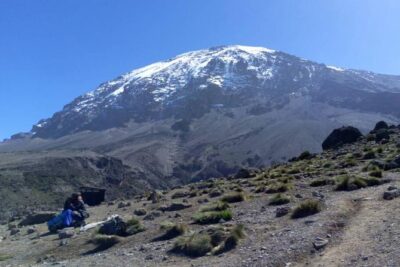
This is a route for people who want a serious mountain challenge with a private group and a well-organized support team. It is not a casual week in the hills. The reward is a changing series of forests, moorland, giant senecios, volcanic valleys, and high desert, finishing with sunrise near Uhuru Peak if the weather allows.
In This Review
- Key points about the Rongai Route
- Why choose the Rongai Route?
- Day 1: Farmland, pine forest, and Simba Camp
- Day 2: The moorland route toward Kikelewa
- Day 3: Steep slopes and Mawenzi Tarn
- Day 4: Acclimatization beneath Mawenzi Peak
- Day 5: Crossing the Saddle to Kibo Hut
- Day 6: Uhuru Peak and the longest day
- Day 7: Forest descent and the Marangu Gate
- Guide support, food, and group size
- Fitness, altitude, and practical planning
- Should you book this Rongai climb?
- FAQ
- Where does the Rongai Route climb begin?
- How long is the Kilimanjaro Rongai Route experience?
- What is the highest point reached?
- Is there an acclimatization day?
- How large can the private group be?
- What level of fitness is required?
- What is the cancellation policy?
Key points about the Rongai Route
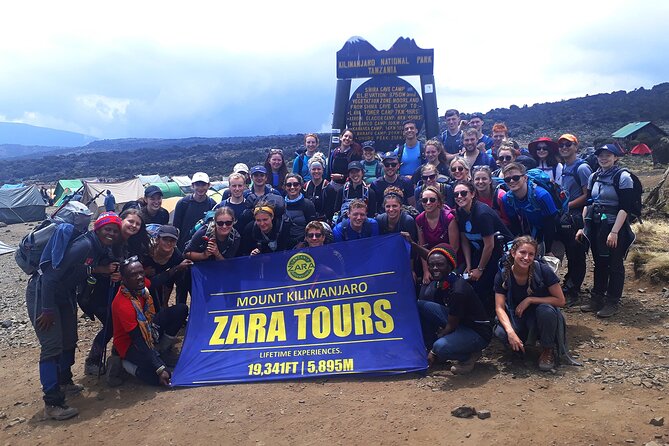
- A quieter northern approach: The Rongai Route begins near the Kenya border side of Kilimanjaro and crosses the mountain toward the Marangu Gate.
- A useful extra acclimatization day: Day four at Mawenzi Tarn gives your body more time to adjust before the summit push.
- A dramatic Mawenzi setting: Kikelewa Camp and Mawenzi Tarn offer some of the most striking scenery on the trek.
- A very long summit day: You hike from Kibo Hut to Uhuru Peak, descend to Kibo, and continue to Horombo Hut in one demanding day.
- Strong personal support: Guides are described as attentive to tiredness and possible altitude sickness, with porters, cooks, and other crew supporting the climb.
- Private group pricing: The $2,700 charge covers a group of up to 15, which can be good value for a full group but costly for one or two people.
Why choose the Rongai Route?
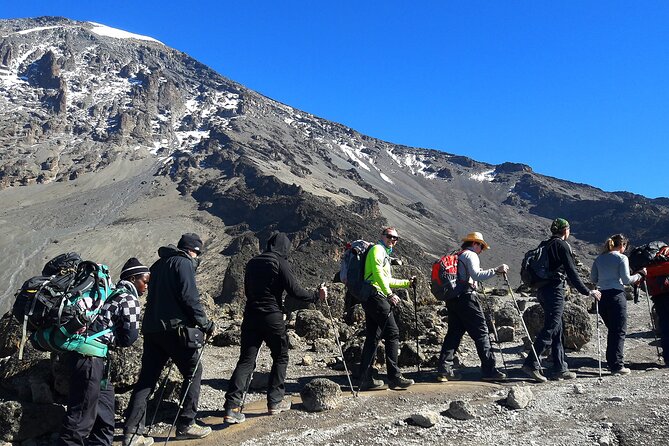
Kilimanjaro has several routes, and Rongai has a different feel from the busier southern approaches. Your first hours pass through farmland and pine forest, rather than beginning in a crowded high mountain zone. The route then moves toward Mawenzi, one of Kilimanjaro’s two great volcanic peaks, before crossing the broad Saddle to Kibo.
I like the way this itinerary builds the mountain in stages. You start at 1,950 meters and reach Simba Camp at 2,600 meters on the first day. The altitude gain is noticeable but not brutal. The next few days take you higher through moorland and volcanic terrain, with a full day at Mawenzi Tarn before you head toward Kibo Hut.
That extra day matters. Altitude is the serious issue on Kilimanjaro, not technical climbing. You need time to let your body adjust, and the Mawenzi Tarn rest day creates a better rhythm than rushing straight toward the summit. It is not a day off in the usual sense, since you take a short hike upward, but it gives you a chance to walk, rest, eat, drink, and watch for signs that your body is struggling.
More Kilimanjaro climbs:
- Kilimanjaro climb by Lemosho Route (7-day)
★ 5.0 · 651 reviews - Kilimanjaro climb, Machame Route (7-day)
★ 5.0 · 262 reviews - Kilimanjaro Climbing Lemosho Route 8 Days.
★ 5.0 · 186 reviews
Day 1: Farmland, pine forest, and Simba Camp
After breakfast, you drive for two to three hours toward Rongai Gate. The road passes farms and rural villages before you reach the park entrance. The supplied meeting information lists Kilimanjaro Airport at 7:00 am, while the day plan begins after breakfast at the hotel, so confirm the exact pickup point and time before you arrive.
At Rongai Gate, registration comes first. Then you begin walking through farmland and pine forest. The first stretch is gentle, which is exactly what you want on a seven-day climb. You can settle into a slow pace without spending too much energy early in the week.
The walk covers about 8 kilometers and takes three to four hours. The route rises from 1,950 meters to 2,600 meters, ending at Simba Camp. Colobus monkeys might appear along the way, and the forest gives you a calm introduction to the mountain.
This is a good first day for noticing how the operation works. Your guide sets the pace, the crew handles camp duties, and you begin learning the basic routine of walking, eating, resting, and drinking regularly. Do not treat this as an easy sightseeing walk. Save energy from the start.
Day 2: The moorland route toward Kikelewa
Day two is longer, with about 10 kilometers of walking over five to six hours. You climb from 2,600 meters to 3,600 meters, stopping at Second Cave for lunch before leaving the main trail toward Kikelewa Camp.
The path across the moorland feels more remote. You gain broader views of Mawenzi’s sharp peaks, and the setting becomes less wooded and more open. The shift in scenery is one of the pleasures of Rongai. You can see the mountain changing as vegetation gives way to exposed ground and high-altitude plants.
Kikelewa Camp sits in a sheltered valley near Kikelewa Cave, surrounded by giant senecios. These unusual plants give the area a distinctly Kilimanjaro character. The camp is also an important point in the climb because the altitude begins to make itself known.
Your best strategy here is to walk slowly, keep drinking, and tell the guide if you feel unwell. The support system is a major strength of this experience. The guides are expected to watch for tiredness and symptoms of altitude sickness, but you still need to report headaches, nausea, dizziness, or unusual fatigue rather than trying to hide them.
Day 3: Steep slopes and Mawenzi Tarn
The third day is shorter, at about 6 kilometers and three to four hours, but it is steeper. You climb from 3,600 meters to roughly 4,315 meters, crossing grassy slopes toward Mawenzi Tarn.
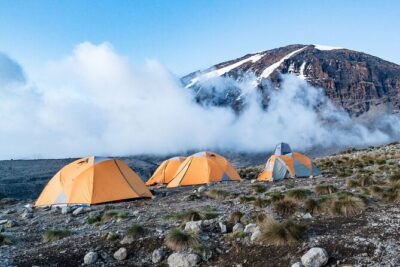
Mawenzi Tarn is one of the most memorable camps on the route. It sits below the cliffs of Mawenzi Peak, with dramatic views in several directions. The volcanic rock and high ridges create a setting that feels far removed from the villages and farms below.
After lunch, you can rest or take a short acclimatization walk. This is a day when the schedule’s slower pace pays off. You are already high, and even a short climb can feel like work. The guide gives a briefing in the evening, preparing you for the next stage.
The hard part is not just the steep trail. At this height, simple tasks take more effort. Packing a day bag, walking to the dining tent, or getting ready for bed can feel surprisingly tiring. Give yourself plenty of time and do not measure your performance against anyone else in the group.
More Rongai Route climbs:
- Kilimanjaro climb, Rongai Route (7-day)
★ 5.0 · 40 reviews - Kilimanjaro climb, Rongai Route (6-day)
★ 5.0 · 15 reviews - 6-Day Rongai Route Trek in Mount Kilimanjaro
★ 5.0 · 8 reviews - Kilimanjaro Rongai Route 5 Days Trekking
★ 5.0 · 1 review
Day 4: Acclimatization beneath Mawenzi Peak
The extra day at Mawenzi Tarn is one of the smartest parts of this itinerary. The scheduled altitude is about 4,330 meters, and the plan calls for hiking toward Mawenzi Peak before returning to camp to rest.
This short uphill walk gives your body more time at altitude without forcing you to move camp. It also lets you see more of the high volcanic setting. You should use the day for steady walking, hydration, food, and rest, not for proving how far you can go.
The itinerary does not give a distance or hiking time for this day, so the exact outing may depend on conditions and the guide’s judgment. That flexibility is useful on a mountain, where weather and individual health can change the plan.
I would treat this as preparation for summit night. Keep your gear organized, ask questions during the briefing, and conserve strength. A relaxed day here is more valuable than an ambitious side hike that leaves you worn out.
Day 5: Crossing the Saddle to Kibo Hut
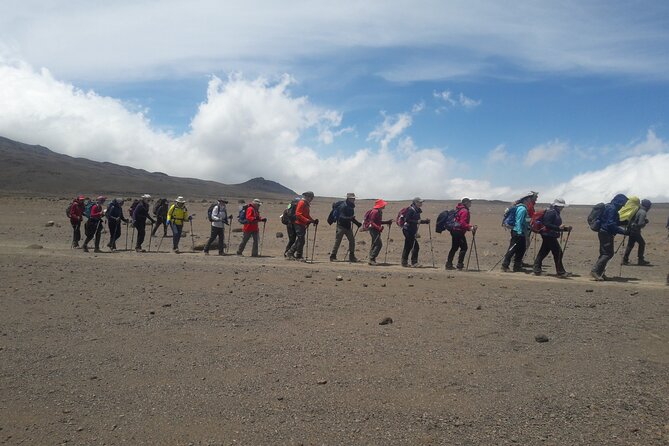
You leave Mawenzi Tarn after breakfast and cross the Saddle, the broad volcanic area between Mawenzi and Kibo. The route covers about 8 kilometers and takes five to six hours, rising to 4,720 meters.
The Saddle is stark and open. There are few distractions, and Kibo dominates your attention. The trail climbs gently, but the high altitude makes the walk feel longer than the distance suggests. This is a good time to focus on the guide’s pace and keep your effort even.
At Kibo Hut, you eat an early dinner and rest before the midnight start. The hut is not the summit, but it is the staging point for the hardest section of the climb. You need to sleep if you can, prepare your warm clothing, and keep your headlamp and water close at hand.
The evening briefing is especially important. Your guide explains the summit schedule and the route ahead. A crew that pays attention to small details can make a major difference here. One published account praised the food, including a two-course dinner served at about 4,500 meters, which gives you a sense of the effort put into camp catering.
Day 6: Uhuru Peak and the longest day
Summit day begins around midnight. You climb from about 4,700 meters to 5,895 meters, then descend through Kibo Hut to Horombo Hut. The full route is about 22 kilometers, with 12 to 15 hours of walking and descending.
The first goal is Gillman’s Point at 5,685 meters. The climb takes around six hours and is steep and tiring. You walk in darkness, step by step, with your guide controlling the pace. This is where the patient, supportive approach described by climbers becomes most important.
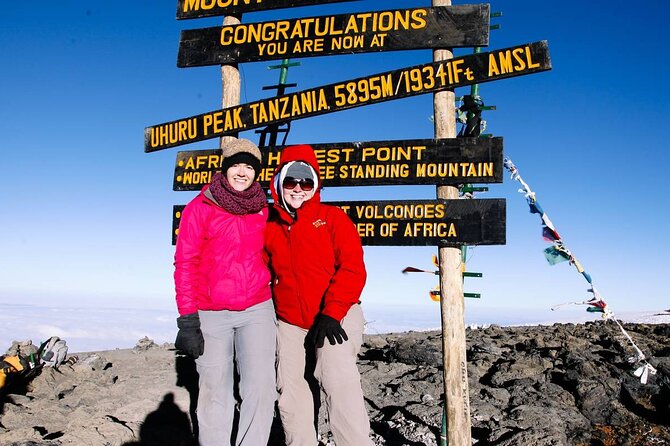
Gillman’s Point is a major achievement, but it is not Uhuru Peak. From there, you continue along the crater rim toward the highest point in Africa. If the sky is clear, sunrise can transform the final section into one of the most powerful moments of the trip.
Do not underestimate the distance after Gillman’s Point. You still need to reach Uhuru Peak, return to Kibo Hut, rest briefly, and continue to Horombo. The summit photograph is only one part of the day. The descent can be hard on tired legs, and you need to keep drinking and eating as instructed.
The guide team is central to this stage. The names connected with especially strong support include Mndeme, Stanley, also called Baba Massive, Izadini, Teodori, Kabilla, Amani, and Selemani. The most useful quality is not simply enthusiasm. It is close attention to your pace, energy, and health.
Day 7: Forest descent and the Marangu Gate
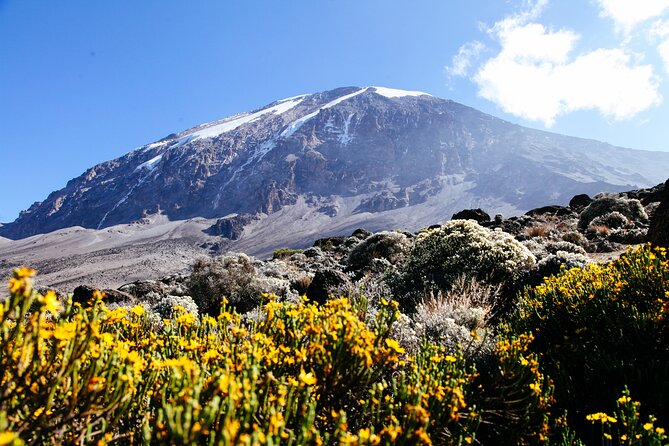
After breakfast at Horombo Hut, you descend about 20 kilometers over six to seven hours. The route passes through moorland and rainforest before reaching Marangu Gate at about 1,830 meters.
The descent is easier on your breathing, but it can be tough on your knees and feet. The changing vegetation gives you a final reminder of how much ground you covered. You began among farms and forest, crossed high volcanic terrain, reached the summit, and now return through greener country.
At the gate, you receive a summit certificate. Then you drive back to Springlands Hotel in Moshi for a hot meal, shower, and bed. Those comforts will feel well earned after the summit day and long descent.
The company can also help arrange a safari or a Zanzibar extension after the climb. That can be convenient if you want to connect the mountain with wildlife or the coast, but the information provided does not specify those extra costs or schedules. Ask for a separate quote rather than assuming they are part of the $2,700 price.
Guide support, food, and group size
The strongest part of the experience is the human support. One account describes a large crew of guides, porters, cooks, and waiters supporting a group, while other accounts praise the organization and the attention paid to altitude symptoms.
That support affects both safety and comfort. You are not simply handed a route map and sent uphill. Guides set the pace, check how you are doing, and help the group deal with the long summit schedule. The food also receives unusually warm praise, especially meals served at high altitude.
The tour is private, with only your group participating, and the maximum group size is 15. That is a useful middle ground. You get a private experience, but you can still share the cost and companionship with a larger party.
The price of $2,700 per group is therefore best judged by group size. For 15 people, it works out to $180 per person. For two people, the same advertised group price is $1,350 each. The final value depends on what is included in your booking, so confirm the exact inclusions before paying.
Fitness, altitude, and practical planning
You need a moderate level of physical fitness, but the schedule is still demanding. The key tests are long walking days, steep uphill sections, cold conditions, thin air, and the 12 to 15 hour summit day.
I would prepare by walking regularly before the trip and including long uphill outings if possible. The supplied information does not specify a packing list, medical requirements, or gear rental, so ask Zara Tanzania Adventures for those details.
The route begins with pickup arrangements and lists Kilimanjaro Airport as a meeting point at 7:00 am. It also notes access near public transportation. Since the daily plan refers to a hotel breakfast and a return to Springlands Hotel, confirm exactly where your climb starts and where pre-climb accommodation is arranged.
Cancellation is free if you cancel at least 24 hours before the local start time. Cancellations or changes made inside that window are not accepted for a refund.
Should you book this Rongai climb?
I would recommend this climb if you want a private Kilimanjaro experience with a slower schedule, a full acclimatization day, and close guide support. The route is especially appealing if Mawenzi Peak, quieter trails, and changing scenery matter more to you than a quick ascent.
I would hesitate if you dislike long, strenuous hikes or if you are choosing mainly on price. The private group fee can be excellent value for a full party, but expensive for a very small group. You also need to accept that reaching the summit is never guaranteed, even with a strong crew and careful pacing.
For the right person, this is a serious but well-structured way to climb Kilimanjaro. The best reason to choose it is not simply the certificate at the gate. It is the combination of gradual altitude gain, striking camps at Kikelewa and Mawenzi Tarn, and a guide team that takes the difficult parts seriously.
FAQ
Where does the Rongai Route climb begin?
The climb begins at Rongai Gate after a two to three hour drive through farmlands and rural villages. The listed meeting point is Kilimanjaro Airport in Kilimanjaro National Park, Tanzania, with a start time of 7:00 am.
How long is the Kilimanjaro Rongai Route experience?
The experience lasts approximately seven days. The longest day is summit day, which includes the ascent to Uhuru Peak, descent to Kibo Hut, and continued descent to Horombo Hut.
What is the highest point reached?
The route reaches Uhuru Peak at 5,895 meters, or 19,341 feet, the highest point on Mount Kilimanjaro.
Is there an acclimatization day?
Yes. Day four is spent at Mawenzi Tarn at about 4,330 meters. You take a hike toward Mawenzi Peak and then return to camp to rest.
How large can the private group be?
The private tour can include up to 15 people. Only your own group participates in the activity.
What level of fitness is required?
The listed requirement is a moderate physical fitness level. You should also be ready for steep sections, high altitude, long hiking days, and a summit day lasting 12 to 15 hours.
What is the cancellation policy?
You can cancel for a full refund up to 24 hours before the experience start time. Cancellations or changes made less than 24 hours before the start are not refunded or accepted.
Just added in Moshi
- THE BEST 2 DAYS ON TREK – MARANGU ROUTE TOUR ADVENTURES★ 5.0 · 1 review
- Mount Kilimanjaro National Park Day Trip★ 5.0 · 7 reviews
- Mount Kilimanjaro Climbing in Tanzania Full-Day Trip★ 5.0 · 1 review
- Mount Kilimanjaro Day Hike – All-Inclusive, No Hidden Fees★ 4.0 · 7 reviews
- Mount Kilimanjaro Trekking Tour – Climb with Local Guides★ 5.0 · 1 review
- Mount Kilimanjaro: 7 Days Hike Lemosho Route★ 5.0 · 1 review
- Moshi:Chemka Hot Springs, Materuni Waterfalls & Coffee Tour★ 5.0 · 1 review
- Moshi Town: Walking Tour: Theme Urban lifestyle★ 3.1 · 4 reviews
Rongai Route Climbs, compared.
6 Day Private Kilimanjaro Climbing Via Rongai Route
Read our review →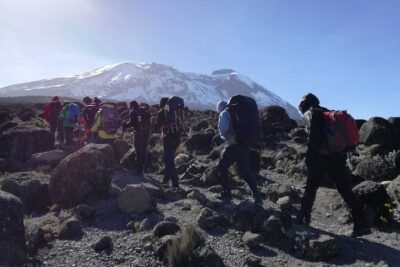
Multi-Day Tour RONGAI Route Kilimanjaro Trekking
Read our review →
Browse the lists this tour appears in