
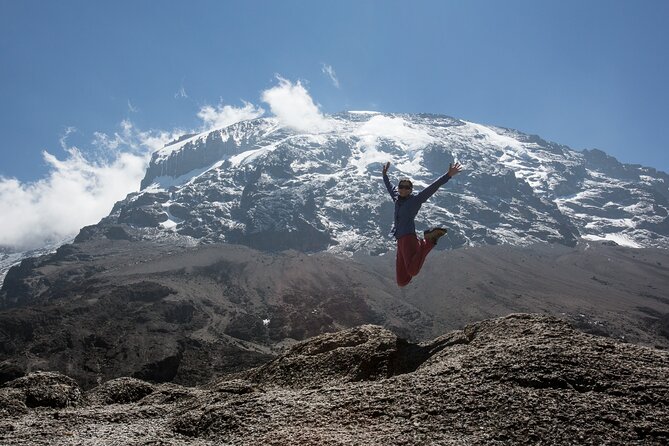
Reviewed · RONGAI ROUTE CLIMBS
7 Day Rongai Kilimanjaro Summit
Africa’s highest peak demands patience and grit. This seven-day Kilimanjaro climb uses the Rongai approach, a quieter route with pine forest, open moorland, Mawenzi’s jagged spires, and a long summit night ending at Uhuru Peak. I like the gradual altitude gain and the small group size of no more than six people. I also like that porters set up camp and prepare your belongings while you concentrate on walking.
The main drawback is the physical strain. Summit night begins around midnight, includes a steep ascent on scree or snow, and is followed by a long descent. I would also confirm the route before paying, since one part of the supplied description mentions Machame Gate and Machame Camp, while the day-by-day plan clearly follows the Rongai route and finishes through Marangu.
In This Review
- Key points to know before you book
- Why the Rongai route feels different
- Day 1: From Nale Moru fields to the moorland edge
- Day 2: The steady climb to Second Cave
- Day 3: Giant Senecios and Mawenzi views
- Day 4: Mawenzi Tarn at 4,330 meters
- Day 5: Across the Saddle to Kibo Camp
- Day 6: The midnight push to Uhuru Peak
- Day 7: Forest descent and the Marangu Gate
- What the $2,592 price means
- Fitness, clothing, and small details that matter
- Is this Kilimanjaro climb right for you?
- FAQ
- Where does the climb begin?
- Where does the trek finish?
- How long is the experience?
- How high is Uhuru Peak?
- How many people can join the group?
- What fitness level is required?
- When does the summit climb begin?
- Is camping included during the mountain route?
- Is pickup offered?
- What is the cancellation policy?
Key points to know before you book
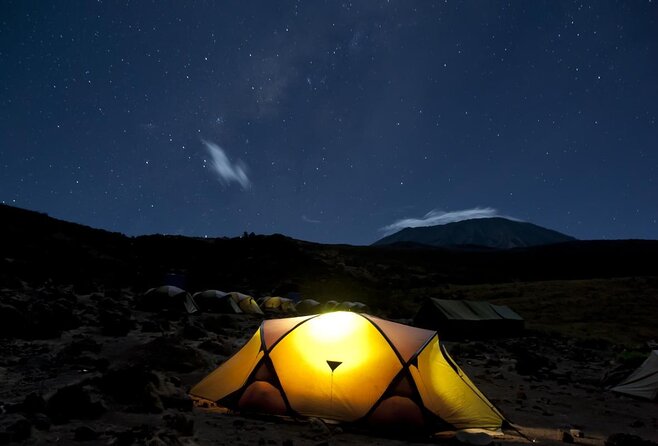
- Rongai starts near Nale Moru: The opening walk passes corn and potato fields before entering pine forest.
- Mawenzi Tarn is the scenic high point before the summit: Camp sits at about 4,330 meters beneath Mawenzi’s sharp volcanic spires.
- The summit push is a full mountain day: You climb from roughly 4,700 meters to 5,895 meters, then descend toward Horombo.
- A maximum of six people keeps the group manageable: That matters when walking slowly, checking on one another, and handling the final ascent.
- Porter-supported camping makes the route more practical: Tents, personal belongings, and meals are handled by the mountain crew.
- The price is $2,592 per person: That is a serious outlay, but the seven-day format provides time for acclimatization and includes pickup.
Why the Rongai route feels different
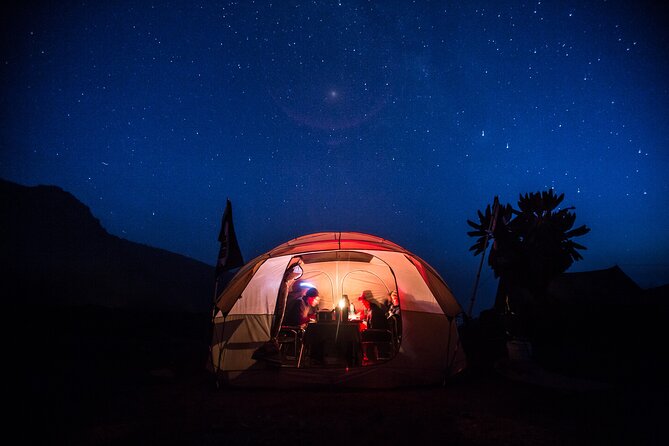
Rongai approaches Kilimanjaro from the northeastern side, near the Kenyan border. The first day begins at the village of Nale Moru rather than at the busy southern trailheads described elsewhere on the mountain.
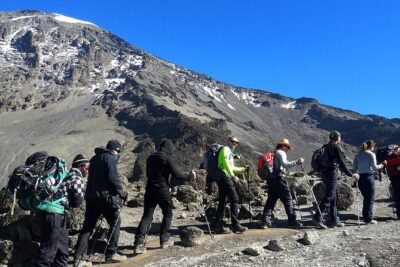
That gives this route a pleasing sense of space. You begin among cultivated fields, then move into pine forest and higher moorland. The route is not simply a race toward the summit. Each day gains altitude in measured steps, which gives your body more time to adjust.
I especially like the route’s variety. You get farms, forest, open high country, giant Senecios, a volcanic saddle, and the stark upper slopes of Kibo. The views also change direction. Early on, you look toward the Kenyan plains. Later, Mawenzi dominates the scene, and finally Kibo fills your view.
The group limit of six is another practical strength. A small party can move at a more even pace, and your guide has a better chance of noticing when you are struggling. At high altitude, that personal attention matters more than fancy extras.
Still, this is a demanding trek. The description calls for a moderate fitness level, but I would treat that as a minimum, not a promise that the climb will feel moderate. You need to be comfortable walking for several hours on consecutive days, sleeping at altitude, and handling a very long final day.
More Rongai Route climbs:
- Kilimanjaro Rongai Route 5 Days Trekking
★ 5.0 · 1 review - Rongai 7 days
★ 5.0 · 1 review - Multi-Day Tour RONGAI Route Kilimanjaro Trekking
★ 5.0 · 1 review
Day 1: From Nale Moru fields to the moorland edge
The first day covers about 6 kilometers, rising from roughly 2,000 meters to 2,650 meters. The walking time is listed at three to four hours, though the day also includes the transfer, park sign-in, and preparation of the porters.
You begin on a wide track through corn and potato fields. This is a useful introduction to the local setting because you see cultivated land before entering the mountain forest. The trail then climbs gently through pine trees, where the changing vegetation hints at the altitude still ahead.
The forest shelters wildlife, although sightings are not promised. As the trees thin, the first camp reaches the edge of the moorland zone. The Kenyan plains open below, giving you an early reward without requiring a punishing day.
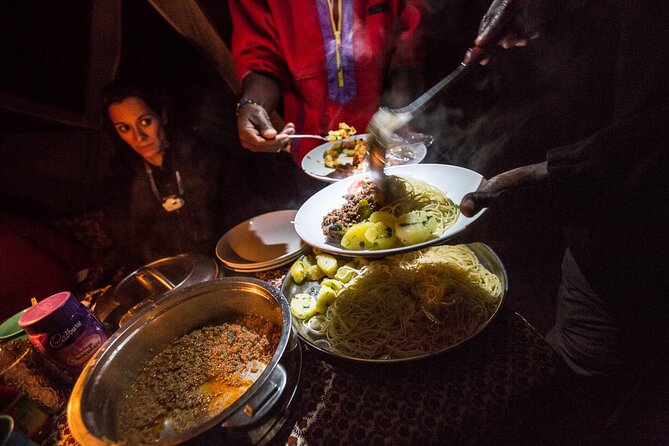
At camp, your tent is set up and your personal belongings are ready. Dinner follows, and the evening is mainly about resting. I would resist the temptation to stay up late. The easy first day is designed to help you start well, not to fill every hour.
Day 2: The steady climb to Second Cave
Day two rises from 2,650 meters to about 3,450 meters. The route covers approximately 6 kilometers and takes three to four hours.
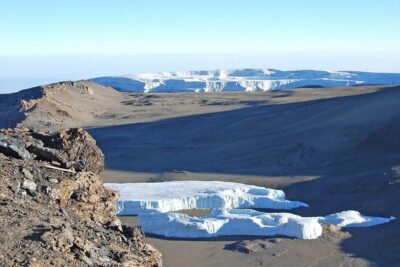
The climb is steady rather than dramatic. Your main reward is the view toward Kibo and the eastern ice fields on the crater rim. Those glimpses help you understand the mountain’s shape: Kibo is the broad central summit, while Mawenzi later appears as a more jagged and separate volcanic form.
Second Cave is the day’s key point. The name suggests a simple campsite setting rather than a developed mountain lodge, so you should expect basic camping conditions. The short walking distance leaves time to eat, rest, and pay attention to how your body reacts to the increased altitude.
This is also where a slow pace becomes important. You may feel strong at this height and want to walk quickly. I would not. The climb rewards steady breathing and small steps, especially since the next days reach much higher ground.
Day 3: Giant Senecios and Mawenzi views
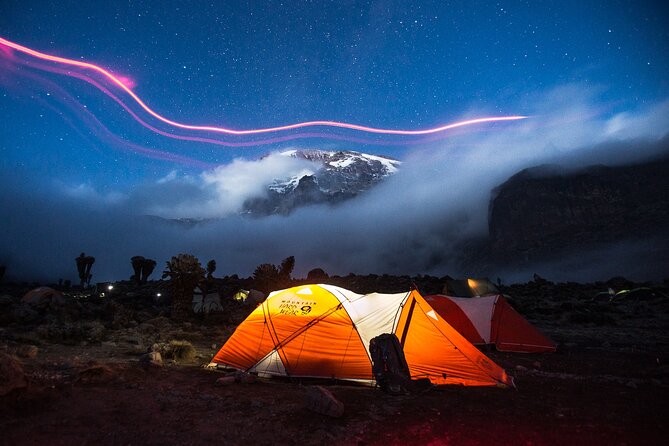
The third day is a shorter gain in altitude, from about 3,450 meters to 3,600 meters. The route stretches about 9 kilometers but takes only two to three hours according to the schedule.
You leave the main moorland path and walk toward Mawenzi. Its broken peaks give this section a more dramatic feel than the earlier forest approach. The campsite sits in a sheltered valley with giant Senecios nearby, one of the route’s distinctive plant features.
The modest altitude gain is useful. A mountain itinerary should not push upward at the same rate every day, and this stage gives you time to settle into the rhythm of walking, eating, sleeping, and drinking at altitude.
The schedule also lists about six hours for the stop, which likely allows time around camp. Use it sensibly. Rest is not wasted time here. You can look around the valley, but keep enough energy for the steeper climb to Mawenzi Tarn.
A few more options to weigh up in Arusha
- Balloon Safari & Bush Breakfast in Serengeti – Miracle Experience
★ 5.0 · 1,646 reviews - Tanzania Classic – 7 Days
★ 5.0 · 1,151 reviews - 4 Days Group Camping Safari
★ 5.0 · 1,101 reviews - 5 Days Group Camping Safari
★ 5.0 · 730 reviews
Day 4: Mawenzi Tarn at 4,330 meters
Day four climbs from approximately 3,600 meters to 4,330 meters. The distance is only about 6 kilometers, but the route is short and steep, with three to four hours of walking.
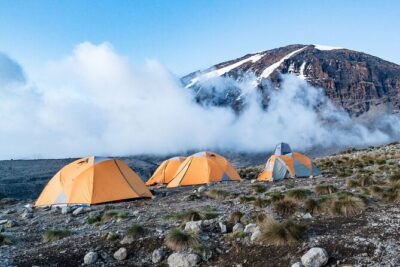
The effort pays off at Mawenzi Tarn. The camp sits in a cirque directly beneath Mawenzi’s towering spires. It is one of the most memorable settings on the route, not because of comfort, but because of the scale and shape of the volcanic rock around you.
Vegetation fades shortly before camp, marking a clear transition into higher mountain country. You will feel the thin air more strongly here. A short climb at this altitude can take more out of you than a longer walk lower down.
The afternoon is free for rest or gentle exploration, specifically to support acclimatization. Follow the guide’s lead. This is not the place for an ambitious side hike. A quiet afternoon, warm food, and sleep are the best preparation for the next day’s move toward Kibo.
Day 5: Across the Saddle to Kibo Camp
Day five crosses the lunar-looking Saddle between Mawenzi and Kibo. You climb from about 4,330 meters to 4,750 meters and walk roughly 9 kilometers over four to five hours.
The Saddle is a broad, stark stretch between the two main volcanic cones. There is little vegetation, and the open space can make the route feel exposed. The reward is a direct view of Kibo’s crater wall and the knowledge that summit camp is close.
Kibo Camp is positioned at the bottom of the crater wall. You arrive with the final ascent ahead, but the day is not finished in a practical sense. The key task is rest.
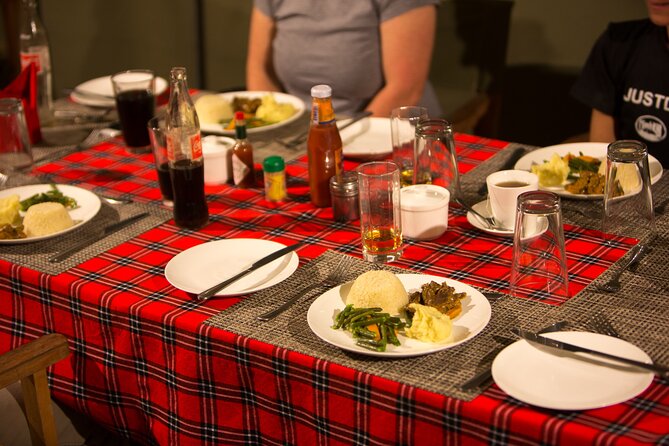
A very early start follows, listed as midnight on summit night. Eat what you can, organize warm layers, and keep your essential items close. You will not want to rummage through a large bag in the dark or discover that your gloves are buried at the bottom.
Day 6: The midnight push to Uhuru Peak
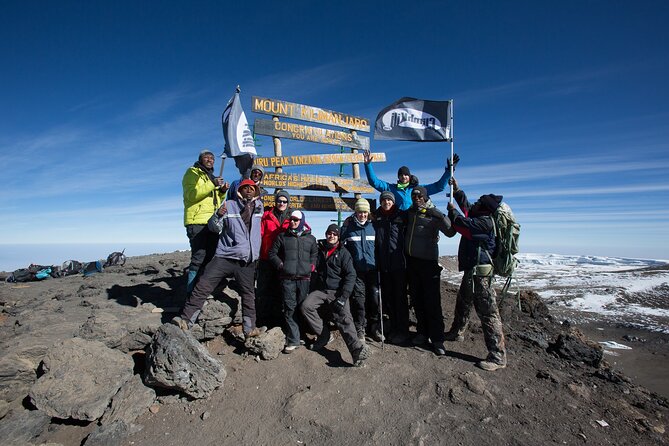
This is the hardest and longest stage. The ascent begins around 4,700 meters and reaches Uhuru Peak at 5,895 meters, the highest point in Africa. The uphill distance is about 6 kilometers, followed by a descent of roughly 15 kilometers.
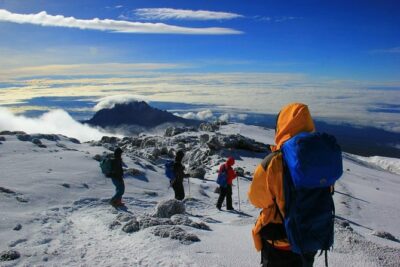
The first section takes place in darkness. You climb steep scree or snow toward Gilman’s Point on the crater rim at about 5,700 meters. The surface can be tiring because each step may slide back on loose ground. Trekking poles are useful here, as is a slow, controlled pace.
From Gilman’s Point, you continue toward Uhuru Peak. The route is still demanding, but the summit goal is now close. The promised views can be extraordinary, yet your priority should remain safety and steady movement. At this altitude, cold, fatigue, and thin air can make simple tasks feel difficult.
At Uhuru Peak, you have time for a summit photograph. Keep the stop sensible. You may be thrilled to reach the top, but the descent still requires substantial effort.
You return to Kibo for lunch and a rest before continuing toward Horombo Camp. This is a major reason the route should not be treated as a casual sightseeing trip. The ascent alone is tough, and the same day includes a long downhill walk on tired legs.
The supplied schedule gives six to eight hours up and another fifteen kilometers down. The figures are not perfectly clear, so ask Climb Kili to confirm the expected timing and exact overnight camp before departure. The route description says Horombo, while the elevation information refers to Kibo and then the lower camp. That detail matters because you should know how much descending remains after the summit.
The single written account of this experience praised the team’s support, safety standards, hospitality, and mountain expertise during an August 2023 climb. That is useful context. On a mountain this high, attentive support is not a small luxury. It can shape how calmly you handle the hardest hours.
Day 7: Forest descent and the Marangu Gate
The final day descends from about 3,700 meters to 1,700 meters. The walking distance is approximately 20 kilometers, with four to five hours listed.
You begin through moorland toward Mandara Hut. From there, the trail enters lush forest and continues to the National Park gate at Marangu. This makes for a satisfying change after the gray upper mountain and open Saddle.
The lower trail may be wet and muddy. Gaiters and trekking poles are recommended, and I would take that advice seriously. Your legs may be tired after summit day, so slippery ground adds unnecessary risk.
At lower elevations, shorts and a T-shirt may be comfortable, but keep rain gear and warmer clothes within reach. Mountain weather can change, and you do not want your protective layers packed away in the vehicle.
At Marangu Gate, the Climb Kili vehicle transfers you to your hotel for a shower and an overnight bed-and-breakfast stay. That shower will feel like an event in its own right. The return to ordinary comforts is part of the emotional payoff.
What the $2,592 price means
At $2,592 per person, this is not a budget day trip. It is a seven-day, porter-supported mountain expedition with transfers, camping, a guide and crew, park access, meals, and the logistics needed to move a small group up and down Kilimanjaro, based on the details provided.
The strongest value comes from the length. A shorter climb may cost less, but it gives you fewer days to adjust to altitude. Here, the itinerary includes a relatively easy opening, a modest third day, a rest period at Mawenzi Tarn, and a full day before the summit push.
The price also buys organization. You do not need to carry every personal item, assemble your own campsite, or solve the route alone. That support lets you focus on pacing and staying well.
I would still ask for a written breakdown before booking. The supplied details do not spell out every inclusion, such as gear rental, tips, airport transfers, or extra hotel nights. Those costs can affect the final value.
Fitness, clothing, and small details that matter
The stated fitness requirement is moderate, but the summit day makes this a serious physical challenge. Prepare for repeated walking days, steep uphill sections, loose ground, and a long descent after very little sleep.
Pack for changing conditions. The lower forest can be wet and muddy, while the upper route may involve scree or snow. Useful items specifically supported by the route notes include:
- Gaiters for muddy forest trails
- Trekking poles for slippery ground and loose scree
- Rain gear for the lower route
- Warm clothing for the summit night
- Comfortable lighter clothing for the lower elevations
The booking confirmation is expected within 48 hours, subject to availability. Pickup is offered, and the tour uses a paper ticket. The available booking window runs daily from midnight to 11:30 p.m., but that does not mean the actual mountain departure begins at midnight. The midnight start applies to summit night.
Free cancellation is available up to 24 hours before the experience begins. Changes or cancellations made inside that window are not accepted for a refund.
Is this Kilimanjaro climb right for you?
I would choose this trip if you want a structured ascent with a small group, a quieter starting route, and several days for acclimatization. It suits someone who values mountain scenery and dependable crew support more than a quick or low-cost attempt.
I would think twice if you dislike camping, struggle with long walking days, or want a relaxed holiday with only a little hiking. The summit night is cold, dark, steep, and tiring, followed by a major descent. You need realistic expectations.
Before booking, ask Climb Kili to confirm three points: the exact route, the overnight camp after the summit, and everything included in the $2,592 price. Once those details are clear, this seven-day Rongai plan offers a strong balance of scenery, pacing, and support for a demanding Kilimanjaro ascent.
FAQ
Where does the climb begin?
The day-by-day route begins at the village of Nale Moru, reached by transfer after meeting the guide and mountain crew.
Where does the trek finish?
The descent finishes at the National Park gate at Marangu, followed by vehicle transfer to a hotel.
How long is the experience?
The climb lasts approximately seven days.
How high is Uhuru Peak?
Uhuru Peak reaches 5,895 meters, or about 19,340 feet.
How many people can join the group?
The maximum group size is six people.
What fitness level is required?
A moderate physical fitness level is required.
When does the summit climb begin?
The summit ascent begins around midnight on day six.
Is camping included during the mountain route?
Yes. The itinerary includes camps at locations such as the moorland edge, Second Cave, Mawenzi Tarn, and Kibo.
Is pickup offered?
Yes, pickup is offered as part of the experience.
What is the cancellation policy?
You can cancel at least 24 hours before the experience start time for a full refund. Cancellations or changes made less than 24 hours before the start time are not accepted.
Just added in Arusha
- Safari “Kifaru” – 5 days in the most famous Parks in the world★ 5.0 · 4 reviews
- Saadani Day Trip★ 5.0 · 13 reviews
- 3 Days Tanzania Short and Spicy★ 5.0 · 6 reviews
- 5 Day Tanzania Safari Camping Adventure Private Tour★ 5.0 · 2 reviews
- Day Trip to Ngorongoro Crater from Arusha★ 5.0 · 1 review
- SERENGETI NATIONAL PARK Tour★ 4.5 · 5 reviews
- 3 Days Serengeti Park & Ngorongoro Crater Adventure Safari★ 5.0 · 8 reviews
- 6 Days Tanzania Bush Experience Safari★ 5.0 · 6 reviews
Rongai Route Climbs, compared.
6 Day Private Kilimanjaro Climbing Via Rongai Route
Read our review →
Multi-Day Tour RONGAI Route Kilimanjaro Trekking
Read our review →
Browse the lists this tour appears in