
Reviewed · RONGAI ROUTE CLIMBS
6-Day Rongai Route Trek in Mount Kilimanjaro
Africa’s highest summit rewards patience. The Rongai Route gives you a gradual approach from Kilimanjaro’s quieter northern side, near the Kenyan border, with open views, remote camps, and a steady climb toward Uhuru Peak. I like the low crowd levels and the chance of seeing wildlife during the first days, something that is less likely on busier routes.
I also like the sensible route profile: the walking is generally gradual until the summit push, and the route crosses several distinct zones, from farms and pine forest to moorland, high desert, and the icy summit area. The main consideration is the six-day schedule. The summit day can last 10 to 16 hours, and the route gives you less time at altitude than longer Kilimanjaro options.
In This Review
- Key points to know before booking
- Why Rongai suits climbers who prefer a quieter start
- Day 1: Nale Moru and the pine forest
- Day 2: Kikelelwa Caves and the first real altitude test
- Day 3: Mawenzi Tarn and a useful acclimatization walk
- Day 4: Crossing the saddle to Kibo Hut
- Day 5: Uhuru Peak and the long descent
- Day 6: Descending through forest to Marangu
- What the $2,353 price includes
- Private booking, group questions, and practical planning
- Who I think should book this six-day climb
- Should you book the Rongai Route?
- FAQ
- Where does the Rongai Route begin?
- Where does the trek finish?
- How long is the Rongai Route trek?
- How high is Uhuru Peak?
- How long is summit day?
- Is emergency oxygen included?
- Are meals included?
- Is personal hiking gear included?
Key points to know before booking
- Northern approach: Rongai is Kilimanjaro’s only route from the Kenyan side of the mountain.
- Quiet early days: You walk through remote wilderness with fewer crowds than the Marangu approach.
- Gradual ascent: The route climbs steadily, but altitude remains the main challenge.
- Serious summit day: You may walk from midnight through the afternoon, with a major descent after Uhuru Peak.
- Full mountain support: Guides, assistant guides, porters, a cook, tents, meals, drinking water, and hot wash water are included.
- Strong guide praise: Tuma and Issa are specifically praised for safety, encouragement, and summit support.
Why Rongai suits climbers who prefer a quieter start
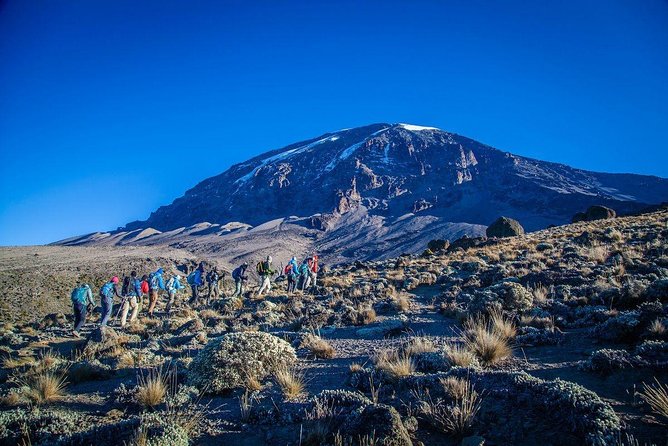
Rongai begins near Nale Moru, on the northern side of Kilimanjaro. That matters because the route feels more remote from the first walking day. Instead of starting amid heavy foot traffic, you set out through cultivated fields and then move into pine forest.
The route’s northern position also gives you broad views toward Kenya. In good weather, the open plains become one of the first memorable sights of the climb. You are not simply walking uphill for six days. You are moving through changing plant zones, weather patterns, and terrain.
The route is often described as one of Kilimanjaro’s easier routes because the ascent is gradual and steady. That does not make it easy in the ordinary sense. At altitude, even a moderate slope can feel hard, and the final night demands strong legs and a calm pace.
I would choose Rongai if you value space, a slower rhythm on the lower mountain, and a route that does not repeat the same path on the way down. You should think twice if your main goal is the longest possible acclimatization schedule. Six days is workable, but it leaves little room for a bad night, slow altitude adjustment, or an extra rest day.
More Kilimanjaro climbs:
- Kilimanjaro climb by Lemosho Route (7-day)
★ 5.0 · 651 reviews - Kilimanjaro climb, Machame Route (7-day)
★ 5.0 · 262 reviews - Kilimanjaro Climbing Lemosho Route 8 Days.
★ 5.0 · 186 reviews
Day 1: Nale Moru and the pine forest
After breakfast at your Moshi hotel, the head guide collects you and takes you to Kilimanjaro National Park’s Rongai Gate. Registration comes first. From there, a vehicle continues to the village of Nale Moru at about 1,950 meters.
The walking begins on a narrow path through fields of maize and potatoes. This farming area gives you a useful sense of how people live around the mountain before the route turns toward the forest. The first walking section takes about three to four hours, with a gradual climb toward the moorland edge.
Rain is possible in the forest, so keep your waterproof jacket and trousers in your daypack rather than buried in a porter’s load. That small packing choice can save you from an uncomfortable first afternoon.
The reward for this opening day is not dramatic altitude gain. It is the change in scenery and the wide view toward the Kenyan plains. This is also the part of the route where wildlife sightings are possible. They are not guaranteed, but Rongai offers a better chance than many other Kilimanjaro routes during the early stages.
Day 2: Kikelelwa Caves and the first real altitude test
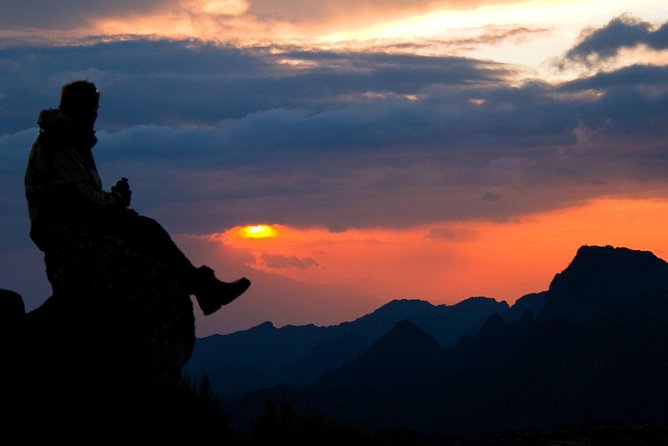
Day two takes you toward the Kikelelwa Caves. The schedule describes a steady climb to Second Cave at roughly 3,450 meters, followed by camp near Kikelelwa at about 3,800 meters.
The walking distance is about nine kilometers, with five to seven hours on your feet and around 950 meters of altitude gain. This is where you begin to feel that the mountain is not just a long walk. Your pace needs to be slow, even, and controlled.
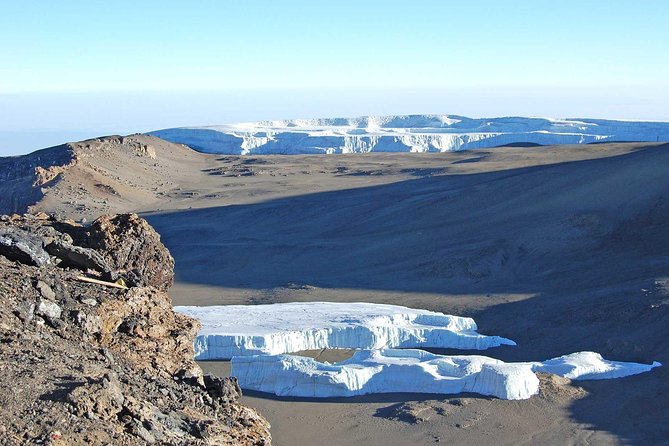
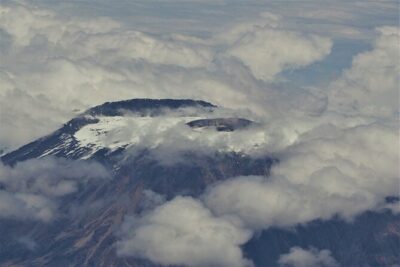
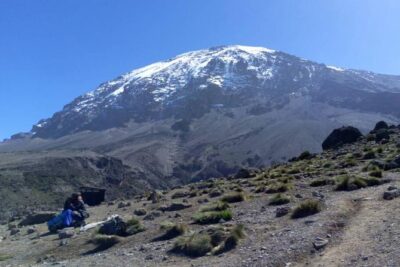
Weather permitting, you can see Kibo, Kilimanjaro’s main summit cone, along with the eastern ice fields on the crater rim. Those views help you understand the scale of the days ahead. The summit may look close, but the altitude and rough ground will make the final approach much slower than the distance suggests.
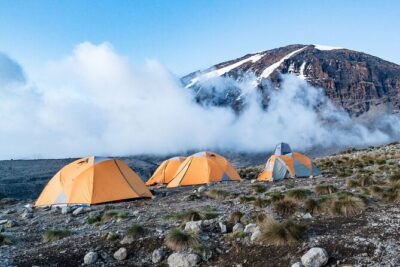
Dinner and a night near the caves give this day a remote character. Camping equipment, a mattress, camp chairs, tables, meals, drinking water, and hot wash water are included. You should still expect basic mountain camping rather than comfort similar to a lodge.
Day 3: Mawenzi Tarn and a useful acclimatization walk
The third day is shorter, at about three to four hours of walking, but it includes steeper sections. You leave the forest and lower vegetation behind, climbing grassy slopes toward Mawenzi Tarn Hut at 4,330 meters.
The hut name can be confusing because this is a camping trek, not a hut-based stay in the usual sense. Confirm the exact sleeping arrangement with the operator before departure, especially since the package describes tents and camping equipment.
The short day is helpful. You have time to walk slowly, eat, rest, and take an afternoon acclimatization walk to around 4,500 meters. That extra height exposure is valuable preparation for the summit attempt, though it can also make the afternoon feel tiring.
The views here are wide and stark. The route has left the lower vegetation zones, and Mawenzi Peak gives the area a sharp, dramatic outline. I like this day because it creates a pause before the long crossing toward Kibo. It is not a free day, but it gives your body more time to adjust than the longer second day.
More Rongai Route climbs:
- Kilimanjaro climb, Rongai Route (7-day)
★ 5.0 · 40 reviews - Kilimanjaro climb, Rongai Route (6-day)
★ 5.0 · 15 reviews - Mount Kilimanjaro Rongai Route
★ 5.0 · 10 reviews - Kilimanjaro Rongai Route 5 Days Trekking
★ 5.0 · 1 review
Day 4: Crossing the saddle to Kibo Hut
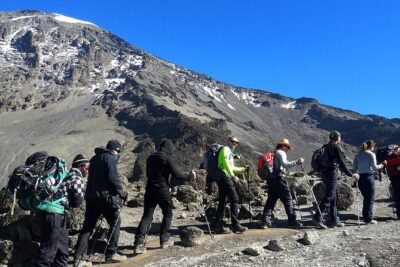
Day four crosses the lunar-looking saddle between Mawenzi and Kibo, Kilimanjaro’s two highest peaks. The distance is about nine kilometers, with four to five hours of walking and an altitude gain of roughly 370 meters.
This section can feel exposed and empty. There is little vegetation, and the broad high-altitude terrain makes the mountain feel much larger than it did below. The route itself is not described as technically difficult, but the height can make a straightforward walk feel slow.
You reach Kibo Hut at around 4,700 meters. Dinner is served early, followed by an attempt to sleep before the midnight wake-up. Sleep can be difficult at this altitude, so do not judge your summit chances only by how well you rest. The practical goal is to stay warm, eat what you can, drink regularly, and conserve energy.
Pack your summit clothing and headlamp before dinner. You do not want to sort through your main bag in the dark while everyone else is preparing to leave.
Day 5: Uhuru Peak and the long descent
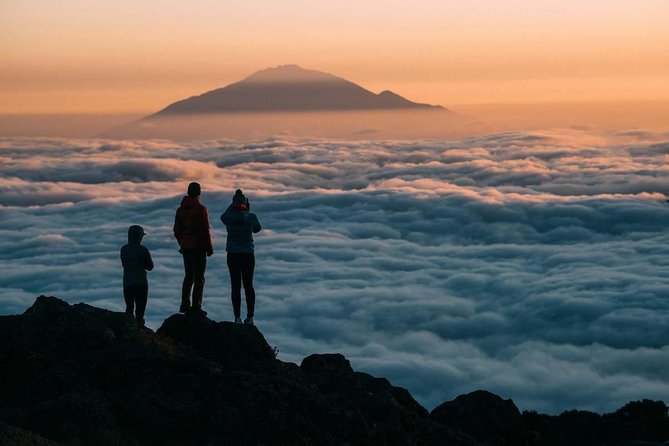
This is the day that defines the trek. You wake at about midnight for a hot drink and snack, then begin the slow climb by torchlight.
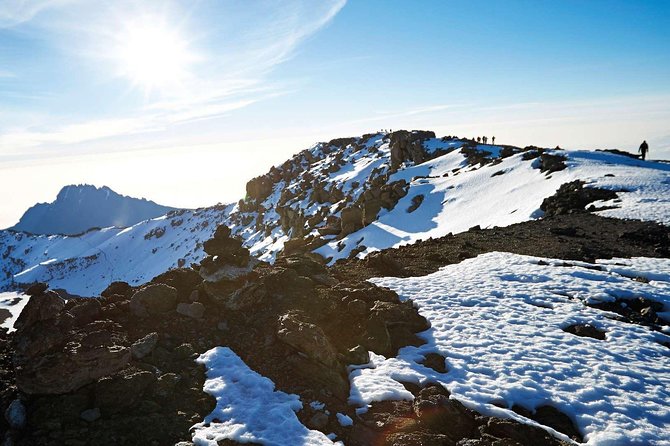
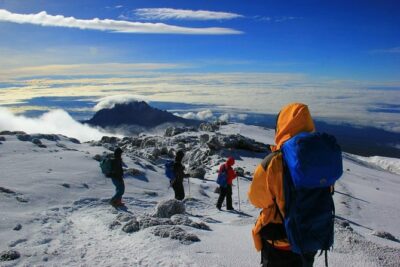
The first major target is Gilman’s Point on the crater rim at 5,685 meters. Reaching this point usually requires patience more than speed. The climb is scheduled to take about five to six hours, though actual timing can vary.
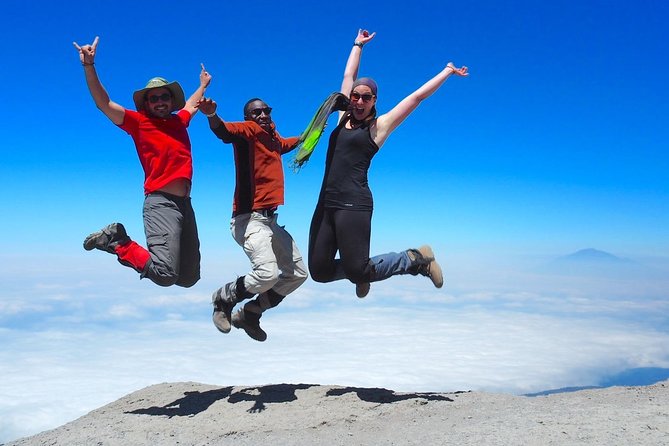
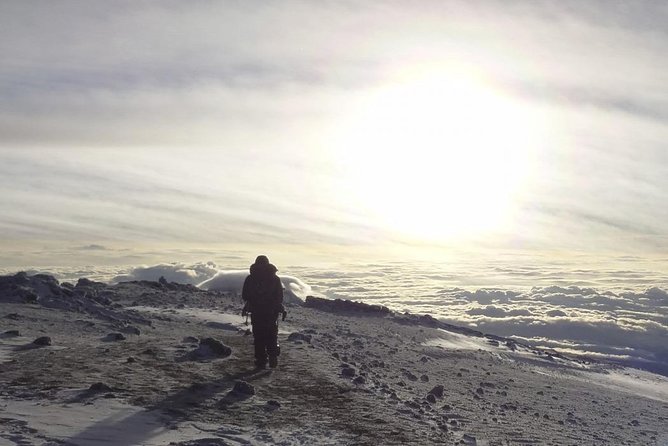
At Gilman’s Point, you can pause for the sunrise over Mawenzi Peak, weather permitting. This is a fine moment, but do not linger too long in the cold. The route continues to Uhuru Peak at 5,895 meters, the highest point in Africa.
The distance from Kibo to the summit is about five kilometers, followed by roughly 15 kilometers of descent. The stated total walking time ranges from 10 to 16 hours, including the climb, the return to Kibo, and the continued descent toward Horombo Hut at 3,720 meters.
That long descent is the part many people underestimate. After reaching the summit, you return to Kibo Hut for brunch and rest, then continue downward. Your knees, feet, and concentration all get tested. A pair of well-used hiking boots, trekking poles if you use them, and a carefully packed daypack matter more here than fancy equipment.
The included emergency oxygen is for emergencies only. It is not intended as a way to help you reach the summit if your body is not coping with altitude. The guides’ safety decisions should take priority over the summit goal.
One particularly useful detail comes from the guide team’s reputation. Tuma is praised for keeping a close eye on safety, while Issa is credited with giving crucial encouragement during a very slow summit push. That matters because summit day is often a mental contest as much as a physical one. Good support can help, but no guide can remove the effects of altitude.
Day 6: Descending through forest to Marangu
The final day brings a long descent to Marangu Park Gate at about 1,700 meters. The walk is listed at around 20 kilometers and five to seven hours, though the stated walking time is also five hours.
You return through lush forest on good paths. After the severe upper-mountain terrain, the trees and lower altitude should feel like a relief. You sign out at the park gate, meet the driver, and transfer back to your hotel in Moshi or Arusha.
This route design is useful because you descend on a different side of the mountain rather than retracing the northern path. It gives the trek a sense of movement and variety, but the final day is still physically demanding. After the summit day, you may prefer a slow breakfast and a quiet afternoon rather than immediate sightseeing.
What the $2,353 price includes
At $2,353 per person, this is not a budget walk, but the price covers the infrastructure needed for a supported Kilimanjaro climb. You receive return transfers between Kilimanjaro Airport and Moshi, with the return journey also available to Moshi or Arusha at the end.
The package includes:
- Five breakfasts
- Six lunches
- Four dinners as specified
- Park fees, taxes, and listed entry costs
- A qualified mountain guide and assistant guides
- Porters and a cook, with their wages
- Tents, sleeping mattresses, tables, and camp chairs
- Fresh drinking water
- Hot water for a daily wash
- Emergency oxygen and a basic first aid kit
The exact meal count is worth checking before you pay, since the inclusions list gives six lunches, five breakfasts, and four dinners while the six-day schedule includes meals across the mountain. Ask the operator to confirm which meals are covered on arrival and departure days.
The value comes from the staff and logistics, not only from the tent. Porters move equipment, the cook handles mountain meals, and the guides manage route pace and safety. Several people who used Pinnacle Adventures describe the organization as solid and place particular trust in the guide team. That is important on a mountain where transport, weather, food, and altitude all need attention.
You still need to budget for flights, visas, travel insurance, health insurance, personal medicines, snacks, and drinks not specified. Personal hiking clothing and equipment are also extra, although you can rent gear from shops in Moshi. A portable toilet is optional but strongly recommended, and water-purifying tablets are not included.
Private booking, group questions, and practical planning
The activity is described as private, meaning only your group should participate. At the same time, group discounts are offered, and one account connected with this route describes joining an open group. I would ask Pinnacle Adventures to confirm whether your booking is fully private, a shared departure, or eligible for a group rate before making payment.
The meeting point is in Moshi Urban, Tanzania. Pickup is offered, and the stated operating hours cover Monday through Sunday, all day, through June 18, 2026.
You should receive booking confirmation at the time of purchase. The experience is described as suitable for most people, but that should not replace your own medical assessment. Kilimanjaro reaches nearly 5,900 meters, and the summit day is long enough to demand serious preparation.
Cancellation is relatively clear: a full refund is available if you cancel at least three full days before the local start time. Cancellations or changes made less than three full days ahead are not accepted for a refund.
Who I think should book this six-day climb
I would recommend this route to you if you want:
- A quieter northern approach
- A steady lower-mountain climb
- A chance of wildlife early in the trek
- Full support from guides, porters, and a cook
- A route that enters at Rongai and exits through Marangu
- A private group arrangement, once confirmed with the operator
I would be more cautious if you are new to long mountain days, dislike camping, or want the most generous possible acclimatization plan. The summit day is the key concern. The climb to Uhuru is followed by a very long descent, and the six-day format does not offer much spare time.
The strongest reason to consider Pinnacle Adventures is the guide support. Tuma’s attention to safety and Issa’s determination during a difficult summit attempt give you useful names to request when discussing your booking. Frazier is also praised for patiently answering detailed questions before departure, which is exactly what you want when arranging flights, gear, visas, and a high-altitude trek.
Should you book the Rongai Route?
Yes, if you want a quieter, gradual route and accept that summit day will be extremely long. The price is reasonable for the included staff, park costs, meals, equipment, transfers, and safety supplies, but you should confirm the meal schedule and private-group arrangement before booking.
I would choose this six-day Rongai trek for a fit person who values remote scenery more than luxury and who is comfortable with a demanding midnight summit start. If you want more time for altitude adjustment, ask about a longer Kilimanjaro plan. If Rongai’s northern approach and lower crowd levels appeal to you most, this is a strong way to reach Uhuru Peak with a well-supported team.
FAQ
Where does the Rongai Route begin?
The route begins at Rongai Gate, near the Kenyan border, with the first walking section starting from the village of Nale Moru at about 1,950 meters.
Where does the trek finish?
The trek ends at Marangu Park Gate at about 1,700 meters. A driver then transfers you to your hotel in Moshi or Arusha.
How long is the Rongai Route trek?
The experience lasts approximately six days.
How high is Uhuru Peak?
Uhuru Peak is 5,895 meters above sea level.
How long is summit day?
Summit day can take about 10 to 16 hours in total. This includes the ascent, the return to Kibo Hut, and the descent toward Horombo Hut.
Is emergency oxygen included?
Yes. Emergency oxygen and a basic first aid kit are included. The oxygen is for emergencies only and is not intended as summit assistance.
Are meals included?
Yes. The package includes breakfast, lunch, and dinner in the quantities specified by the operator. Meals and drinks not listed, along with snacks, are not included.
Is personal hiking gear included?
No. Personal trekking equipment is not included, but you may rent gear from equipment stores in Moshi. A portable toilet is optional and strongly recommended.
More Treks in Moshi
- Private Kilimanjaro Hike 7 Day Lemosho Route
★ 5.0 · 60 reviews - Best Kilimanjaro hiking day trip tour with Kilinge Adventures
★ 4.5 · 54 reviews - #1. Best Kilimanjaro Day hike Tour-Machame Route-ISMANI
★ 4.2 · 47 reviews - Best Kilimanjaro Adventure 7 days Machame route Trekking
★ 5.0 · 42 reviews
Just added in Moshi
- THE BEST 2 DAYS ON TREK – MARANGU ROUTE TOUR ADVENTURES★ 5.0 · 1 review
- Mount Kilimanjaro National Park Day Trip★ 5.0 · 7 reviews
- Mount Kilimanjaro Climbing in Tanzania Full-Day Trip★ 5.0 · 1 review
- Mount Kilimanjaro Day Hike – All-Inclusive, No Hidden Fees★ 4.0 · 7 reviews
- Mount Kilimanjaro Trekking Tour – Climb with Local Guides★ 5.0 · 1 review
- Mount Kilimanjaro: 7 Days Hike Lemosho Route★ 5.0 · 1 review
- Moshi:Chemka Hot Springs, Materuni Waterfalls & Coffee Tour★ 5.0 · 1 review
- Moshi Town: Walking Tour: Theme Urban lifestyle★ 3.1 · 4 reviews
Rongai Route Climbs, compared.
6 Day Private Kilimanjaro Climbing Via Rongai Route
Read our review →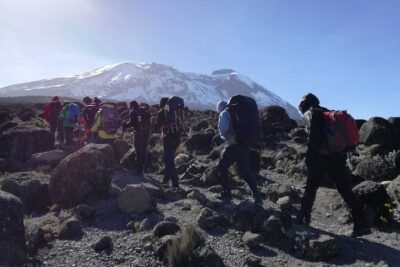
Multi-Day Tour RONGAI Route Kilimanjaro Trekking
Read our review →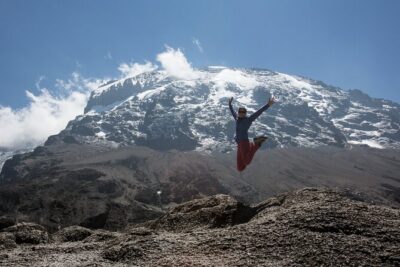
Browse the lists this tour appears in