
Reviewed · RONGAI ROUTE CLIMBS
Kilimanjaro Climb by Rongai Route 6 days
The quiet side of Kilimanjaro rewards steady walkers. This eight-day Hilbas Tours program uses the Rongai Route, the mountain’s only approach from the north, near the Kenyan border. I like its early wilderness feel and its lower rainfall compared with southern routes, especially if you are considering a climb during the rainy season. I also like that the price includes airport transfers, two hotel nights, park fees, meals, tents, guides, porters, and rescue fees. The main drawback is the summit day: 15 hours of walking, with a midnight start and a steep final push above 5,600 meters.
This is not a casual trek, despite the moderate fitness rating shown in the tour details. The route covers forest, moorland, alpine desert, and the Arctic zone before reaching Uhuru Peak at 5,895 meters. A maximum group size of 15 keeps the trip from feeling like a large expedition, but you still need to accept shared rooms, shared tents, early mornings, and basic mountain camping.
In This Review
- Key points to know before booking
- Why the Rongai Route feels different
- Arrival in Moshi and the first hotel night
- Day 2: From Nalemuru village to the pine forest
- Day 3: Moorland, Cave Two, and Mawenzi views
- Day 4: Mawenzi Tarn and a useful afternoon
- Day 5: Across the Saddle to Kibo Hut
- Day 6: The midnight push to Uhuru Peak
- Day 7: The Marangu descent and coffee country
- Food, tents, and crew support
- Who will get the most from this climb?
- Is $2,282 a fair value?
- Should you book the Rongai Route?
- FAQ
- Where does the climb begin?
- How long is the complete experience?
- How much does the climb cost?
- Is airport pickup included?
- Are hotel nights included?
- How many people can join the group?
- Are meals included on the mountain?
- Can dietary requirements be accommodated?
- Is personal climbing gear included?
- How difficult is the summit day?
Key points to know before booking
- The Rongai Route approaches from the north: You begin near Nalemuru village and finish through Marangu Gate on the southern side.
- Rainy-season appeal: The northern side of Kilimanjaro usually receives less rain than the southern routes.
- Two nights of hotel lodging are included: One comes before the climb and one after you return.
- Summit day is the real test: Expect about 21 kilometers and 15 hours, beginning around midnight.
- A full mountain support team is included: Guides, assistant guides, cooks, camp staff, and porters handle the main camp duties.
- Food needs can be arranged: Vegetarian, vegan, lactose-free, gluten-free, halal, and other meal plans are available.
Why the Rongai Route feels different
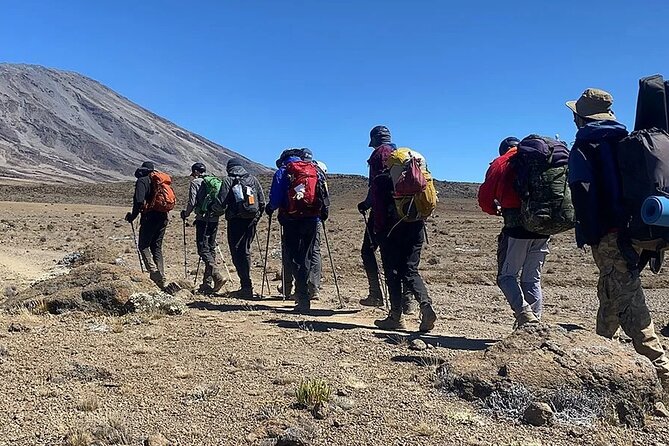
Kilimanjaro has several established routes, but Rongai has a clear identity. It is the only route that reaches the mountain from the north, making the first days feel more remote than the popular Marangu approach. You begin near the Kenyan border, walking from Nalemuru village through farm fields before entering pine forest.
That opening is one of the route’s best features. The trail first passes maize, beans, and potatoes, then moves into a forest zone where black-and-white colobus monkeys may be seen. The change from cultivated land to mountain forest gives you a real sense of leaving ordinary life behind.
Rongai is also a sensible choice for a wetter time of year. The north side receives substantially less precipitation than Kilimanjaro’s southern slopes. That does not mean you should expect dry conditions every day, but it does improve the odds of a more comfortable start.
The route later crosses toward Mawenzi Peak and joins the southern descent near Kibo Hut. This gives you changing views and avoids returning along the same path. It also means you experience both the quieter northern approach and the forested Marangu descent.
More Kilimanjaro climbs:
- Kilimanjaro climb by Lemosho Route (7-day)
★ 5.0 · 651 reviews - Kilimanjaro climb, Machame Route (7-day)
★ 5.0 · 262 reviews - Kilimanjaro Climbing Lemosho Route 8 Days.
★ 5.0 · 186 reviews
Arrival in Moshi and the first hotel night
Your trip begins with pickup at Kilimanjaro International Airport. A Hilbas representative transfers you to the hotel, where you have time for a hot shower, a comfortable bed, a briefing, and a gear check.
This first night matters more than it may seem. You are not walking straight from an airplane onto the mountain. The gear check gives you a chance to identify missing clothing or equipment before the trail begins. Personal items such as hiking clothes, footwear, and sleeping bags are not included, but rental equipment can be arranged.
The climb price is listed at $2,282 per person. That is a substantial amount, but it covers much more than a guide and a trail permit. Park fees, camping fees, vehicle fees, rescue fees, mountain entry, meals, tents, support staff, and airport transfers are all part of the package. You still need to budget for flights, a Tanzania visa, travel insurance, personal spending, equipment rentals, and crew tips.
Two people share a hotel room and a tent unless you pay extra for single accommodation. If you prefer privacy, ask about the extra charge before booking.
Day 2: From Nalemuru village to the pine forest
The first mountain day begins with transport from the hotel to Marangu Gate. This is where registration takes place and where the guides and porters prepare the equipment. You then continue by vehicle to Rongai Gate, also called Nalemuru, a transfer that takes about three hours.
Lunch is served on the way to the gate or at the gate before the walk begins. From there, the route covers about 8 kilometers in roughly six hours, rising from 1,900 meters to 2,626 meters.
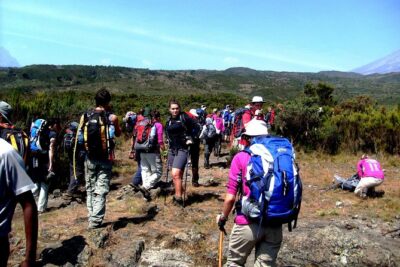
The walking is gentle by Kilimanjaro standards. The path winds through fields of maize, beans, and potatoes, then enters pine forest. This is a good first day because the gain in height is moderate and the scenery changes slowly rather than all at once.
The forest is also a reminder that Kilimanjaro is not only a summit. Black-and-white colobus monkeys and other wildlife may be found here, though sightings are never guaranteed. The trail’s quiet northern setting is the main reward.
You camp at the end of the day. Two hikers share a tent, while the crew carries the main mountain equipment and prepares the camp.
Day 3: Moorland, Cave Two, and Mawenzi views
After breakfast, you continue through moorland toward the second cave. The day covers about 12 kilometers and takes around seven hours, moving from 2,626 meters to roughly 3,600 meters before dropping slightly to a campsite at 3,450 meters.
Lunch takes place at the second cave. After eating, the route turns southeast, crossing a small path with repeated ups and downs through the moorland. The day’s destination is a sheltered valley with views toward Mawenzi Peak.
This is an important acclimatization day. You gain considerable height, but the overnight stop is slightly lower than the day’s highest point. That climb-high, sleep-lower pattern is useful on a high-altitude mountain.
The advice here is simple: walk slowly even if you feel strong. Kilimanjaro rewards patience more than speed. The route description repeatedly stresses a slow pace, and you should treat that as a practical safety instruction, not a slogan.
More Rongai Route climbs:
- Kilimanjaro climb, Rongai Route (7-day)
★ 5.0 · 40 reviews - Kilimanjaro climb, Rongai Route (6-day)
★ 5.0 · 15 reviews - Mount Kilimanjaro Rongai Route
★ 5.0 · 10 reviews - 6-Day Rongai Route Trek in Mount Kilimanjaro
★ 5.0 · 8 reviews
Day 4: Mawenzi Tarn and a useful afternoon
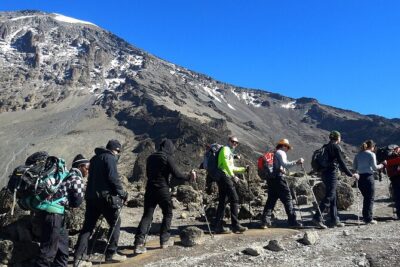
Day four is shorter in distance, about 5 kilometers, but it is steep. You climb from 3,600 meters to 4,300 meters through the alpine desert zone, following grassy slopes toward Mawenzi Tarn Hut.
You reach camp in time for lunch, leaving the afternoon free to explore the surrounding area and acclimatize. That open time is valuable. High-altitude climbing is not improved by rushing from one camp to the next, and a slower day gives your body more time to adjust.
The views from this part of the route are a major attraction. You see Kilimanjaro National Park from a different angle, with Mawenzi Peak close by. The mountain’s two major summits, Kibo and Mawenzi, give the route a dramatic setting before the final approach.
Do not mistake the short distance for an easy day. At 4,300 meters, even a short uphill walk can feel tiring. You should use the afternoon to rest, drink, eat, and prepare your clothing for colder conditions.
Day 5: Across the Saddle to Kibo Hut
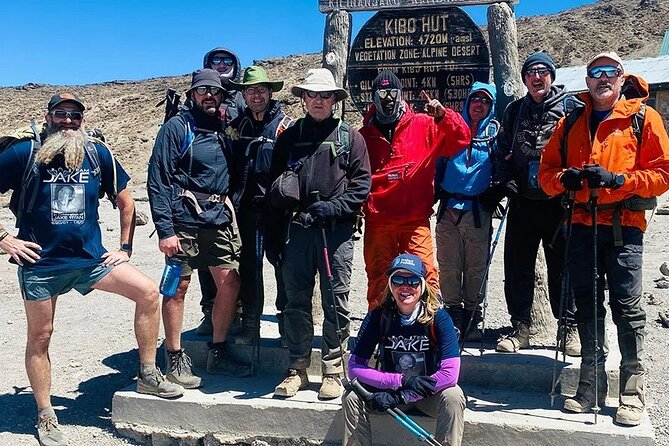
The fifth day crosses the Saddle, the broad alpine desert between Mawenzi and Kibo. The route covers 10 kilometers in about six hours, rising to Kibo Hut at 4,720 meters.
The terrain is dry and open, with wide mountain views but little shelter. Depending on your pace, lunch may be packed for the route or served hot at Kibo Hut. This detail matters because a slower group may reach the hut later, while a faster group may stop along the way.
At Kibo Hut, you receive an early dinner and go to bed. The rest is short because the summit attempt begins around midnight. This is the quietest and most mentally demanding evening of the climb. You have walked for days, the air is thin, and the biggest effort is still ahead.
Pack your summit clothing where you can reach it. The supplied details do not specify the full personal gear list, so confirm the needed layers, gloves, headwear, footwear, and sleeping bag with Hilbas before arrival.
Day 6: The midnight push to Uhuru Peak
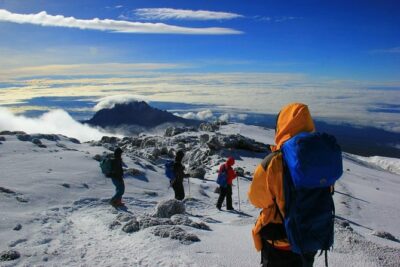
Summit day begins around 11:00 p.m. with tea and biscuits. The climb starts near midnight, following switchbacks up volcanic scree toward William Point, Hans Meyer Cave, and Gillman’s Point on the crater rim.
The full day is listed at about 21 kilometers and 15 hours. That figure includes the climb to the summit and the long descent afterward, so you should prepare for a very long period on your feet.
The section toward Gillman’s Point is steep and covered with loose stone. It demands both physical effort and mental control. Progress can feel slow in the darkness, and the altitude makes each step harder than the distance suggests.
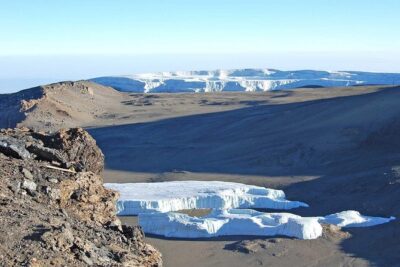
From Gillman’s Point, the route continues around the crater rim toward Uhuru Peak, at 5,895 meters and the highest point in Africa. The supplied schedule is abbreviated during this section, but the stated goal is clear: continue to the summit, then descend to the lower camp at 3,720 meters.
You should think of the summit attempt as a serious high-altitude outing, not simply the last item on a sightseeing schedule. The guides carry oxygen cylinders, oximeters, and medical kits, and all guides hold Wilderness First Aid certifications. Those provisions do not remove the risks of altitude, but they show that safety support is built into the operation.
The crew’s role is central here. The guide leads the pace and route, while porters, cooks, assistant guides, and camp staff keep the group supplied. Past climbers have singled out guides including Hillary, Emmanuel, Felix, and Elinariki, with particular praise for Hillary’s calm encouragement and extensive experience on the mountain. You should still ask which guides are assigned to your departure, since staffing can vary.
Day 7: The Marangu descent and coffee country
After an early breakfast, you descend from 3,720 meters to 2,720 meters, covering about 19 kilometers in eight hours. The path passes Mandara Hut, then continues through moorland and rainforest to Marangu Gate.
The scenery changes quickly. Tall trees, flowers, and birds return as you lose height, and the forest feels very different from the dry upper mountain. The route ends at Marangu Gate, where climbers sign out and receive completion certificates.
A Hilbas driver then takes you back to the hotel. Along the way, you pass coffee and banana farms around Marangu villages. This final drive adds a useful local touch after several days spent above the tree line.
This is still a demanding day. A long descent after the summit can be hard on tired legs, and the 19-kilometer distance is not a gentle stroll. The hotel night afterward is well timed and gives you a proper place to shower, sleep, and recover.
Food, tents, and crew support
Three standard meals are served each day on the mountain: breakfast, lunch, and dinner. Coffee, tea, Milo tea, water, and other listed drinks are included. Meal plans can be adapted for vegetarian, vegan, lactose-free, gluten-free, halal, and other dietary needs.
A cook prepares the food, while the group uses a dining tent with tables, chairs, crockery, and other shared equipment. This is a meaningful comfort at altitude. You are not eating every meal from your lap inside a cramped sleeping tent.
Two hikers share a tent, except on solo climbs. The support crew includes professional English-speaking mountain guides licensed by Kilimanjaro National Park, assistant guides, camp masters, porters, cooks, and other staff. Their work lets you focus on walking, hydration, rest, and personal gear.
Tips for the crew are not included. You should plan for that separate expense and ask Hilbas for current guidance on customary tipping.
Who will get the most from this climb?
I would choose this route if you want a quieter start, prefer a north-side approach, or are planning to climb during the rainy season. It also suits you if you like the idea of seeing the mountain from two sides rather than walking up and down the same route.
You need a moderate level of physical fitness at minimum, but I would personally prepare beyond that label. The route includes seven mountain days, a 15-hour summit day, steep scree, long descents, and sleeping at 4,720 meters before the final attempt.
This trip is a good fit for people who accept shared tents, basic camping, early starts, and a structured group schedule. It is less suitable if you want private rooms, short hiking days, or a relaxed holiday with only a little walking.
The maximum group size is 15. That keeps the operation fairly contained, though the actual number on your departure is not provided.
Is $2,282 a fair value?
The price makes more sense once you count what is included. You receive airport pickup and drop-off, hotel accommodation before and after the climb, vehicle transfers, park and camping fees, rescue fees, a tent, meals, drinks, guides, porters, cooks, group equipment, oxygen, oximeters, and medical kits.
Flights, visas, travel insurance, personal gear, laundry, telephone use, souvenirs, and tips remain your responsibility. Single accommodation also costs extra.
For a fully supported Kilimanjaro climb, the package offers strong practical value because many large expenses are bundled into one price. The key question is not just cost. It is whether you are comfortable with shared accommodation and the physical demands of the Rongai schedule.
You can cancel for a full refund at least six full days before the local start time. Cancellation two to six days before departure provides a 50 percent refund, while cancellation within two days is nonrefundable.
Should you book the Rongai Route?
Book this climb if you want a northern approach, a quieter opening, built-in hotel nights, and a large support team that includes trained guides and cooks. The lower-rainfall side of Kilimanjaro is especially appealing during the wet season.
I would not book it casually. The summit day is long, the upper mountain is cold and exposed, and the itinerary requires you to sleep in tents and share rooms unless you pay more. Confirm your personal gear, dietary needs, single-room options, crew tipping expectations, and assigned guides before paying.
If you are ready for a serious mountain challenge and value route variety over luxury, this is a well-rounded Kilimanjaro plan. The strongest reasons to choose it are the remote Rongai approach, the Mawenzi views, the all-inclusive support structure, and the calm, experienced guiding associated with the Hilbas team.
FAQ
Where does the climb begin?
The mountain portion begins near Nalemuru village at Rongai Gate on Kilimanjaro’s northern side, close to the Kenyan border.
How long is the complete experience?
The complete program lasts about eight days, including arrival, hotel accommodation before the climb, six mountain days, the descent, and the departure transfer.
How much does the climb cost?
The listed price is $2,282 per person.
Is airport pickup included?
Yes. Transportation from Kilimanjaro International Airport is included for both pickup and drop-off.
Are hotel nights included?
Yes. Two hotel nights are included, one before and one after the climb. Two people share a room unless you pay extra for single accommodation.
How many people can join the group?
The maximum group size is 15 travelers.
Are meals included on the mountain?
Yes. Breakfast, lunch, and dinner are included on the mountain, along with listed drinks such as coffee, tea, Milo tea, and water.
Can dietary requirements be accommodated?
Yes. Vegetarian, vegan, lactose-free, gluten-free, halal, and other meal plans are available.
Is personal climbing gear included?
No. Personal gear such as hiking clothes, footwear, and sleeping bags is not included. Equipment rental is available.
How difficult is the summit day?
The summit day covers about 21 kilometers and takes around 15 hours. It begins around midnight and includes a steep section over volcanic scree before reaching the crater rim and Uhuru Peak.
Just added in Moshi
- Zanzibar: Stone Town tour and Nakupenda beach with Lunch★ 5.0 · 1 review
- machame route★ 5.0 · 16 reviews
- day trip lake manyara★ 5.0 · 2 reviews
- Mt Kilimanjaro 6 days Marangu route hike★ 5.0 · 3 reviews
- Private Cycle to Kilimanjaro Bike Park Safari★ 5.0 · 6 reviews
- West Kilimanjaro cycling Adventures★ 4.5 · 8 reviews
- Wildlife Extravaganza: Manyara, Tarangire & Ngorongoro in 3 Days★ 5.0 · 3 reviews
- 3 Days Private E-Bike Tour in West Kilimanjaro★ 5.0 · 3 reviews
Rongai Route Climbs, compared.
Rongai Route 6 Days 5 Nights/Kilimanjaro climb
Read our review →
6 Days Kilimanjaro climbing | Hiking Tour via the Rongai Route
Read our review →
6 Days Mount Kilimanjaro Climbing via Rongai Route
Read our review →Browse the lists this tour appears in