
Reviewed · RONGAI ROUTE CLIMBS
Kilimanjaro climb, Rongai Route (6-day)
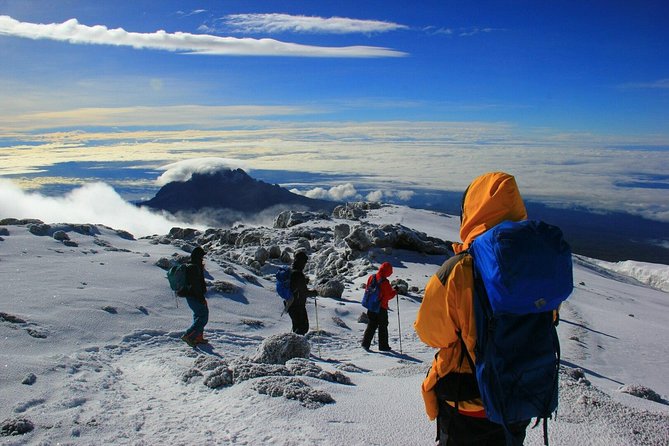
Africa’s highest summit rewards steady feet. Altezza Travel’s six-day Rongai Route climb gives you a quieter way up Kilimanjaro, with northern-slope scenery, small-group attention, and a capable mountain crew handling the heavy work. I especially like the route’s lower traffic and the careful safety setup, including medical checks, oximeters, oxygen tanks, and Wilderness First Responder guides.
I also like the practical comfort here: a hotel before and after the climb, proper North Face VE-25 tents, a dining tent, hot drinks, and three filling meals each day. The main catch is the schedule. Six climbing days is short for Kilimanjaro, so this route suits fit regular hikers much better than first-time high-altitude walkers.
In This Review
- Key points before you book
- Why the Rongai Route feels different
- Arrival in Moshi and the first night
- Day 1 on the mountain: Nalemuru Gate to Simba Camp
- Day 2: Simba Camp to Kikilewa Camp
- Day 3: Mawenzi Tarn and the value of a short acclimatization hike
- Day 4: School Hut at 4,715 meters
- Summit night: School Hut to Uhuru Peak
- The descent through Horombo to Marangu Gate
- Camping, food, and daily comfort
- Safety and the role of the mountain crew
- Is $3,064 a fair price?
- Who should choose this climb?
- Booking details and cancellation
- Should you book the six-day Rongai Route?
- FAQ
- How long is the full Altezza Kilimanjaro experience?
- What is the highest point reached?
- Where does the climb begin?
- Where does the descent finish?
- Are meals included?
- Is airport transportation included?
- Do I need to bring my own hiking equipment?
Key points before you book
- Rongai is one of Kilimanjaro’s quieter routes: You approach from the northern side and descend through the Marangu route.
- The highest camp reaches 4,715 meters: School Hut is your staging point before the night ascent to Uhuru Peak at 5,895 meters.
- The summit night is the hard part: You leave School Hut at night, reach the summit, rest briefly, then continue down to Horombo Camp.
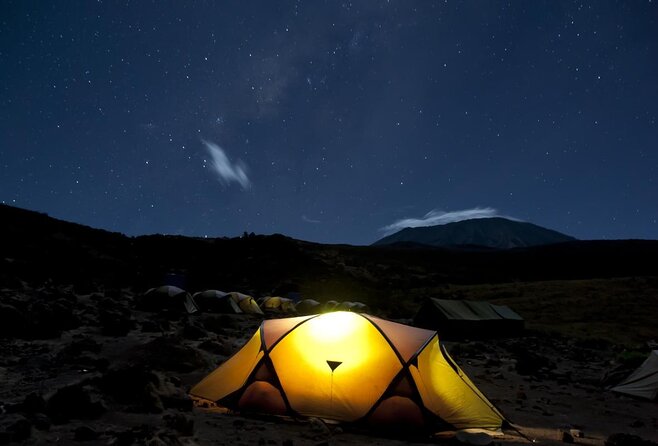
- Your crew carries the camp equipment: Porters handle gear, while cooks, camp staff, and guides manage camp life.
- The $3,064 price covers a lot: Park charges, airport transfers, hotel nights, tents, meals, guides, crew, and medical equipment are included.
- Plan for personal costs: International flights, visas, insurance, personal gear, crew tips, and some hotel meals are extra.
Why the Rongai Route feels different
Rongai begins near the Kenyan border on Kilimanjaro’s northern side. It is known here as one of the least used routes, which gives you more space and a stronger sense of wilderness than a busy trail can provide.
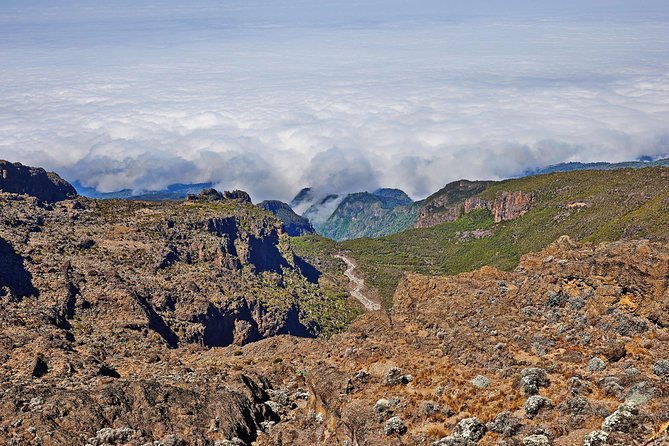
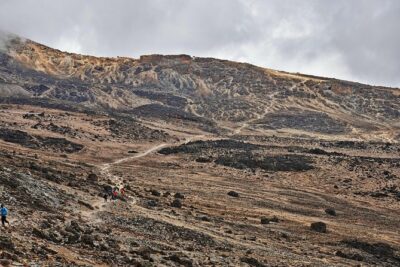
The first section passes through coniferous forest. As you climb, the vegetation thins and the mountain opens into rocky semidesert. By the time you reach School Hut, the setting feels stark and high, with Mawenzi and Kibo providing the drama.
You do not return by the same path. The descent uses the Marangu side, taking you toward Horombo Camp and then Marangu Gate. That change of scenery is useful on a six-day schedule because each stretch feels distinct.
There is a tradeoff. Rongai is shorter than longer routes that allow extra nights for acclimatization. You gain time and avoid a busier approach, but you have fewer easy days for your body to adjust. Previous high-altitude experience is helpful, though it does not guarantee an easy summit.
More Kilimanjaro climbs:
- Kilimanjaro climb by Lemosho Route (7-day)
★ 5.0 · 651 reviews - Kilimanjaro climb, Machame Route (7-day)
★ 5.0 · 262 reviews - Kilimanjaro Climbing Lemosho Route 8 Days.
★ 5.0 · 186 reviews
Arrival in Moshi and the first night
Your trip begins with pickup at Kilimanjaro International Airport. An Altezza representative meets you at JRO and takes you to Aishi Machame Hotel in the foothills of the mountain.
The hotel stay is not just a place to sleep. It gives you a shower, internet access, a swimming pool, hot water, and a chance to sort your gear before the trail. Check-in begins at 2:00 PM, and an evening briefing helps confirm that you have the clothing and equipment needed for the climb.
This first night also gives you a chance to ask direct questions about pace, food, sleeping arrangements, and summit day. Use it well. A six-day route leaves little room for poor preparation.
Breakfast is included at the hotel. Lunch and dinner there are not included, with an average cost of about $15 per person for each meal. That is a modest extra, but you should budget for it.
Day 1 on the mountain: Nalemuru Gate to Simba Camp
In the morning, your guide and support crew meet you at the hotel. A vehicle takes you to Nalemuru Gate, the northern entrance to Kilimanjaro National Park, at about 2,020 meters.
Park permits and registration come first. The operator also registers climbers with a search and rescue service, an important part of a well-managed mountain trip. Once the formalities are complete, you start walking toward Simba Camp at 2,625 meters.
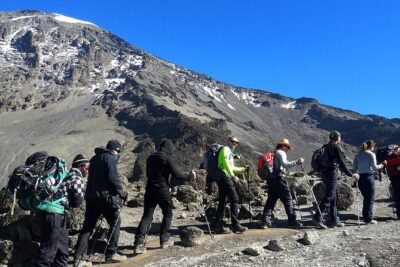
This is a moderate day through coniferous forest. The distance and elevation gain are manageable, but you should not treat the opening hours as a race. The advice to walk slowly matters from the beginning. You are saving energy for the upper mountain, not trying to prove anything before lunch.
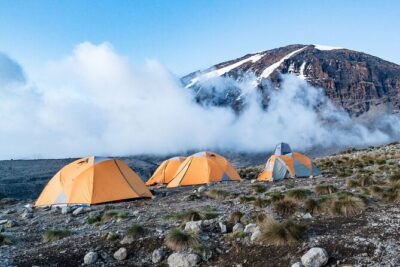
At camp, the mountain crew prepares the tents and camp equipment. Two people share a North Face VE-25 tent unless you pay for a single arrangement. You also have access to a dining tent, sleeping pads, tables, chairs, crockery, and cutlery.
Day 2: Simba Camp to Kikilewa Camp
The second walking day takes you from Simba Camp to Kikilewa Camp at 3,630 meters. It is more demanding than the first day, with a clear jump in altitude.
One reward is the view toward Kibo Volcano, Kilimanjaro’s main summit cone. Clouds can hide it, so do not count on a perfect view, but when the skies open, the sight gives you a useful sense of the mountain still ahead.
Once you reach camp, full rest is the smart move. This is not the place for extra exploring just because you arrive with energy left. Drink, eat, and let the crew take care of camp while you prepare for the next increase in height.
The short schedule begins to show here. You are climbing high each day, and your body needs to adjust while you continue moving.
More Rongai Route climbs:
- Kilimanjaro climb, Rongai Route (7-day)
★ 5.0 · 40 reviews - Mount Kilimanjaro Rongai Route
★ 5.0 · 10 reviews - 6-Day Rongai Route Trek in Mount Kilimanjaro
★ 5.0 · 8 reviews - Kilimanjaro Rongai Route 5 Days Trekking
★ 5.0 · 1 review
Day 3: Mawenzi Tarn and the value of a short acclimatization hike
You leave early for Mawenzi Tarn Camp, positioned at the foot of Mawenzi, Kilimanjaro’s sharp secondary summit. This is one of the most memorable camp settings on the route because Mawenzi gives the area a jagged, sculpted profile quite unlike Kibo’s broad volcanic form.
After arriving, you eat lunch and rest for about two hours. Then comes an acclimatization hike with roughly 200 meters of additional gain before you descend to camp for dinner.
This small outing is more important than it looks. The basic idea is climb a little higher, then sleep lower. You should take it seriously and keep the pace easy. It helps your body respond to altitude before the summit push.
Mawenzi Tarn is also a good test of how you are coping. A headache, nausea, unusual tiredness, or poor coordination should be reported to your guide. The crew performs medical checks, and the guides carry medical kits and oxygen equipment, but early communication remains your best protection.
Day 4: School Hut at 4,715 meters
The trail to School Hut Camp takes you into rocky semidesert. Plant life becomes sparse, the air feels thinner, and the mountain begins to look less like a long hike and more like a serious high-altitude climb.
The walking itself is described as manageable, but the elevation is the real issue. Keep a gentle pace and protect your strength. School Hut sits at 4,715 meters, and you will spend the night there before the summit attempt.
Once you arrive, the sensible plan is simple: eat, drink, avoid unnecessary activity, and sleep if you can. You will leave during the night for Uhuru Peak.
The schedule can feel strange because you may be trying to sleep in the afternoon or evening before a major effort. Do not worry if sleep is imperfect. Resting quietly still helps.
Summit night: School Hut to Uhuru Peak
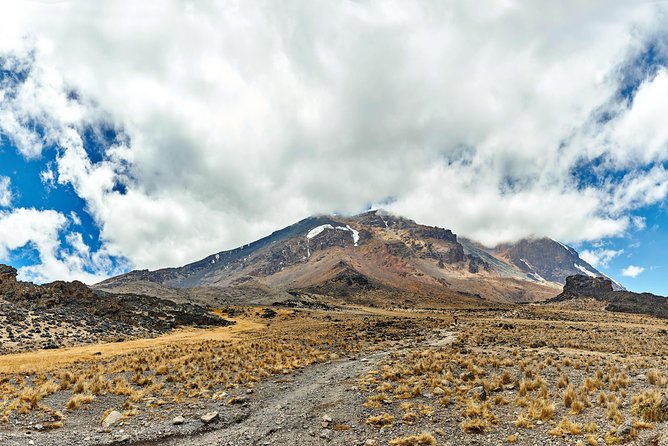
The summit attempt begins at night. From School Hut at 4,715 meters, you climb to Uhuru Peak at 5,895 meters.
Physically, the route is described as moderate. Altitude makes it much harder than the words suggest. Cold, darkness, tired legs, and thin air all arrive together. The climb is less about speed than staying calm and taking one careful step at a time.
A major strength of this program is the guide support. Each pair of climbers is accompanied by its own guide during the summit section, allowing the guide to watch stamina and mental condition closely. Guide teams connected with this experience include Shabane, Kelvin, Emmanuel, Joseph, Gerald, Adam, Peter, Richard, Stanford, and Innocent.
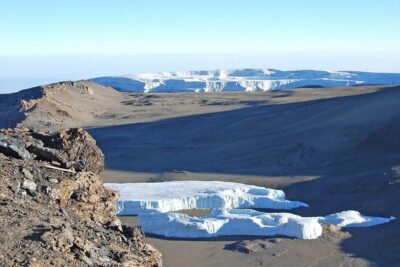
At Uhuru Peak, you reach the highest point in Africa at 5,895 meters. If conditions allow, you may descend to a nearby glacier after the summit. That is optional, and you should decide based on how you feel rather than treating it as another obligation.
The descent continues to Kibo Camp, where you rest for about two hours. Then you keep going to Horombo Camp at 3,720 meters. This is a very long day. The summit is only half the work, and the continued descent can test your legs more than expected.
The descent through Horombo to Marangu Gate
After a warm breakfast at Horombo, you descend to Marangu Gate at 1,860 meters. The walking day takes about five hours, making it much easier than summit day, though tired knees and feet may slow you down.
The change from Rongai to Marangu gives the trip a satisfying point-to-point shape. You enter from the north and leave on the southeastern side, seeing more than one face of Kilimanjaro.
At the finish, the group gathers to celebrate. Certificates are presented at the Altezza office, and you are transferred back to Aishi Machame Hotel. That post-climb night is included and is more valuable than it may sound. After several nights in a tent, a shower, bed, internet, and a swimming pool feel like proper rewards.
Camping, food, and daily comfort
You sleep two people per tent, with single accommodation available for an extra charge. The tents are North Face VE-25 models, a serious choice for mountain conditions, and the operator supplies group equipment such as sleeping pads, tables, chairs, dining shelter, crockery, and cutlery.
Three meals are served each day on the mountain. The menu includes energy-rich food with choices for each meal, plus tea, coffee, juices, soda, and other drinks. Vegetarian, vegan, lactose-free, gluten-free, halal, and other meal plans are available.
Food quality matters on a climb like this. You need to eat even when altitude reduces your appetite, and having familiar choices can make that easier. The cooks receive particularly warm praise, including a chef named Justin, who prepared meals that one climber compared favorably with food on luxury trips.
The exact menu is not provided, so you should not expect a restaurant-style selection. Think practical, warm, filling mountain food served by a dedicated kitchen crew.
Safety and the role of the mountain crew
The price includes certified Wilderness First Responder guides, professional guides, porters, camp masters, cooks, medical kits, oxygen tanks, oximeters, and medical checks.
That is a strong safety package, but no equipment removes the risk of high altitude. You still need mountaineering insurance covering trekking up to 6,000 meters, which is strongly recommended and not included.
The crew structure also changes the feel of the climb. Porters carry the equipment, while you carry only your personal day needs. Camp staff set up the tents and dining area, so your energy goes toward walking, eating, resting, and staying healthy.
Tip money is optional and based on your satisfaction. It is wise to plan for it in your overall budget because a large support team does much of the work that makes the climb possible.
Is $3,064 a fair price?
At $3,064 per person, this is not a bargain trek. It is also not a bare-bones price. The cost includes airport pickup and drop-off, all ground transport, two hotel nights, park fees, mountain tents, group equipment, meals, drinks, guides, porters, cooks, camp staff, medical checks, and safety equipment.
The park fees alone are a major part of any Kilimanjaro climb. Adding hotel rooms, transfers, food, and a full mountain crew makes the package easier to judge as a complete service rather than a simple trail fee.
You still need to pay for flights, a Tanzanian visa, personal clothing and gear, a sleeping bag, insurance, tips, and meals at the hotel beyond breakfast. Most nationals pay $50 for a visa at JRO, while US passport holders pay $100. Gear hire is available if you do not want to buy every item.
For a private group, the price may make sense if you value organization, strong safety support, and comfort at camp. Group discounts are offered, but the specific discount is not stated, so ask for the current price before booking.
Who should choose this climb?
I would recommend it to a fit hiker who has a tough schedule and wants a less-used route. It is particularly suitable if you have previous high-altitude experience or are comfortable with several consecutive days of uphill walking.
You should think twice if this is your first serious mountain trip and you have no experience above normal hiking elevations. A longer Kilimanjaro route may give you more time to adjust, though this six-day plan can work well for people who arrive prepared and respond well to altitude.
The private format is useful for couples, families, or groups of friends. One group included three family members on a private climb, and another group used the route for a meaningful family memorial. The experience can carry personal importance as well as physical challenge.
Booking details and cancellation
Pickup and drop-off at JRO are included, and the listed start time is 9:00 AM. Confirmation is provided when you book. The activity is private, so only your own group participates.
You can cancel up to 24 hours before the local start time for a full refund. Cancellations or changes made less than 24 hours before the start are not accepted for a refund.
Hotel checkout is at 11:00 AM on the final day. If your flight leaves later, a late checkout may be arranged for an extra fee.
Should you book the six-day Rongai Route?
I would book this climb if you want a quieter approach, strong logistical support, and a complete package that includes the costly mountain essentials. The guides, porters, food team, and safety systems receive especially strong praise, and the pre- and post-climb hotel stays make the trip more comfortable.
I would not choose it simply because it is shorter. The six-day schedule demands steady fitness and sensible pacing, and the summit day is long because you climb to Uhuru Peak, rest briefly, then continue down to Horombo.
Before paying, confirm the current group discount, ask about gear hire, check the exact hotel arrangements, and buy insurance that covers 6,000 meters. If those pieces fit your plans, Altezza’s Rongai Route offers a focused, well-supported way to reach Kilimanjaro’s summit without spending extra days on the mountain.
FAQ
How long is the full Altezza Kilimanjaro experience?
The full program lasts approximately eight days, including airport transfers, two hotel nights, and six days connected with the mountain climb.
What is the highest point reached?
The summit is Uhuru Peak at 5,895 meters.
Where does the climb begin?
The climb begins at Nalemuru Gate, the northern entrance to Kilimanjaro National Park, at approximately 2,020 meters.
Where does the descent finish?
The descent finishes at Marangu Gate at approximately 1,860 meters.
Are meals included?
Seven breakfasts, five lunches, and five dinners are included. Mountain meals and drinks are provided, while hotel breakfast is included. Hotel lunch and dinner cost extra.
Is airport transportation included?
Yes. Pickup and drop-off at Kilimanjaro International Airport, along with all ground transportation, are included.
Do I need to bring my own hiking equipment?
Personal equipment such as hiking clothes, boots, and a sleeping bag is not included. Gear is available for hire, and single hotel and tent arrangements cost extra.
Just added in Moshi
- THE BEST 2 DAYS ON TREK – MARANGU ROUTE TOUR ADVENTURES★ 5.0 · 1 review
- Mount Kilimanjaro National Park Day Trip★ 5.0 · 7 reviews
- Mount Kilimanjaro Climbing in Tanzania Full-Day Trip★ 5.0 · 1 review
- Mount Kilimanjaro Day Hike – All-Inclusive, No Hidden Fees★ 4.0 · 7 reviews
- Mount Kilimanjaro Trekking Tour – Climb with Local Guides★ 5.0 · 1 review
- Mount Kilimanjaro: 7 Days Hike Lemosho Route★ 5.0 · 1 review
- Moshi:Chemka Hot Springs, Materuni Waterfalls & Coffee Tour★ 5.0 · 1 review
- Moshi Town: Walking Tour: Theme Urban lifestyle★ 3.1 · 4 reviews
Rongai Route Climbs, compared.
6 Day Private Kilimanjaro Climbing Via Rongai Route
Read our review →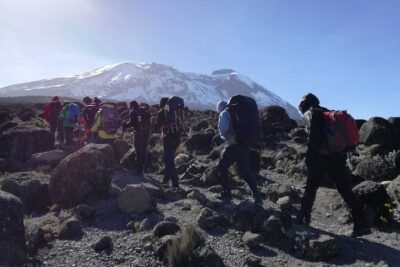
Multi-Day Tour RONGAI Route Kilimanjaro Trekking
Read our review →
Browse the lists this tour appears in