
Reviewed · RONGAI ROUTE CLIMBS
Multi-Day Tour RONGAI Route Kilimanjaro Trekking
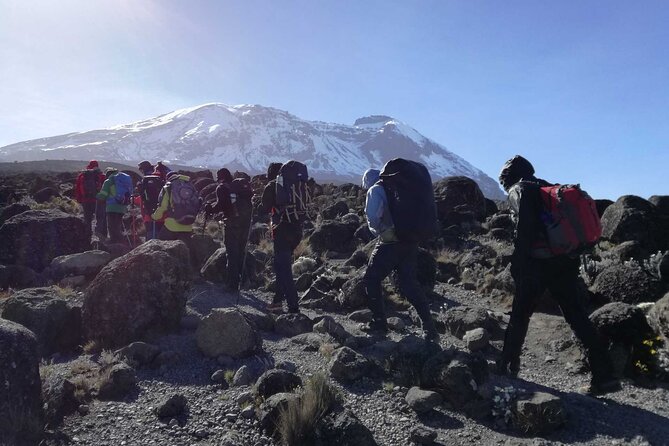
Kilimanjaro feels wilder from the north. This six-day Rongai trek approaches Africa’s highest mountain from near the Kenyan border, using a quieter trail with a gradual climb and a descent through the Marangu route. I especially like the low crowd levels and the route’s suitability during rainy periods, when Kilimanjaro’s northern side usually receives less rain.
I also like that this is a private climb, so only your group participates, and that the price includes park fees, rescue fees, meals, tents, purified water, and mountain staff. The main caution is the schedule: six days leaves no extra acclimatization day at Mawenzi Tarn, making the summit attempt more demanding than the seven-day version.
In This Review
- Key points before you book
- Why the Rongai route feels different
- Day 1: From Arusha to Rongai Cave
- Day 2: Heathland and a cold night at Kikelewa Cave
- Day 3: The short, steep climb to Mawenzi Tarn
- Day 4: Crossing the alpine desert to Kibo Hut
- Day 5: The midnight push to Uhuru Peak
- Day 6: The long descent to Marangu Gate
- What the $2,700 price really covers
- Food, camping, and staff support
- Who should choose this climb?
- Practical details before booking
- Should you book the six-day Rongai route?
- FAQ
- How long is the Rongai Route Kilimanjaro trek?
- Where does the Rongai route begin?
- Is this a private tour?
- Does the six-day version include an acclimatization day at Mawenzi Tarn?
- What is included in the price?
- Are tips included?
- Is the Tanzania visa included?
- What happens at the end of the trek?
Key points before you book
- Rongai is Kilimanjaro’s only northern approach, beginning close to the Kenyan border.
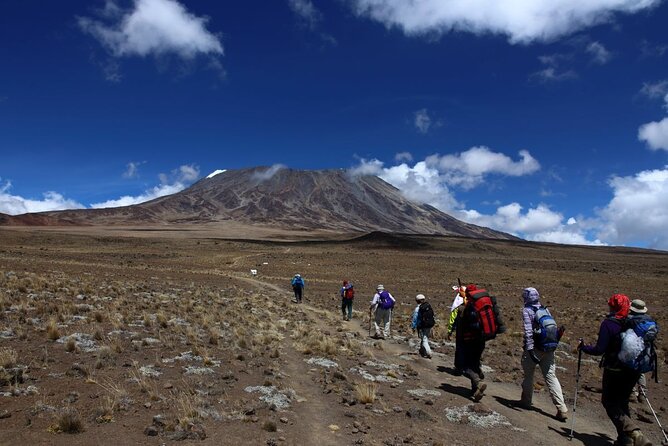
- The route is quieter and more gradual than many other Kilimanjaro trails, a useful choice if you prefer space and a steady pace.
- The six-day plan skips the Mawenzi Tarn acclimatization day, unlike the seven-day option.
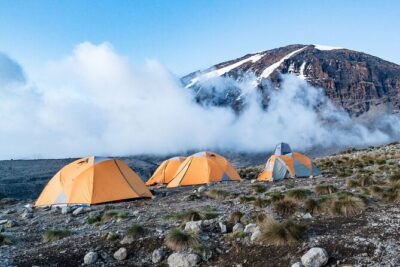
- You sleep in private, waterproof four-season tents, with a mess tent, tables, chairs, and prepared meals.
- Summit night begins around 11:30 p.m., followed by the climb toward Gillman’s Point and Uhuru Peak.
- The $2,700 price includes major mountain costs, but tips and the $50 Tanzania visa are extra.
Why the Rongai route feels different
Most people picture Kilimanjaro as a single trail up and down. It is not. The mountain has several approaches, and Rongai gives you a different first impression from the routes on the southern and western sides.
You begin near the Kenyan border, in a quieter part of the mountain. The trail rises through cornfields and pine forest before reaching the higher heath and alpine desert zones. The scenery is not as varied as on some western routes, but you gain something else: a stronger sense of wilderness and fewer people around you.
I would choose Rongai if you want a calmer walk and do not need a parade of dramatic scenery every few hours. The route has a gradual slope in its early stages, which helps you settle into the altitude and rhythm of mountain walking.
It is also a sensible route to consider during the rainy season. The northern side of Kilimanjaro receives less precipitation, although no mountain route should be treated as reliably dry. You still need proper waterproof clothing and a warm sleeping system.
The route is described as moderately difficult and suitable for people with less backpacking experience. That does not mean easy. Kilimanjaro’s altitude remains the great challenge, and the six-day format gives your body less time to adjust.
More Rongai Route climbs:
- Kilimanjaro Rongai Route 5 Days Trekking
★ 5.0 · 1 review - Rongai 7 days
★ 5.0 · 1 review - 7 Day Rongai Kilimanjaro Summit
★ 5.0 · 1 review
Day 1: From Arusha to Rongai Cave
The day begins with pickup from Arusha after breakfast. The published meeting time is 7:30 p.m., but the hiking schedule describes an early morning departure, so you should confirm the exact pickup time with Mountain Warriors Tours and Safaris before the climb.
The drive first goes to Marangu Gate, at about 1,980 feet? No, the stated elevation is 1,980 meters, roughly 6,500 feet. Here, your guide registers the group with TANAPA, while porters organize and pack the equipment. You then continue by vehicle for about two and a half hours to the Rongai trailhead.
That transfer matters. You are not walking from the Marangu Gate, and the start of the hike is some distance beyond it. Allowing time for registration, packing, and the road transfer will make the morning feel less rushed.
The trail begins through tall cornfields, then moves into pine forest. The climb is gradual, with about 8 kilometers of walking and three to four hours on foot. The stated habitat is rain forest, although the route description also emphasizes the farmland and pine sections at the start.
Your first camp is Rongai Cave, at about 9,300 feet. The staff set up the tent before you arrive, and meals and drinking water are prepared on the mountain. This is a useful arrangement if you have little camping experience. You can concentrate on walking rather than putting up a tent after a tiring afternoon.
Day 2: Heathland and a cold night at Kikelewa Cave
Day two covers two sections: Rongai Cave to Second Cave, then Second Cave to Kikelewa Cave. Each section is about 6 kilometers, with three to four hours of walking listed for each part.
The trail rises from roughly 9,300 feet to 11,300 feet at Second Cave, then continues to about 11,811 feet at Kikelewa Cave. The heath habitat marks a clear change from the forest below. Plants become shorter, the air feels thinner, and the open setting makes the temperature drop more noticeable.
Second Cave is a practical lunch stop. You will have time to eat, rest, and prepare for the second part of the day. Since the total distance is not extreme, the main issue is the altitude gain rather than the number of miles.
Kikelewa Cave is an exposed camp, and temperatures can fall below freezing at night. The private four-season tents and prepared washing water are valuable here, but you still need warm layers, a hat, gloves, and a good sleeping bag. The tour includes tents, but the supplied information does not specify whether sleeping bags are included, so ask before departure.
The mountain kitchen provides breakfast, lunch, dinner, and evening snacks. The food is described as fresh, healthy, nutritious, and served in large portions. That kind of steady fuel matters more than fancy menus at this altitude.
Day 3: The short, steep climb to Mawenzi Tarn
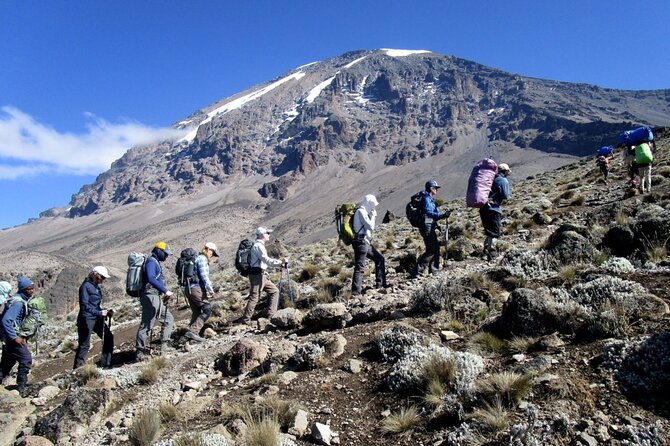
Day three is only about 5 kilometers, with three to four hours of walking, but it is not a soft day. The path becomes short and steep as you climb from Kikelewa Cave to Mawenzi Tarn, at approximately 14,160 feet.
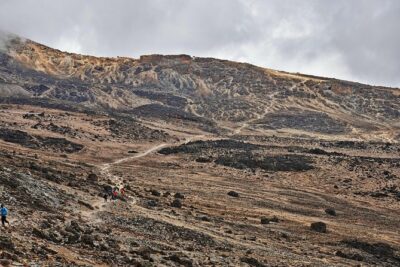
This is the alpine desert zone. You may see giant lobelia and groundsel, unusual plants that make this section feel very different from the forest below. Mawenzi, one of Kilimanjaro’s major volcanic peaks, provides the dramatic setting for camp.
The plan allows time at Mawenzi Tarn for your body to adjust. You can rest, enjoy the sunset, eat a hot dinner, and use the washing water prepared by the staff.
Here is the key difference between the six-day and seven-day versions. The six-day climb does not include an extra acclimatization day at Mawenzi Tarn. If you are new to high-altitude trekking, that missing day may be the most important consideration in the whole booking decision.
The private format can help with pacing and communication, but it cannot remove the effects of altitude. Walk slowly, drink the supplied purified water, and tell your guide if you feel unwell.
More treks in Arusha:
- 8-Day Small-group Lemosho Kilimanjaro Summit Trekking
★ 5.0 · 186 reviews - Mountain Kilimanjaro Day Hike
★ 5.0 · 102 reviews - Private Full Day Hiking Experience to Marangu Route
★ 5.0 · 61 reviews - 4 Days Mount Meru Trekking
★ 5.0 · 55 reviews
Day 4: Crossing the alpine desert to Kibo Hut
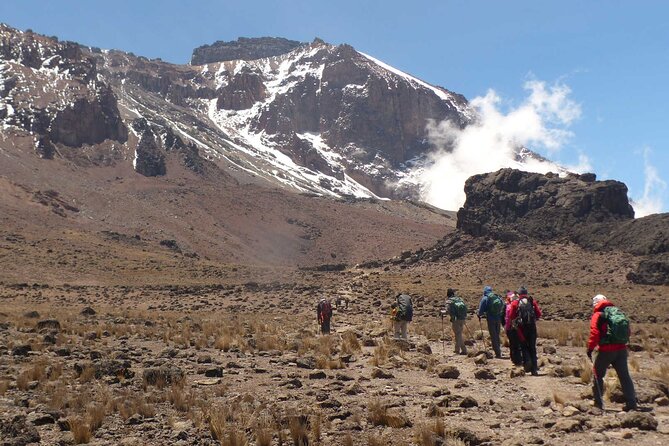
On day four, you leave Mawenzi Tarn and walk about 8 kilometers to Kibo Hut. The climb takes five to six hours and reaches approximately 15,430 feet.
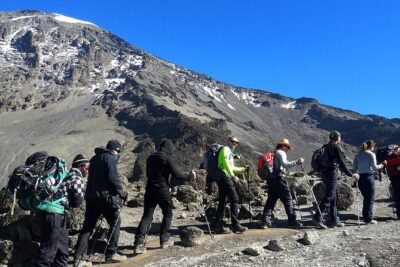
This is another alpine desert section, with little shelter and a serious sense of height. The walking may not be technically difficult, but the thin air makes ordinary slopes feel steep. You should keep your pace controlled and save energy for the night ahead.
Kibo Hut is the staging point for the summit attempt. The guide plans to wake you around 11:30 p.m. for tea and biscuits, so this afternoon should be quiet. Eat, organize your summit clothing, fill your daypack, and rest even if sleep is difficult.
The schedule provided for this six-day version contains a small point that deserves clarification. Day four places you at Kibo Hut, and day five describes the midnight summit attempt. Day six begins with a descent from Horombo Hut to Marangu Gate, but the supplied day five description is cut off during the descent details. Ask the operator exactly where you sleep after the summit and how the Kibo to Horombo section is arranged.
Day 5: The midnight push to Uhuru Peak
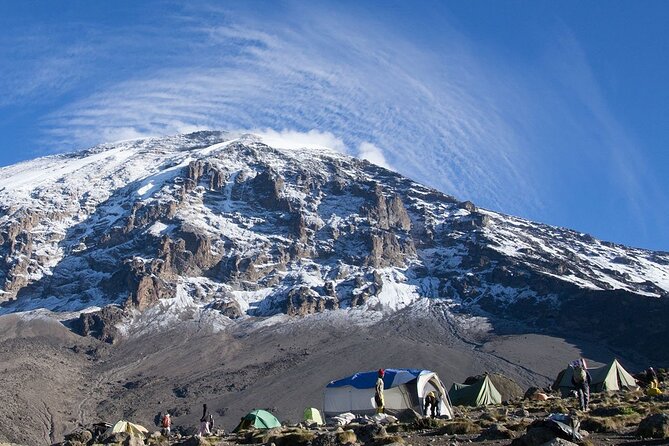
Summit night starts around 11:30 p.m. with tea and biscuits. You set off in darkness, climbing over rocky ground toward Hans Meyer Cave, at about 5,150 meters.
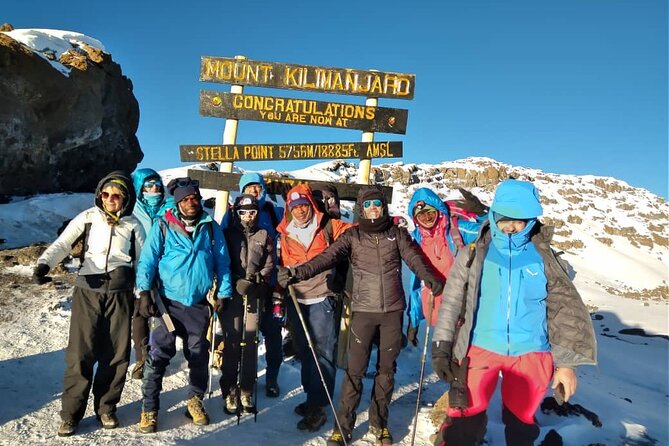
The route continues to Gillman’s Point, at 5,681 meters, on the crater rim. Reaching Gillman’s Point is a major achievement. The climb is steep, rocky, and made harder by the altitude. If you reach this point, you receive a green completion certificate.
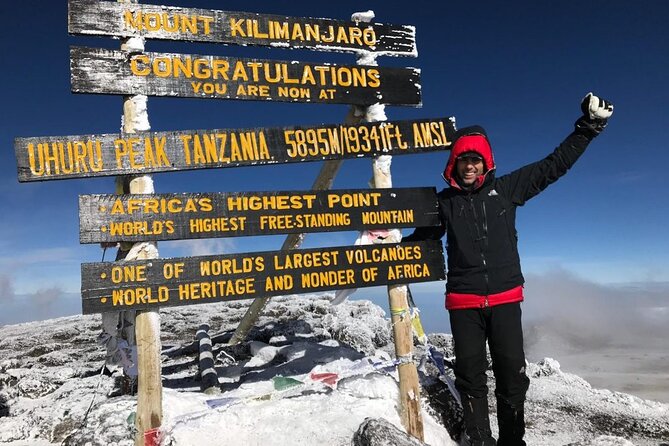
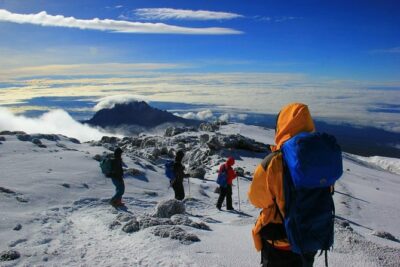
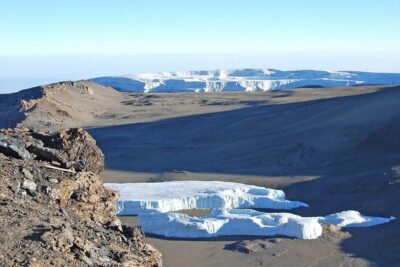
From Gillman’s Point, the trail is usually snow-covered as it continues toward Uhuru Peak. At 5,895 meters, Uhuru is the highest point on Kilimanjaro and the goal of the trek. Reaching it earns a gold certificate.
Your time at the top will be short. The cold, wind, altitude, and long descent all argue against lingering. You should have time for photographs and tea before heading down.
This is the toughest part of the trek by far. The six-day plan asks you to reach high altitude without the extra Mawenzi Tarn acclimatization day, then perform a long night climb. I would favor the seven-day version if you have the time, particularly if you have little experience above 4,000 meters.
The schedule refers to a descent after the summit and then to Horombo Hut for the following stage. Because the supplied outline is abbreviated in this section, confirm the exact overnight plan and walking distances with the company before paying the balance.
Day 6: The long descent to Marangu Gate
The final stated section runs from Horombo Hut to Marangu Gate, dropping from about 12,205 feet to 6,046 feet. The distance is approximately 20 kilometers, or 12 miles, with five to seven hours of walking through rain forest.
After the summit effort, this is a long day. The downhill direction feels easier on your lungs, but tired legs and knees can make the distance demanding. Trekking poles would be useful, although the tour information does not state whether they are supplied.
At Marangu Gate, you sign your name with the national park and receive your certificate. The staff then hold a celebration with singing and dancing, followed by tips for the guide, assistant guides, chef, and porters.
Tipping is not included in the $2,700 price. Bring enough Tanzanian shillings or another accepted form of payment, and ask the company for current tipping guidance before you leave home. The staff carry equipment, prepare food, organize camp, and support the climb, so this is an important part of the trip’s real cost.
After the gate, you are driven back to Arusha for showers and further celebration. That shower will feel well earned.
What the $2,700 price really covers
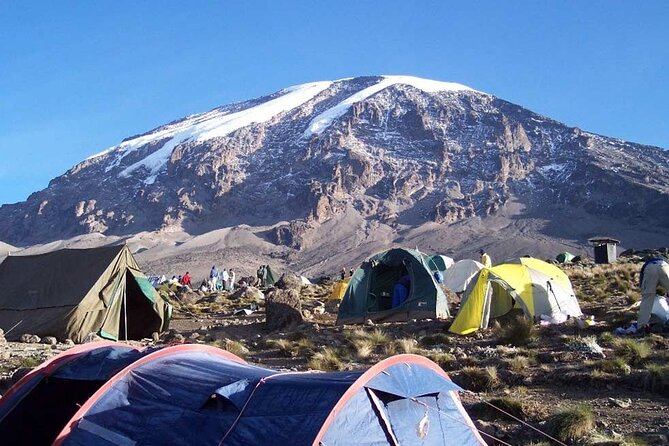
At $2,700 per person, this is not a budget mountain walk. It is also not simply a price for a guide and a trail permit. The package includes:
- Park fees and rescue fees
- Professional mountain guides
- Private, waterproof, four-season sleeping tents
- A dining tent with tables and chairs
- Breakfast for six days
- Lunch for six days
- Dinner for five nights
- Purified drinking water
- Fresh, nutritious meals in large portions
Those inclusions make the cost easier to understand. Park and rescue fees are unavoidable, and mountain logistics require a staff team, transport, food, tents, registration, and camp support. A private climb also costs more than joining a large group.
You still need to budget for tips and the Tanzania visa, listed at $50. You should also confirm whether sleeping bags, trekking poles, airport transfers, hotel nights, and personal gear are included, because they are not listed in the package details.
One strong point from the booking experience is the company’s communication. The supplied feedback specifically praises Mountain Warriors for replying quickly and providing a detailed, logical PDF. That may sound minor, but clear planning documents are valuable when you are arranging an African mountain trip with limited time.
Food, camping, and staff support
You sleep in private mountain tents rather than huts. That gives Rongai a more remote feel and avoids relying on shared dormitory accommodation. The tents are described as waterproof and suitable for four seasons, which is reassuring, though you should still pack for wet and freezing conditions.
The mess tent is another practical touch. A table and chair give you somewhere to eat, organize gear, and warm up with tea. On a six-day climb, these simple comforts can make the difference between feeling supported and feeling worn down.
Meals are served throughout the mountain portion of the tour. Breakfast is provided on six days, lunch on six days, and dinner on five days. The description promises large portions and fresh, healthy food, but no sample menu is provided. If you have allergies or dietary restrictions, confirm arrangements before booking.
The guides are described as professional and experienced, but no guide names are provided. Since only your group participates, you should be able to discuss your pace and concerns directly with the lead guide. That is especially useful on the summit night, when careful pacing and honest communication matter.
Who should choose this climb?
I would consider Rongai a good fit if you:
- Want a quieter route with a wilderness feel
- Prefer a gradual early ascent
- Have moderate physical fitness
- Are comfortable camping in cold conditions
- Want a private climb for your own group
- Are climbing during a wetter period and prefer the drier northern side
- Have only six days available
I would think twice about the six-day format if you are new to altitude, worried about the summit schedule, or able to spare one more day. The seven-day option includes an acclimatization day at Mawenzi Tarn, and that extra time may improve your chances of enjoying the mountain rather than simply enduring it.
The route is recommended for people with less backpacking experience, but you should not confuse that with beginner-level exercise. The summit attempt is long, the elevation is extreme, and the final day includes a 12-mile descent.
Practical details before booking
The tour offers pickup and a mobile ticket, and confirmation is provided at booking. It is listed as a private activity, so only your group participates.
The stated start time is 7:30 p.m., while the first day describes an early breakfast and morning pickup. Treat this as something to clarify, not something to guess. Confirm the exact meeting time, pickup location in Arusha, and the order of transport to Marangu Gate and the Rongai trailhead.
Free cancellation is available if you cancel at least 24 hours before the local start time. Cancellations made within 24 hours are not refunded, and late changes are not accepted.
Should you book the six-day Rongai route?
I would book this tour if you value a quieter approach, private support, prepared camps, and a northern route that can be useful during the rainy season. The quick replies and detailed planning material are encouraging, and the $2,700 price covers the largest and most important mountain expenses.
My main advice is simple: choose seven days if you can. The six-day route is possible, but skipping the Mawenzi Tarn acclimatization day leaves less room for your body to adjust. If six days is your limit and you have moderate fitness, Rongai offers a sensible, less crowded path to Kilimanjaro, provided you confirm the summit-day logistics and bring proper cold-weather gear.
FAQ
How long is the Rongai Route Kilimanjaro trek?
The advertised private climb lasts six days. Mountain Warriors also offers a seven-day private climb and a seven-day group climb.
Where does the Rongai route begin?
The route approaches Kilimanjaro from the north, close to the Kenyan border. You register at Marangu Gate before transferring by vehicle to the Rongai trailhead.
Is this a private tour?
Yes. Only your group participates in the activity.
Does the six-day version include an acclimatization day at Mawenzi Tarn?
No. The six-day version does not include the extra acclimatization day at Mawenzi Tarn. That day is included in the seven-day variation.
What is included in the price?
The price includes mountain tents, professional guides, park fees, rescue fees, meals on the mountain, a mess tent with tables and chairs, and purified drinking water.
Are tips included?
No. Tips for the guides, assistant guides, chef, and porters are not included.
Is the Tanzania visa included?
No. The Tanzania visa is listed separately at $50.
What happens at the end of the trek?
You descend to Marangu Gate, sign with the national park, and receive a certificate. Gillman’s Point earns a green certificate, while Uhuru Peak earns a gold certificate. You then return to Arusha.
Just added in Arusha
- Safari “Kifaru” – 5 days in the most famous Parks in the world★ 5.0 · 4 reviews
- Saadani Day Trip★ 5.0 · 13 reviews
- 3 Days Tanzania Short and Spicy★ 5.0 · 6 reviews
- 5 Day Tanzania Safari Camping Adventure Private Tour★ 5.0 · 2 reviews
- Day Trip to Ngorongoro Crater from Arusha★ 5.0 · 1 review
- SERENGETI NATIONAL PARK Tour★ 4.5 · 5 reviews
- 3 Days Serengeti Park & Ngorongoro Crater Adventure Safari★ 5.0 · 8 reviews
- 6 Days Tanzania Bush Experience Safari★ 5.0 · 6 reviews
Rongai Route Climbs, compared.
6 Day Private Kilimanjaro Climbing Via Rongai Route
Read our review →
Browse the lists this tour appears in