
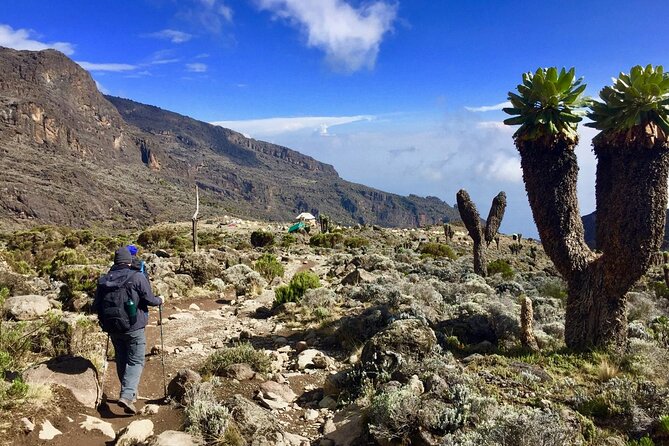
Reviewed · RONGAI ROUTE CLIMBS
6-Days Kilimanjaro Climbing via Rongai Route
The quiet side of Kilimanjaro rewards steady walkers. This six-day Rongai Route climb approaches Africa’s highest mountain from the Kenyan border, uses one of the mountain’s less crowded paths, and descends by the familiar Marangu Route. I like the changing views, from maize fields and pine forest to moorland and alpine desert, and I like that the descent shows you a different side of Kilimanjaro. The main concern is the short schedule: six days gives you less time to adjust to altitude than longer routes.
You begin near Nale Moru after a drive through villages, coffee plantations, and Marangu, then sleep in camps as you gain height. The summit attempt is a long, punishing night followed by a major descent, so moderate fitness is the bare minimum. The price is $2,200 per person, with meals and pickup included, but international flights and visas are extra.
In This Review
- Key points to know before booking
- Why the Rongai Route feels different
- The three-hour journey to Nale Moru
- Day 1: Nale Moru to the edge of the forest
- Day 2: Second Cave and the first high views
- Day 3: Second Cave to Third Cave
- Day 4: Kibo Hut and a long wait for midnight
- Day 5: Gilman’s Point, Uhuru Peak, and the descent to Horombo
- Day 6: Marangu Gate and the ride back to Moshi
- What the $2,200 price gives you
- Who should choose this climb
- Small details that can make the climb easier
- Should you book the Rongai Route?
- FAQ
- Where does the Rongai Route climb begin?
- How long does the experience last?
- What time does the climb start?
- How high is Uhuru Peak?
- What meals are included?
- Is pickup available?
- What is not included in the price?
Key points to know before booking
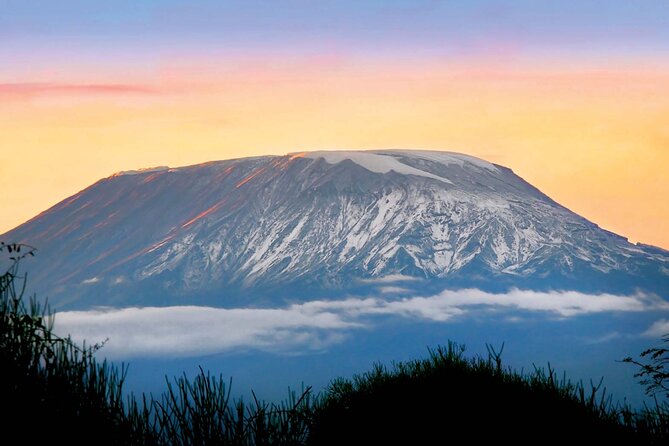
- Rongai is Kilimanjaro’s quieter northern approach, with a gentle first climb through farmland and forest.
- You see two sides of the mountain, ascending from Rongai and descending through Marangu.
- The summit day begins between midnight and 2am, with Uhuru Peak reached after a steep climb to Gilman’s Point and beyond.
- Altitude changes quickly, from 2,000 meters on Day 1 to 5,895 meters at Uhuru Peak.
- The six-day plan is efficient but demanding, especially because summit day includes a long descent to Horombo.
- The package costs $2,200 per person and includes five lunches, five dinners, and six breakfasts, plus pickup service.
Why the Rongai Route feels different
Many Kilimanjaro trips begin on the southern or western slopes. This one starts in the north, close to the Kenyan border, at the village of Nale Moru. That gives you a quieter beginning and a gradual approach through farmland and forest.
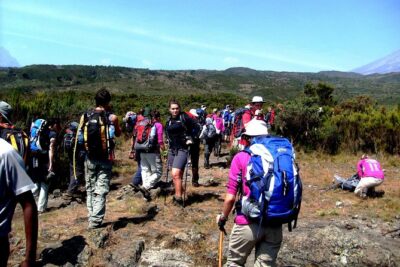
I like the route’s variety. On the first morning, you can be looking across fields of maize and potatoes. By the fourth day, you are walking across bare alpine desert below Kibo crater. The mountain changes in front of you rather than presenting the same view for six days.
The route also uses a sensible out-and-back pattern without making you retrace the entire climb. You go up by Rongai and come down by Marangu. That matters because the descent is not just a necessary walk back to the vehicle. It gives you another set of views, vegetation zones, and trail conditions.
The quiet setting has a trade-off. Rongai is less traveled, but the six-day schedule does not leave much spare time for altitude adjustment. You should not mistake the route’s gentle first stages for an easy climb. The upper mountain is still severe, and Uhuru Peak is nearly 5,900 meters above sea level.
More Kilimanjaro climbs:
- Kilimanjaro climb by Lemosho Route (7-day)
★ 5.0 · 651 reviews - Kilimanjaro climb, Machame Route (7-day)
★ 5.0 · 262 reviews - Kilimanjaro Climbing Lemosho Route 8 Days.
★ 5.0 · 186 reviews
The three-hour journey to Nale Moru
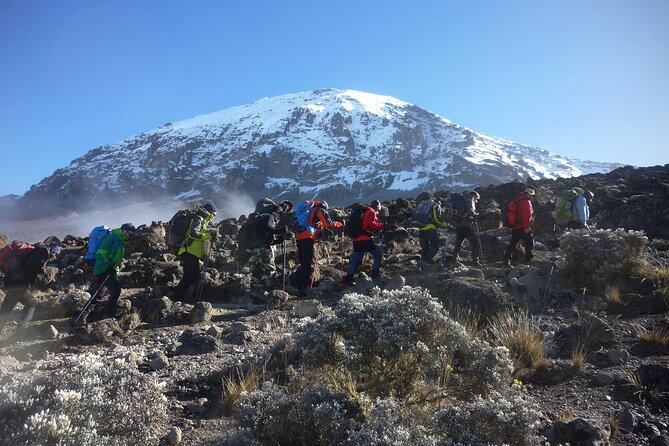
The trip begins with an 8am start. From Moshi, the drive to the trailhead takes about three hours, although the route description gives about two hours for the drive to Nale Moru when including the permit stop at Marangu. Allowing extra time is sensible.
The road passes through villages and coffee-growing areas before reaching the registration point. At Marangu, permits are handled, and the porters prepare for the climb. If you are coming from Amboseli National Park in Kenya, the route can also be reached in about two hours, including the border crossing. Copies of passports are needed ahead of time for that arrangement.
This opening drive is part of the experience. You are not dropped at a polished resort entrance and sent straight uphill. You pass through working communities and agricultural areas before reaching the park. Keep your daypack organized, because the transition from vehicle to trail involves registration, equipment preparation, and a short hike soon after arrival.
Day 1: Nale Moru to the edge of the forest
The first hike covers about 6 kilometers and takes three to four hours. You begin at roughly 2,000 meters and finish near 2,650 meters.
The trail starts wide and practical, crossing fields of maize and potatoes. Then it enters pine forest, where the climbing becomes steady but remains fairly gentle. The forest provides shade and a chance to settle into the pace before the high mountain takes over.
The forest is also described as sheltering wildlife, though no particular sightings are promised. Treat any wildlife viewing as a bonus rather than part of the schedule. The main reward is the change in scenery and the first open views toward the Kenyan plains.
The first camp sits at the edge of the moorland zone. That position gives you a clear sense that the climb has begun in earnest. Lunch and dinner are included, and you spend the night at about 2,650 meters. Drink regularly and keep the evening quiet. The early part of the route is the time to protect your energy.
Day 2: Second Cave and the first high views
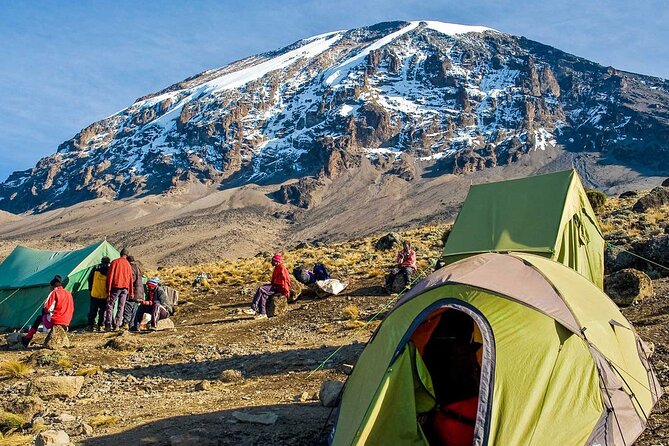
Day 2 is another 6-kilometer walk, taking three to four hours. You climb from 2,650 meters to about 3,450 meters through moorland.
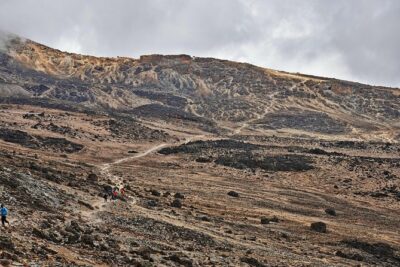
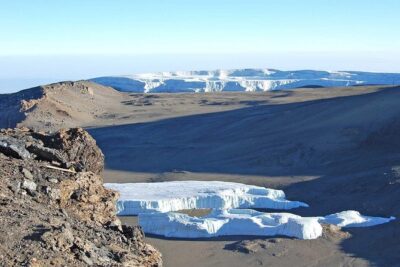
The trail continues upward at a steady rate. The important feature today is the view toward Kibo, Kilimanjaro’s main summit cone, and its eastern ice fields. This is one of the first moments when the mountain feels truly immense.
The relatively short walking time can be misleading. You are gaining about 800 meters, and altitude affects people differently. Walk slowly, pay attention to how you feel, and avoid treating the easy trail underfoot as permission to rush.
Breakfast, lunch, and dinner are provided. The routine is simple: walk, eat, rest, and prepare for another gain in height. At the end of the day, you are already higher than many mountain towns, even though the summit is still more than 2,400 meters above you.
More Rongai Route climbs:
- Kilimanjaro climb, Rongai Route (7-day)
★ 5.0 · 40 reviews - Kilimanjaro climb, Rongai Route (6-day)
★ 5.0 · 15 reviews - Mount Kilimanjaro Rongai Route
★ 5.0 · 10 reviews - 6-Day Rongai Route Trek in Mount Kilimanjaro
★ 5.0 · 8 reviews
Day 3: Second Cave to Third Cave
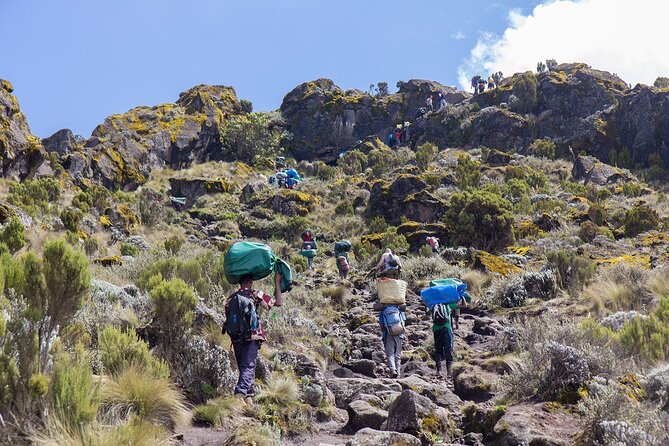
The third day covers about 9 kilometers but takes only two to three hours according to the schedule. You climb from 3,450 meters to approximately 3,880 meters, entering semi-desert terrain.
This is a useful acclimatization day in terms of walking time, but it is not a day to underestimate. The air is thinner, vegetation becomes sparse, and the open terrain offers little shelter. You may find the surroundings stark compared with the pine forest below.
The short timetable leaves time to rest at Third Cave. Use it. The goal is not to prove how quickly you can cover the trail. It is to arrive at the upper camp with enough strength for the summit push.
All three meals are included. Keep warm after sunset, even if the afternoon felt mild. Temperatures can change sharply as you gain height, and you will want dry clothing ready for the next morning.
Day 4: Kibo Hut and a long wait for midnight
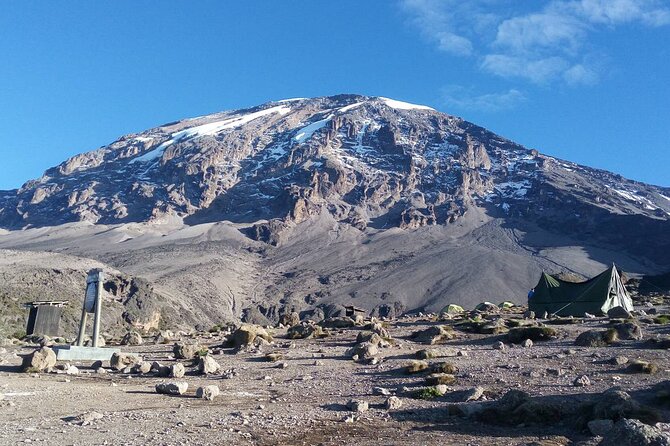
Day 4 takes you from Third Cave to Kibo Hut, climbing about 870 meters over 5 kilometers. The walking time is listed as three to four hours, and the habitat changes to alpine desert.
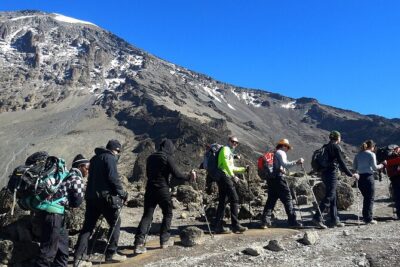
Kibo Hut sits at approximately 4,750 meters, near the bottom of Kibo crater wall. This is the last camp before the summit attempt. The rest of the day is meant for resting, eating, checking clothing, and preparing for a very early start.
This may be the hardest kind of rest. You have climbed high enough that sleep can be difficult, and you are waiting for a midnight to 2am departure. Keep your gear simple. Put your headlamp, water, warm layers, snacks if you carry them, and trekking poles where you can reach them.
Breakfast, lunch, and dinner are included. Do not plan extra sightseeing on this day. Your best use of time is conserving energy and staying warm.
Day 5: Gilman’s Point, Uhuru Peak, and the descent to Horombo
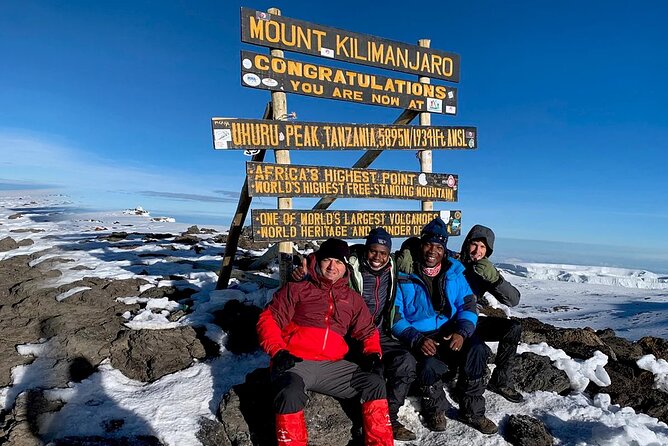
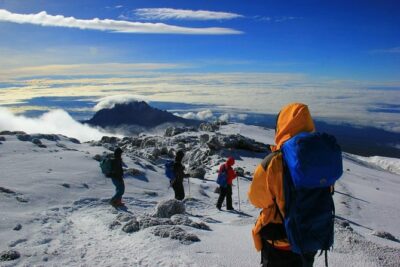
Summit day is the central challenge. You start between midnight and 2am, climbing steep scree or snow toward Gilman’s Point at about 5,700 meters. From there, you continue around the crater rim to Uhuru Peak, the highest point in Africa, at 5,895 meters.
The upward section is listed as about 6 kilometers and six to eight hours. The route description promises striking views, but you should expect the summit climb to feel slow and demanding. The combination of darkness, cold, loose ground, and thin air makes every step matter.
Gilman’s Point is a major marker, but it is not the summit. You still need to continue to Uhuru Peak. The final section follows the crater rim, and conditions can change. Keep your focus on a controlled pace rather than an early celebration.
At Uhuru Peak, there is time for a photograph before the descent. That picture may be the simplest souvenir from the entire climb, but reaching the sign is only half of the day. You descend to Kibo for lunch and a rest, then continue to Horombo encampment at about 3,700 meters.
The listed distance is 15 kilometers down after the 6-kilometer ascent. The schedule gives six to eight hours for the ascent and six to eight hours for the descent, while the day is also summarized as eight hours. In practical terms, prepare for a very long day, not a quick eight-hour outing.
This is the point where fitness and patience matter most. A strong first four days helps, but summit day can still be exhausting. Trekking poles are useful on loose ground and during the long descent.
Day 6: Marangu Gate and the ride back to Moshi
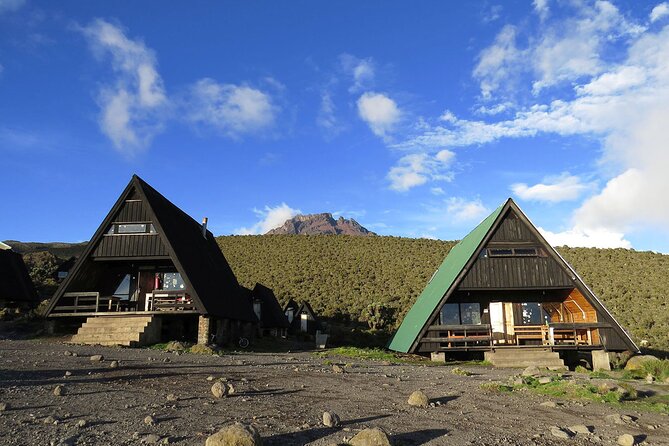
After breakfast at Horombo, you descend from about 3,700 meters to Marangu Gate at roughly 1,700 meters. The route covers about 20 kilometers and takes four to five hours.
The scenery changes quickly as you move back through moorland and into lush forest. Lower sections can be wet and muddy, so gaiters and trekking poles are sensible additions. The advice on clothing is practical: shorts and a T-shirt may be enough in the lower forest, but keep rain gear and warmer layers close until the weather is clear.
At Marangu Gate, a vehicle from Spirit of Kilimanjaro meets you for the approximately one-hour drive to your Moshi hotel. After the summit night and long descent, that transfer is welcome. Keep a change of clothes and basic personal items accessible rather than buried in luggage.
Only breakfast is included on this final day. Plan your onward arrangements with enough flexibility for the possibility that the mountain schedule takes longer than expected.
What the $2,200 price gives you
At $2,200 per person, this is a major purchase, but a Kilimanjaro climb involves more than trail time. The package includes pickup, park access for the scheduled stops, porters, camp arrangements, and meals as specified by the operator. The listed food provision is five lunches, five dinners, and six breakfasts.
International flights and visas are not included. You also need passport copies in advance if you are arranging access from Amboseli through the Kenya border.
I would judge the value by the structure of the trip rather than the headline price. You get a northern approach, a southern descent, transport from Moshi, and meals across the climb. The main question is not simply if $2,200 is cheap or expensive. It is if a six-day schedule matches your fitness, altitude experience, and tolerance for a hard summit day.
The advertised maximum is 100 people, which is a large possible group. Ask how many people will actually be in your climbing party and how the guiding and porter teams are organized. That question matters more than the maximum number printed in the general trip information.
Who should choose this climb
This route suits you if you want a quieter trail, changing mountain scenery, and a direct six-day plan. It is also a good match if you are already comfortable with long walks and want to see Kilimanjaro from both its northern and southern sides.
You should think carefully before booking if you have little hiking experience or want a relaxed altitude schedule. The first days are not technically described as difficult, but the height rises from 2,000 meters to 5,895 meters in less than a week.
The published experience has an overall rating of 5 from two pieces of feedback. One particularly warm account credits William and his team with helping make a couple’s engagement at Kilimanjaro successful. Another describes the climb as a memorable seven-day experience, even though the scheduled version here is six days. That difference is worth clarifying before payment, especially if the exact number of nights or walking days matters to you.
Small details that can make the climb easier
Pack for several climate zones, not one mountain. You move from forest to moorland, semi-desert, alpine desert, and back into wet lower forest.
Keep rain gear handy on Day 6, and bring gaiters if muddy trails bother you. Trekking poles are useful on both the steep summit ground and the long descent.
You should also confirm the daily timing, the exact number of nights, and the size of your group. The published schedule contains a small inconsistency on the total time for summit day, so clear communication before departure is worthwhile.
The free cancellation policy allows a full refund if you cancel at least 24 hours before the local start time. Cancellations or changes inside that window are not accepted for a refund.
Should you book the Rongai Route?
Book this climb if you value a quieter northern approach, broad views across Kenya, and the chance to descend through a different part of Kilimanjaro. The route offers strong visual variety and a clear six-day structure, with meals and Moshi transport included.
I would choose it only after making an honest assessment of your fitness. The route may be gentle at first, but the summit night and long descent are serious. Ask Spirit of Kilimanjaro to confirm the group size, exact accommodation arrangements, and summit-day timing.
If you are prepared for a fast, demanding ascent and want a less-used route, this is a good-value Kilimanjaro option. If you need more time to adjust to altitude, look for a longer itinerary instead.
FAQ
Where does the Rongai Route climb begin?
The climb begins near the attractive wooden village of Nale Moru on the northern side of Kilimanjaro, south of the Kenyan border.
How long does the experience last?
The scheduled experience lasts approximately six days.
What time does the climb start?
The meeting start time is 8am. The summit climb begins very early on Day 5, between midnight and 2am.
How high is Uhuru Peak?
Uhuru Peak is approximately 5,895 meters, or 19,340 feet, above sea level.
What meals are included?
The package includes six breakfasts, five lunches, and five dinners.
Is pickup available?
Yes. Pickup is offered, and a Spirit of Kilimanjaro vehicle takes you from Marangu Gate back to your Moshi hotel after the climb.
What is not included in the price?
International flights and visas are not included.
Just added in Moshi
- Zanzibar: Stone Town tour and Nakupenda beach with Lunch★ 5.0 · 1 review
- day trip lake manyara★ 5.0 · 2 reviews
- Mt Kilimanjaro 6 days Marangu route hike★ 5.0 · 3 reviews
- machame route★ 5.0 · 16 reviews
- Private Cycle to Kilimanjaro Bike Park Safari★ 5.0 · 6 reviews
- West Kilimanjaro cycling Adventures★ 4.5 · 8 reviews
- Wildlife Extravaganza: Manyara, Tarangire & Ngorongoro in 3 Days★ 5.0 · 3 reviews
- 3 Days Private E-Bike Tour in West Kilimanjaro★ 5.0 · 3 reviews
Rongai Route Climbs, compared.
Rongai Route 6 Days 5 Nights/Kilimanjaro climb
Read our review →
6 Days Kilimanjaro climbing | Hiking Tour via the Rongai Route
Read our review →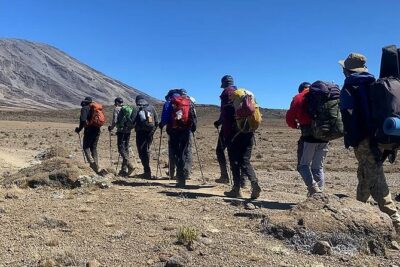
Browse the lists this tour appears in