
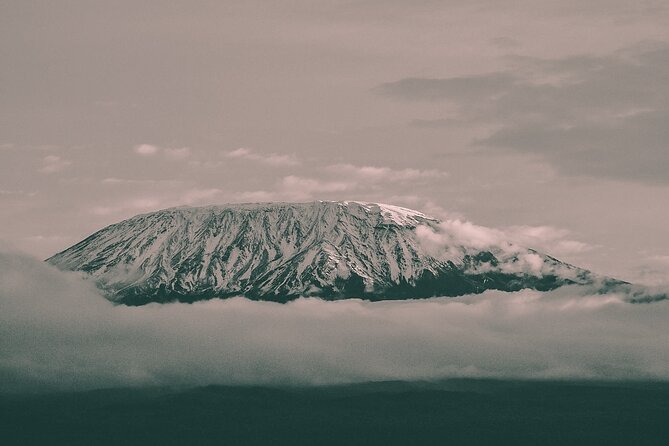
Reviewed · RONGAI ROUTE CLIMBS
6 Days Mount Kilimanjaro Climbing via Rongai Route
Kilimanjaro rewards steady hikers. This six-day Rongai Route climb offers a quieter approach to Africa’s highest peak, with a moderate slope, remote moorland, and a summit attempt timed for sunrise. I especially like the route’s northern position, which receives less rain than the southern side, and the careful pace that gives you several days to adjust to altitude. The private format also means your group can focus on its own rhythm.
The strongest points are clear organization and safety-minded support. Dominic, the owner of Kentau Safaris, is praised for staying involved from the planning stage through the hike’s finish, while the team’s professional approach helps remove some of the worry from a serious climb. The main consideration is the short six-day schedule: it is manageable for a reasonably fit hiker, but the summit day is hard, and you should not mistake a moderate route for an easy one.
In This Review
- Key points to know before you book
- Why the Rongai Route makes sense
- Day one: Moshi to Simba Camp
- Day two: Moorland and the first views of Kibo
- Day three: Entering the semi-desert
- Day four: Kibo Huts and the alpine desert
- Day five: Stella Point, sunrise, and Uhuru Peak
- Day six: Marangu descent and the return to Moshi
- What the $2,200 price covers
- Organization, safety, and the private format
- Who should choose this six-day climb?
- Should you book the Rongai Route?
- FAQ
- Where does the Kilimanjaro climb start?
- What time does the tour start?
- How long does the experience last?
- Is the Rongai Route difficult?
- Is this a private tour?
- What meals are included?
- Is accommodation included?
- What costs are not included?
- What is the cancellation policy?
Key points to know before you book
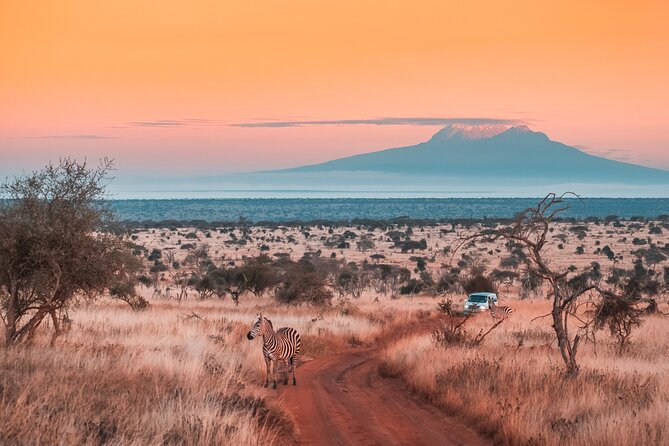
- Rongai approaches Kilimanjaro from the north, giving you a quieter alternative to the better-known Marangu Route.
- The northern side receives less precipitation, which can be useful during Tanzania’s rainy season.
- The route begins in woodland and moorland, then changes to semi-desert and alpine desert before the summit.
- Day five is the demanding summit day, beginning between midnight and 2 a.m. and ending with a descent.
- The tour is private, so only your own group participates.
- The $2,200 price includes park-related fees, accommodation, meals, and hotel transfers, but not tips, gear, flights, insurance, or a visa.
Why the Rongai Route makes sense
Rongai is a good choice if you want a less-used route without taking on the roughest possible approach. Its slope is relatively moderate, and the ascent is spread across several days. That matters because altitude, not just leg strength, is the main challenge on Kilimanjaro.
I like the northern setting for two practical reasons. First, you get a more remote feel than on the popular Marangu approach. Second, the north side receives less rain, making Rongai a sensible option when wet weather is a concern. That does not mean you should expect dry conditions every day. Kilimanjaro weather can shift quickly, and the final descent is specifically described as wet, muddy, and steep.
You should also understand the route’s shape. You begin on Rongai, climb through the northern side of the mountain, then join the Marangu Route near Kibo Huts. The summit climb and much of the descent use the Marangu side. So this is not a completely separate route from start to finish, but it gives you a different opening approach and a quieter feel before the summit section.
The trip is designed for people with a moderate level of fitness. You do not need to be an experienced backpacker, but you do need to handle long walking days, cold temperatures, an early summit start, and a steep descent. The itinerary lists hiking days of six to seven hours, though the summit day includes the most strenuous work.
More Kilimanjaro climbs:
- Kilimanjaro climb by Lemosho Route (7-day)
★ 5.0 · 651 reviews - Kilimanjaro climb, Machame Route (7-day)
★ 5.0 · 262 reviews - Kilimanjaro Climbing Lemosho Route 8 Days.
★ 5.0 · 186 reviews
Day one: Moshi to Simba Camp
Your first morning begins at 7 a.m. in Moshi, with pickup from your hotel or residence. The drive to the Kilimanjaro National Park Gate takes about four to five hours. That is a long transfer before the hiking starts, so you should treat the morning as part of the expedition rather than a quick ride to the trailhead.
The drive passes coffee plantations and the village of Nale Muru. At the park gate, the crew waits while permits are issued. This pause gives you a first look at the practical side of a major mountain climb, with different crews preparing supplies, equipment, and paperwork.
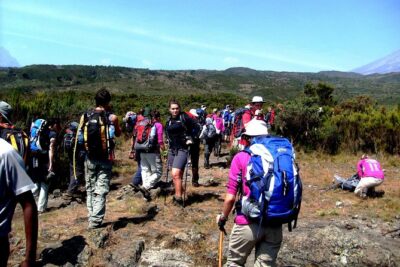
Once hiking begins, the route passes through wooded scenery on windy trails. Your guide can point out local plants, wildlife, and the changing environment as you gain height. The day ends at Simba Camp, near the first cave at the edge of the moorland zone.
The camp offers views across the plains of Kenya, a striking first reward after the long drive. The day is listed at about seven hours, including the transfer and hiking program. The main drawback is that you may feel tired before you have properly found your mountain rhythm. Eat well, drink steadily, and avoid treating the first day as a race.
Day two: Moorland and the first views of Kibo
After breakfast, you continue through moorland on a steady uphill trail. This is a straightforward day in terms of route direction, but the altitude begins to make itself known. The shrubs become thinner as you approach Second Cave, and temperatures start to fall.
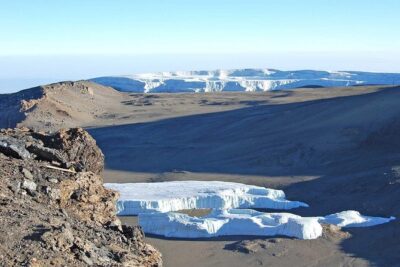
You get clearer views of Kibo, the main volcanic cone of Kilimanjaro, along with an early glimpse of the ice fields on the eastern crater rim. These views help you understand the scale of the mountain. The summit is no longer an abstract goal on the horizon. It begins to feel like the destination ahead.
The day takes about seven hours. The steady slope is one reason Rongai suits hikers with less backpacking experience, but the cold and altitude still demand attention. Keep your warm layers easy to reach. A route that feels comfortable in the afternoon can become chilly once the sun drops.
This is also a good day to communicate with your guide. Tell the guide if you have a headache, feel unusually tired, or notice other changes in how your body is handling the climb. The trip places emphasis on reporting symptoms, and that is good mountain practice.
Day three: Entering the semi-desert
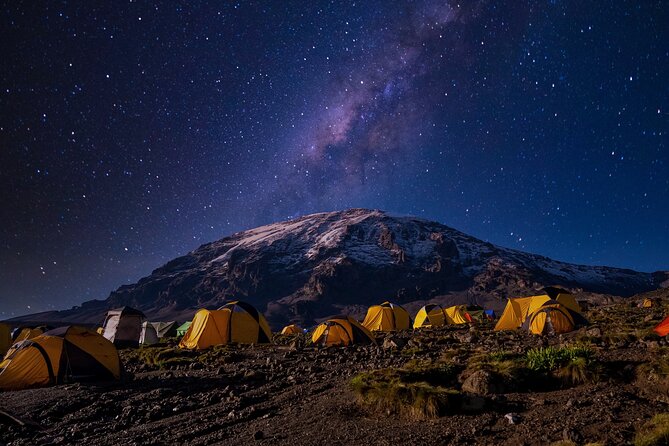
Day three is a shorter hiking day of about six hours. After breakfast and packing, you continue upward into semi-desert terrain. The vegetation becomes sparser, and the mountain feels more exposed.
The eastern ice fields remain a visual focus. You are getting closer to the upper reaches of Kibo, even though the trail still rises at a controlled pace. This is the sort of day when patience pays off. The route may feel physically manageable, but the thinner air can make ordinary tasks seem harder than expected.
The practical instruction here is simple: keep your guide informed about any possible altitude sickness. Do not hide symptoms because you hope they will disappear. A serious climb depends on honest communication, and a private group gives you a better chance to discuss concerns without feeling lost in a large crowd.
I see day three as an important transition. The lower mountain is behind you, while the upper mountain is beginning to dominate the experience. You should use the evening to organize clothing, headlamp batteries, and personal equipment for the following day.
More Rongai Route climbs:
- Kilimanjaro climb, Rongai Route (7-day)
★ 5.0 · 40 reviews - Kilimanjaro climb, Rongai Route (6-day)
★ 5.0 · 15 reviews - Mount Kilimanjaro Rongai Route
★ 5.0 · 10 reviews - 6-Day Rongai Route Trek in Mount Kilimanjaro
★ 5.0 · 8 reviews
Day four: Kibo Huts and the alpine desert
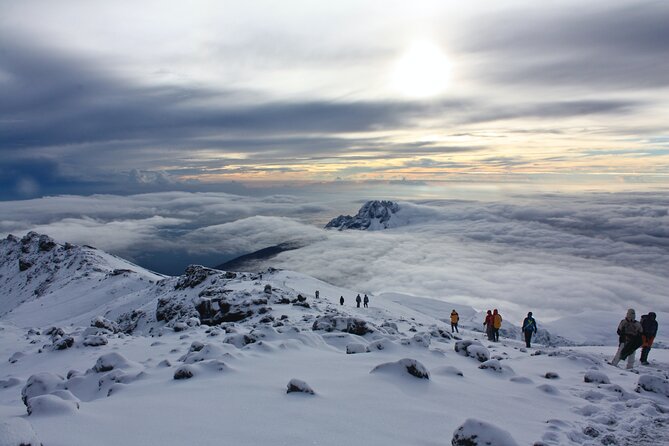
You leave Third Cave early and continue through alpine desert terrain. The vegetation is now limited, and the scenery takes on a stark, open quality. This is a shorter hiking day of about six hours, but it carries a major psychological weight because you are moving into position for the summit.
The destination is Kibo Huts, just below the crater wall. Here, the Rongai Route joins the Marangu Route. The trail becomes busier in spirit and route structure, since the final climb follows the same general approach used by Marangu hikers.
The schedule is intentionally practical. You should prepare clothing and equipment before bed, replace batteries in your headlamp and camera, and try to sleep by 7 p.m. The summit start comes between midnight and 2 a.m., so this early bedtime is not optional sightseeing advice. It is your best chance to get some rest before the hardest section.
The short sleep window is one of the six-day itinerary’s biggest challenges. Even if you are physically fit, waking in the middle of the night after several days of hiking can be rough. Pack your summit clothing in a simple order so you are not searching through bags in the dark.
Day five: Stella Point, sunrise, and Uhuru Peak
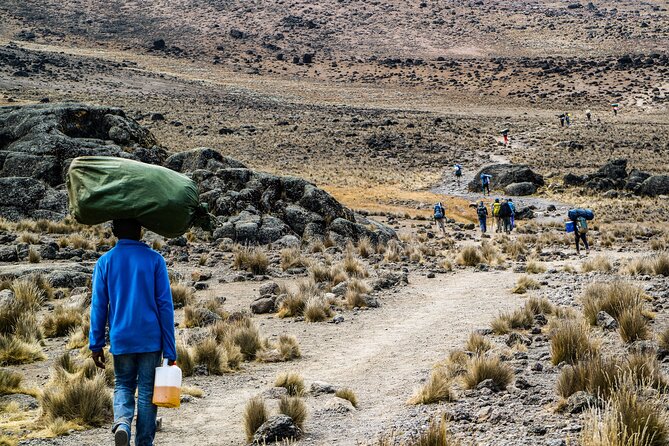
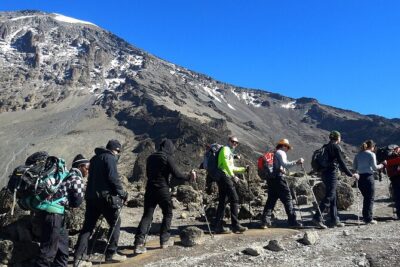
Summit day is the heart of the trip. You start between midnight and 2 a.m., climbing by headlamp through the cold. The route passes between the Rebmann and Ratzel glaciers before turning northwest toward Stella Point.
The ascent uses switchbacks over heavy scree. This is slow, tiring work. Your goal is not speed. It is to keep moving at a pace you can maintain while staying warm and focused.
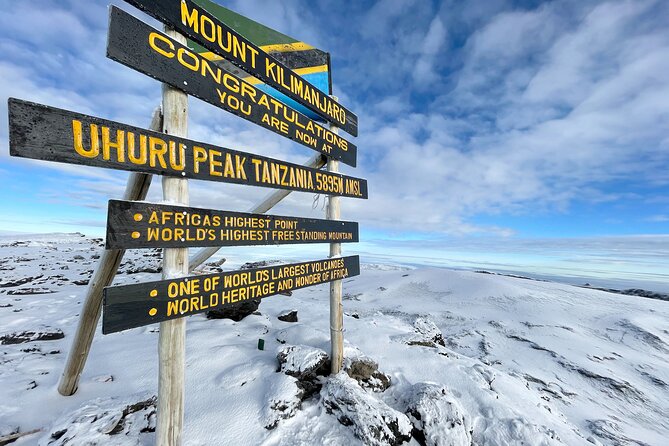
Stella Point sits on the crater rim, and the sunrise is the day’s great reward. You may see the first light from Stella Point, while faster hikers might reach the summit in time to watch sunrise from higher up. The final climb to Uhuru Peak takes about another hour from Stella Point.
The provided schedule gives day five about seven hours, though you should think of this as an approximate hiking duration rather than a strict clock. The summit day can feel longer because it includes the pre-dawn start, the high-altitude ascent, time near the top, and the return toward camp.
This is where your preparation matters most. You need warm clothing, a working headlamp, suitable personal gear, and enough stamina for both ascent and descent. The physical effort is substantial, but the mental side can be just as demanding. The route description is right to call it the most challenging portion of the trek.
Day six: Marangu descent and the return to Moshi
After breakfast, the group holds a ceremony of appreciation and team bonding with the crew. Then you begin the descent, stopping at Mandara Huts for lunch.
The descent continues to the Marangu Park Gate, where you receive your summit certificates. From there, a vehicle takes you back to your Moshi hotel or residence. The drive is about 45 minutes, giving you a relatively quick return to town after the mountain.
Do not underestimate this final day. The route becomes warmer, wet, muddy, and steep. Gaiters and trekking poles are strongly recommended, and I agree with that advice. A pair of poles can help with balance on slick ground, while gaiters keep mud and water out of your boots.
You also say goodbye to guides, cooks, and porters at this point. Tips are not included, so plan for them as part of the real cost of the climb. The farewell can feel especially meaningful after a private expedition in which the crew has supported your group for nearly a week.
What the $2,200 price covers
At $2,200 per person, this is not a budget walk, but the price includes several major expenses:
- Accommodation during the climb
- All fees and taxes
- Pickup and drop-off at your hotel or residence
- Five lunches
- Six dinners
- Five breakfasts
Those inclusions give the price real value. You are not paying only for a guide and a trail permit. Food, mountain accommodation, park-related charges, and transport are part of the package, which makes budgeting easier.
Still, you need to add several costs yourself. Tips for the climbing team are excluded, as are flights, travel insurance, personal gear, and the Tanzanian entry visa. Personal gear can be a substantial expense if you do not already own warm layers, trekking poles, gaiters, a headlamp, and suitable boots.
The package includes lunch five times, dinner six times, and breakfast five times. That matches a six-day mountain itinerary, but it is worth checking the exact meal plan before departure so you understand what is supplied on transfer days and at the final gate.
Organization, safety, and the private format
The most positive comments about this experience focus on organization and professionalism. The trip is described as well coordinated, with updates provided throughout the process. Dominic, the owner, is singled out for being cooperative from the planning stage through the end of a five-day hike.
That matters on Kilimanjaro. Permits, transport, changing weather, food, camp arrangements, and altitude concerns all need attention. Good organization does not make the mountain easy, but it can keep small problems from becoming large ones.
The private format is another useful feature. Only your group participates, so the walking pace and daily discussions are not built around a large mixed party. You should still be realistic about the limits of a private tour. It does not remove the need for fitness, careful pacing, or proper equipment.
The strongest praise also points to safety and a positive team atmosphere. That combination is valuable on a tough climb. You want a crew that takes the mountain seriously without making the experience grim.
Who should choose this six-day climb?
I would suggest this route for you if you want a quieter approach to Kilimanjaro, prefer a moderate slope, and have enough fitness for six to seven-hour hiking days. It also makes sense if you are concerned about rain and plan to climb during a wetter period.
The route is recommended for people with less backpacking experience, but that does not mean no preparation is needed. You should be comfortable walking for long periods and carrying or managing your personal gear in changing temperatures.
I would hesitate if you want a relaxed holiday with lots of sleep. The midnight to 2 a.m. summit start, cold conditions, altitude, and steep descent make this a serious physical undertaking. Six days also gives you less time than longer itineraries to adjust to altitude, so you need to listen closely to your body and follow your guide’s advice.
Cancellation is flexible if your plans change early. You can receive a full refund by canceling at least 24 hours before the local start time. Changes or cancellations within 24 hours are not accepted for a refund.
Should you book the Rongai Route?
Book this climb if you value a quieter northern approach, a moderate route, private group support, and strong attention to planning. The combination of included meals, mountain accommodation, fees, and transfers makes the $2,200 price easier to justify, especially if you want one company handling the main practical pieces.
Think twice if you are not ready for the summit night or if you need a longer acclimatization schedule. The route is considered moderately difficult, not effortless. For a fit hiker who prepares properly, communicates openly about altitude symptoms, and accepts a demanding final ascent, this is a well-structured way to aim for Uhuru Peak.
FAQ
Where does the Kilimanjaro climb start?
The experience starts in Moshi, Tanzania, with pickup available from your hotel or residence.
What time does the tour start?
The listed start time is 7 a.m.
How long does the experience last?
The climb lasts approximately six days.
Is the Rongai Route difficult?
It is described as moderately difficult. The route has a relatively moderate slope and is recommended for people with less backpacking experience, but the summit day remains physically and mentally challenging.
Is this a private tour?
Yes. Only your group participates in the activity.
What meals are included?
The package includes five lunches, six dinners, and five breakfasts.
Is accommodation included?
Yes. Accommodation during the mountain climb is included.
What costs are not included?
Tips for the climbing team, air tickets, travel insurance, personal gear, and the Tanzanian entry visa are not included.
What is the cancellation policy?
You can cancel at least 24 hours before the experience start time for a full refund. Cancellations or changes made within 24 hours are not accepted for a refund.
Just added in Moshi
- Zanzibar: Stone Town tour and Nakupenda beach with Lunch★ 5.0 · 1 review
- Mt Kilimanjaro 6 days Marangu route hike★ 5.0 · 3 reviews
- machame route★ 5.0 · 16 reviews
- day trip lake manyara★ 5.0 · 2 reviews
- Private Cycle to Kilimanjaro Bike Park Safari★ 5.0 · 6 reviews
- West Kilimanjaro cycling Adventures★ 4.5 · 8 reviews
- Wildlife Extravaganza: Manyara, Tarangire & Ngorongoro in 3 Days★ 5.0 · 3 reviews
- 3 Days Private E-Bike Tour in West Kilimanjaro★ 5.0 · 3 reviews
Rongai Route Climbs, compared.
Rongai Route 6 Days 5 Nights/Kilimanjaro climb
Read our review →
6 Days Kilimanjaro climbing | Hiking Tour via the Rongai Route
Read our review →
Browse the lists this tour appears in