
Reviewed · RONGAI ROUTE CLIMBS
7 Day Kilimanjaro Rongai climb
Africa’s highest summit rewards patience. This seven-day Rongai climb reaches Kilimanjaro from the quiet northern side, then descends through the southeastern rain forest, giving you a less common route with changing scenery and a real sense of progress. I like the drier approach, the gradual five-day build toward the summit, and the fact that park fees, meals, porters, camping, medical checks, and transfers are included.
The main caution is altitude, not technical climbing. The route has no scrambling sections and is considered less physically demanding than southern routes, but the summit reaches 5,895 meters. I also like that guides named Calvin and Goodchance received strong praise for motivation and confidence-building, while the crew earned credit for dietary care and friendly service. Still, you need strong fitness, and a longer route does not remove the risk of altitude sickness.
In This Review
- What makes the Rongai route worth considering
- Why Rongai feels different from other Kilimanjaro routes
- Day 1: Moshi to Rongai Gate and the first caves
- Day 2: Second Cave Camp and views toward Kibo
- Day 3: Kikelelwa Caves and a closer look at Mawenzi
- Day 4: Mawenzi Ridge and the alpine desert
- Day 5: Across the saddle to Kibo Base Camp
- Day 6: The midnight climb to Uhuru Peak
- Day 7: Rain forest descent to Marangu Gate
- What the $2,790 price includes
- The crew and the human side of the climb
- What to pack and what costs extra
- Who should book this climb?
- Should you book the 7-day Rongai climb?
- FAQ
- Where does the Kilimanjaro Rongai climb start?
- How long does the Rongai climb last?
- Is the Rongai route technical?
- What height is Uhuru Peak?
- Are meals and drinking water included?
- Are tents and mattresses provided?
- Can I cancel for a full refund?
What makes the Rongai route worth considering
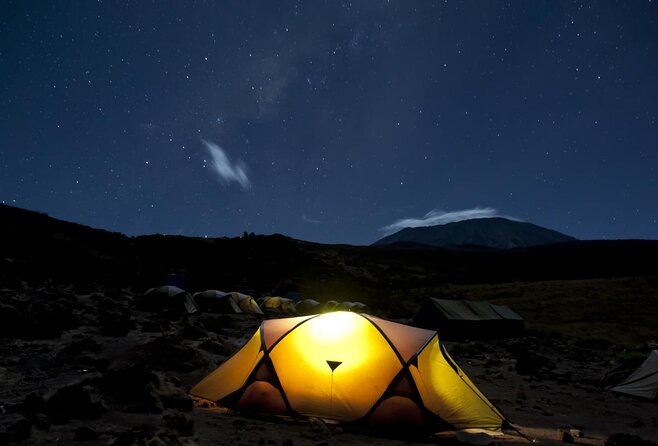
- Northern approach: Rongai is Kilimanjaro’s only route beginning on the mountain’s northern side, near the Kenyan border.
- Drier starting zone: The northeastern side usually receives less rain, which can make the opening days more comfortable.
- Two major Kilimanjaro cones: You pass between Kibo, the summit cone, and Mawenzi, the sharp secondary peak.
- Five days before summit night: The schedule gives you time to gain height gradually before the final push.
- Full mountain support: Guides, porters, cooks, dining equipment, tents, meals, park charges, and rescue fees are included.
- Private group format: Only your party takes part, rather than joining a large mixed group.
Why Rongai feels different from other Kilimanjaro routes
Most people picture Kilimanjaro from the southern side. Rongai changes that view. You begin in Moshi, drive toward Rongai Gate, and enter the mountain from the northeast. The route is quieter and generally drier at the start, a useful advantage in a place where wet boots and soaked camping gear can make a hard week harder.
The trail begins in the rain forest zone, but this forest thins quickly on the northern side. You then move through heather and moorland, alpine desert, and finally the arctic zone near the summit. Those transitions are one of the pleasures of the climb. You can feel the mountain getting more severe as trees disappear and the air becomes thinner.
Rongai is often described as a gentler route because it avoids the scrambling sections found on some southern approaches. That does not mean easy. The summit night is steep, cold, dark, and physically demanding. The route’s real advantage is its seven-day pace, which gives you several chances to adjust before reaching high camp.
More Rongai Route climbs:
- Kilimanjaro climb, Rongai Route (7-day)
★ 5.0 · 40 reviews - Kilimanjaro climb, Rongai Route (6-day)
★ 5.0 · 15 reviews - Mount Kilimanjaro Rongai Route
★ 5.0 · 10 reviews
Day 1: Moshi to Rongai Gate and the first caves
Your morning starts with a 9:00 am transfer from the Shah Tours meeting point at 6 Sekou Toure Way in Moshi. The vehicle takes you to Rongai Gate, where registration and park procedures come first.
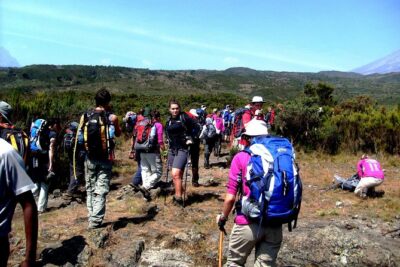
Once you begin walking, the route passes through the rain forest zone. This section does not last as long as it might on wetter southern routes, and the forest soon gives way to heather. You walk for about five hours before reaching camp near the caves, on the edge of the forest and the heather zone.
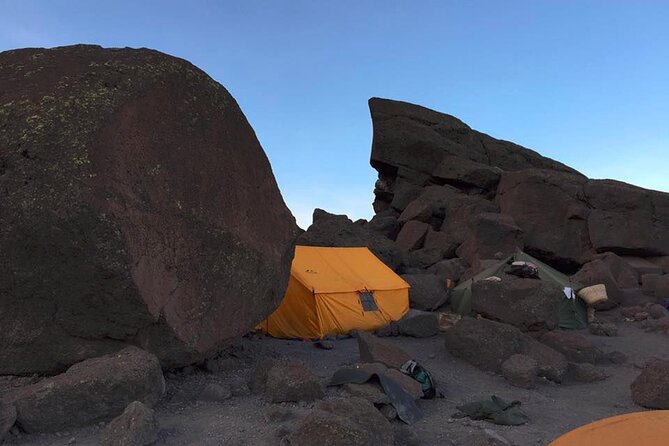
This opening day is useful because it introduces the rhythm of mountain life without an immediate altitude shock. Your guide sets the pace, the support crew prepares camp, and you settle into a four-season tent with a basic foam sleeping mattress. Tents are shared by an even-numbered group, with a single tent available for an odd-numbered group.
You should arrive with water for this first day. Water is boiled from the first camp onward, but water for the opening day is not included. Soft plastic containers are also not permitted on the mountain, and metal or hard plastic bottles are listed as items you need to provide yourself.
Day 2: Second Cave Camp and views toward Kibo
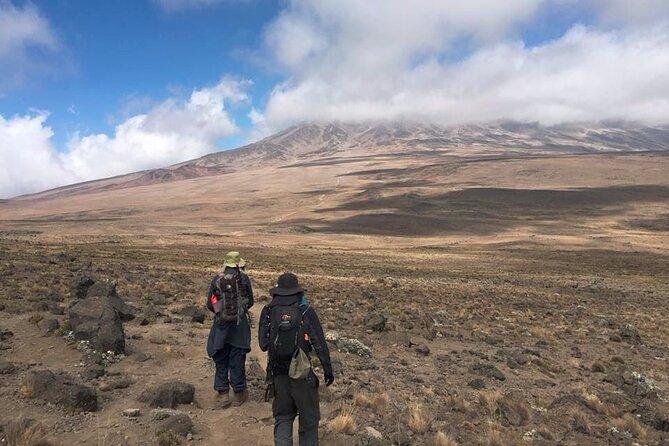
The second day takes about five hours and moves farther toward Kibo, the main summit cone. You leave much of the initial greenery behind and walk through the lower alpine heather and moorland zone.
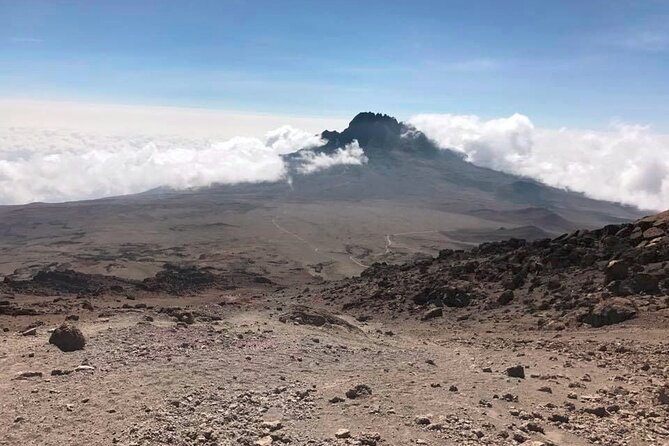
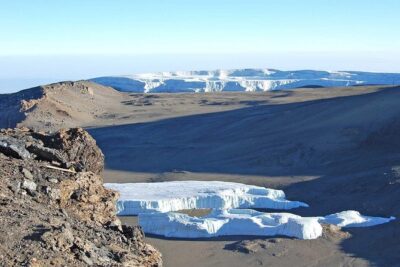
Near Second Cave Camp, the surroundings become more open and barren. This is a good place to understand the shape of the mountain. Kibo rises ahead, while the eastern icefields may be visible along the crater rim when conditions allow.
You can also take an optional acclimatization walk with your guide. That matters because the body responds better to gradual exposure than to a sudden jump in elevation. If you feel tired, resting is also a sensible choice. A high mountain rewards judgment more than bravado.
Day 3: Kikelelwa Caves and a closer look at Mawenzi
The route continues for roughly five hours through heather and moorland. You turn toward Mawenzi, Kilimanjaro’s third peak and the more jagged companion to Kibo.
Mawenzi is rarely climbed on this itinerary, but walking toward it gives the day a strong visual focus. The setting changes as you leave the earlier vegetation behind. You camp near the Kikelelwa Caves, where the mountain feels more exposed and remote.
This is one of the route’s best days for variety. You are not simply walking straight toward the summit. The path takes you around the massif, giving you different angles on both major peaks. That wider journey is a major reason to choose Rongai instead of treating Kilimanjaro as a short up-and-down hike.
A few more options to weigh up in Moshi
- Kilimanjaro climb by Lemosho Route (7-day)
★ 5.0 · 651 reviews - Safari Serengeti And Ngorongoro
★ 5.0 · 288 reviews - Kilimanjaro climb, Machame Route (7-day)
★ 5.0 · 262 reviews - Kilimanjaro Climbing Lemosho Route 8 Days.
★ 5.0 · 186 reviews
Day 4: Mawenzi Ridge and the alpine desert
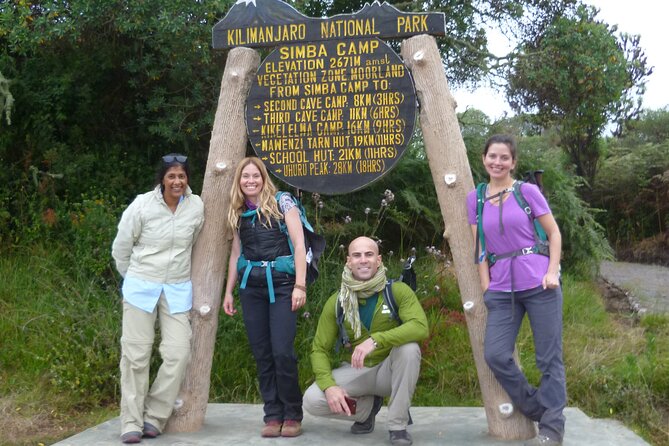
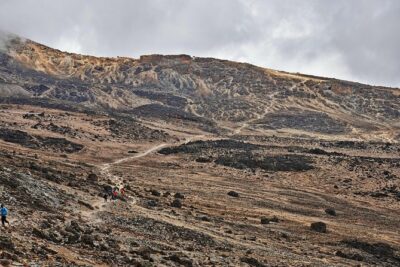
Day four covers about seven hours. It is a shorter route in terms of distance in some sections, but the trail is steep as it crosses grassy slopes and enters the alpine desert.
You move southeast toward the Mawenzi cone, and the surroundings change sharply. The camp lies inside the Mawenzi Ridge area near a tarn lake. Optional acclimatization walks are available, so you can gain additional height under your guide’s supervision without rushing the main route.
This is likely to feel like one of the more demanding daytime walks. The steep section and thin air require a slow pace. You should not judge the entire trip by how you feel here. Fatigue is normal, but symptoms linked to altitude need to be taken seriously and reported during the twice-daily health checks.
Day 5: Across the saddle to Kibo Base Camp
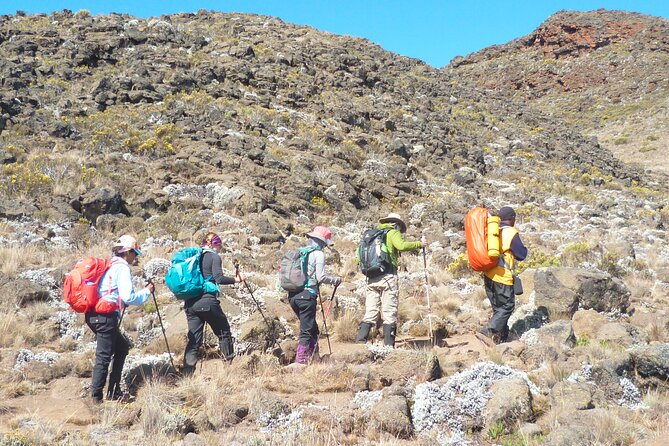
The fifth day takes about five hours and brings you back toward Kibo. You cross the broad saddle between Kibo and Mawenzi, moving steadily through the alpine desert.
The area becomes increasingly bare. There is less shelter, the air is thinner, and the summit feels much closer. You arrive at base camp, where you rest before beginning the summit attempt around midnight.
This schedule is one of the strongest points of the trip. You have spent several days gaining height before the final climb, rather than trying to summit after a short approach. Even so, you should expect a difficult night. Base camp is not the end of the work. It is the place where you eat, organize your gear, and try to rest before the steepest section.
Day 6: The midnight climb to Uhuru Peak
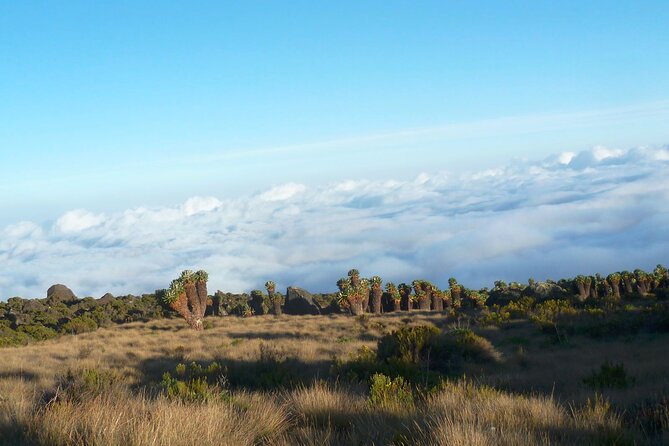
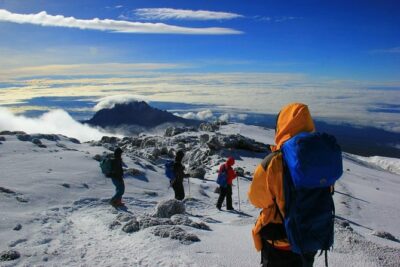
Summit day is listed at about 18 hours, making it the toughest part of the experience by far. You start around midnight and climb through the arctic zone in darkness.
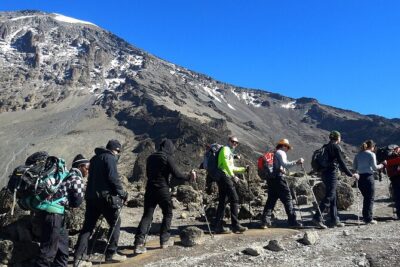
The first major target is Gilman’s Point at 5,681 meters on the Kibo crater rim. The route is steep, with loose volcanic scree underfoot. You move slowly in a zigzag pattern, and the cold night air adds another challenge.
From Gilman’s Point, you continue around the crater rim toward Stella Point and then Uhuru Peak. At 5,895 meters, Uhuru is the highest point in Africa. The final stretch is shorter than the climb to the rim, but the altitude makes every step count.
You normally spend only a short time at the summit because the air is extremely thin. After photographs and a brief moment at the top, you descend toward the lower camp area before continuing the mountain descent. The long day combines a night ascent, summit walking, and a major loss of elevation, so strong fitness is essential.
The included health checks are especially useful here. Guides carry a high-grade medical oximeter and conduct checks twice daily. One emergency oxygen cylinder is provided for every five climbers, along with a first aid kit. These provisions do not guarantee safety, but they show that altitude planning is built into the operation.
Day 7: Rain forest descent to Marangu Gate
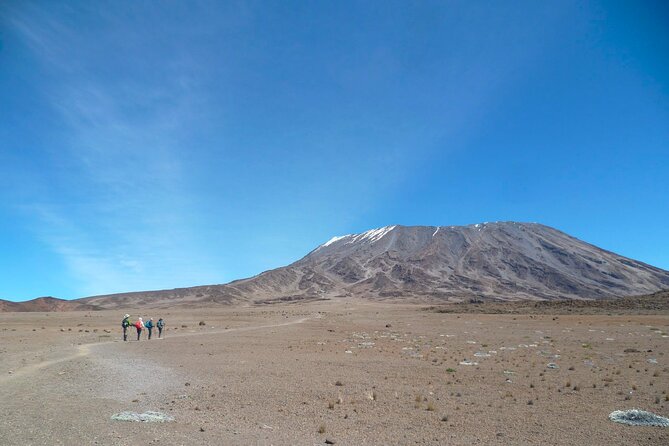
The final day takes about seven hours. You descend through Kilimanjaro’s southeastern rain forest zone to Marangu Gate.
This gives the trip a satisfying geographical shape. You began on the northern side, crossed high ground near Mawenzi and Kibo, summited from the base camp, and now leave through a different ecological zone. At Marangu Gate, the vehicle takes you back to Moshi.
The crew normally leaves you at the gate, making it a natural place to say goodbye and offer an optional tip. Tips are not included, so bring suitable cash if you want to thank the guides, porters, cook, waiter, and tent crew for their work.
What the $2,790 price includes
At $2,790 per person, this is not a budget walk. The price makes more sense when you look at what a supported Kilimanjaro climb requires.
Included costs cover national park conservation, entry, camping, and rescue fees. You also receive transfers from a Moshi-based lodge to the park gates and back, luggage storage during the climb, and transport for the crew to the remote Rongai gate.
The support team is substantial. A trained English-speaking mountain guide works within KINAPA minimum ratios, while porters carry up to 15 kilograms of your personal luggage. A specialist tent crew sets up camp, and a personal mountain cook and waiter handle meals.
Your mountain package includes breakfast, lunch, and dinner, along with eating utensils, bowls, cups, and cutlery. The meal count listed is six breakfasts, seven lunches, and six dinners. Boiled drinking water is provided from the first camp onward.
You also receive a four-season tent, tables, chairs, a dining tent, a basic one-inch foam mattress, hand-washing facilities, a small personal wash basin, and shared public toilets at campsites. These are practical comforts, but do not expect a hotel room at altitude.
The operator also includes Kilimanjaro Porters Assistance Project monitoring. That is important because porters do much of the physical work on the mountain. You should still ask for current details about porter welfare and tipping before departure.
The crew and the human side of the climb
A Kilimanjaro itinerary can look good on paper and still depend heavily on the people leading it. The strongest praise here went to guides Calvin and Goodchance, who were credited with providing motivation and confidence throughout the climb.
That matters during summit night, when tiredness and doubt can become as serious as the steep trail. A guide who keeps communication clear and the pace sensible can make a real difference.
The porters and chef also received warm praise for their friendly attitude. Dietary needs were handled throughout one climb, so you should tell the company about your requirements before departure and repeat them at the pre-climb briefing.
The private format means only your group participates. That can make pacing and communication easier, though the group size is not specified. Extra guides and porters are available for additional charges, $35 per guide per day and $20 per luggage porter per day.
What to pack and what costs extra
Personal mountain equipment is not included. You will need to arrange items such as a sleeping bag and walking poles, and the company can provide a guideline on request.
Extra comfort comes at a cost. A private tent is $20 per day, a portable toilet is $45 per day for up to five people, and a foldable bed is $20 per bed per day. Drinks, alcohol, visas, international flights, insurance, personal items, and tips are also excluded.
Flying Doctors emergency evacuation membership is not included either. The trip does include park rescue fees and emergency oxygen, but you should check that your travel insurance covers high-altitude trekking and evacuation.
The equipment rules deserve attention. Water for the first trekking day is excluded, and soft plastics are not permitted on the mountain. Plan your bottles and containers before reaching the gate, since this is not the sort of detail you want to solve at the trailhead.
Who should book this climb?
I would recommend this route to a fit first-time Kilimanjaro climber who values a slower schedule, changing scenery, and strong logistical support. It also suits someone who prefers a quieter northern approach and likes the idea of descending by a different route.
The seven-day length is a good middle ground. Shorter climbs may cost less or fit a tighter schedule, but they allow less time for acclimatization. Rongai’s gentle trail profile can also fool you into thinking the summit will be easy. It will not.
You should think twice if you have lung problems or another known altitude-related medical condition. The company also states that a strong level of physical fitness is needed. This is a camping expedition with long walking days, not a sightseeing trip with a summit photo added at the end.
The tour has a perfect rating from two posted reviews, with particular praise for professional service, food support, dietary care, and the encouragement provided by Calvin and Goodchance. That is encouraging, but two reviews are not enough to predict every group’s experience. I would still ask about current group size, porter arrangements, equipment standards, and the exact descent camp used after summit morning.
Should you book the 7-day Rongai climb?
Book it if you want the northern side of Kilimanjaro, a seven-day schedule, private participation, and most major mountain costs bundled into one price. The route offers a strong mix of dry lower slopes, Mawenzi views, alpine desert, and a serious summit attempt.
Do not book it simply because Rongai is called easier. The mountain remains high, cold, and demanding, especially on the 18-hour summit day. If you are fit, prepare properly, and respect the altitude, this is a well-supported way to reach Uhuru Peak while seeing more than one face of Kilimanjaro.
FAQ
Where does the Kilimanjaro Rongai climb start?
The experience starts at Shah Tours, 6 Sekou Toure Way in Moshi, Tanzania. Pickup is provided from a Moshi-based lodge, and the transfer begins at approximately 9:00 am.
How long does the Rongai climb last?
The climb lasts approximately seven days. The itinerary includes five approach days, a summit and descent day, and a final descent to Marangu Gate.
Is the Rongai route technical?
No. It is described as a non-technical camping route without the scrambling sections found on some southern circuit routes. You still need strong physical fitness because of the altitude and long walking days.
What height is Uhuru Peak?
Uhuru Peak is 5,895 meters, or 19,341 feet. The route also passes Gilman’s Point at 5,681 meters, or 18,640 feet, on the Kibo crater rim.
Are meals and drinking water included?
Meals are included, along with eating utensils, bowls, cups, and cutlery. Boiled drinking water is provided from the first camp onward, but water on the first trekking day is not included.
Are tents and mattresses provided?
Yes. The package includes four-season tents, a basic one-inch foam sleeping mattress per person, a dining tent, tables, and chairs. Shared tents are used for even-numbered groups, with one single tent for an odd-numbered group.
Can I cancel for a full refund?
Yes. You can receive a full refund if you cancel at least 24 hours before the experience start time. Cancellations or changes made less than 24 hours before the start time are not accepted for a refund.
Just added in Moshi
- Zanzibar: Stone Town tour and Nakupenda beach with Lunch★ 5.0 · 1 review
- day trip lake manyara★ 5.0 · 2 reviews
- Mt Kilimanjaro 6 days Marangu route hike★ 5.0 · 3 reviews
- machame route★ 5.0 · 16 reviews
- Private Cycle to Kilimanjaro Bike Park Safari★ 5.0 · 6 reviews
- West Kilimanjaro cycling Adventures★ 4.5 · 8 reviews
- Wildlife Extravaganza: Manyara, Tarangire & Ngorongoro in 3 Days★ 5.0 · 3 reviews
- 3 Days Private E-Bike Tour in West Kilimanjaro★ 5.0 · 3 reviews
Rongai Route Climbs, compared.
Rongai Route 6 Days 5 Nights/Kilimanjaro climb
Read our review →
6 Days Kilimanjaro climbing | Hiking Tour via the Rongai Route
Read our review →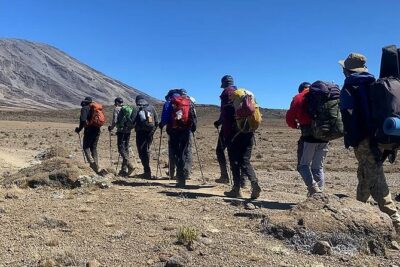
Browse the lists this tour appears in