
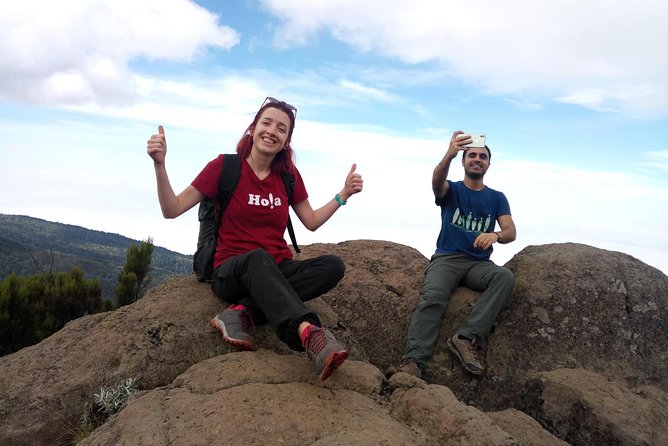
Reviewed · RONGAI ROUTE CLIMBS
7 days Rongai route climbing Mt. Kilimanjaro
Africa’s highest peak rewards patience.
This 7-day Rongai Route climb gives you a quieter approach to Mount Kilimanjaro, with steady walking, useful acclimatization time, and a dramatic summit day. I especially like the route’s gradual start through pine forest and its camps beneath Mawenzi’s sharp volcanic spires. The package also includes meals, tents, park fees, rescue fees, airport transfers, and a mountain crew, so the $2,770 price covers much more than the climb itself.
The main caution is the summit schedule. You wake around 11:30 p.m., climb through darkness to Gillman’s Point and Uhuru Peak, then descend for hours. You need strong physical fitness, a good attitude, and comfort with basic mountain camping. The route is not a casual holiday walk.
In This Review
- The route’s best features at a glance
- What the $2,770 price really covers
- Day 1: From Moshi to Simba Camp at 2,600 meters
- Day 2: Slow walking to Second Cave
- Day 3: Kikelewa Cave and the first big mountain views
- Day 4: Mawenzi Tarn beneath volcanic spires
- Day 5: Across the saddle to Kibo Camp
- Day 6: The summit push to Uhuru Peak
- Day 7: Descending through the forest to Marangu Gate
- Food, water, camping, and the support team
- Safety, fitness, and group size
- Who should choose this Rongai climb?
- FAQ
- How long is the Rongai Route climb?
- Where does the tour start?
- How high is Uhuru Peak?
- What is the hardest part of the climb?
- Are meals included?
- Is drinking water provided?
- What is not included in the price?
- Should you book this Kilimanjaro experience?
The route’s best features at a glance
- Rongai’s gentle opening: The first day crosses maize fields and pine forest on a mild trail, a useful way to begin at altitude.
- Two strong acclimatization days: The schedule takes you from Simba Camp to Second Cave, Kikelewa Cave, and Mawenzi Tarn before the summit push.
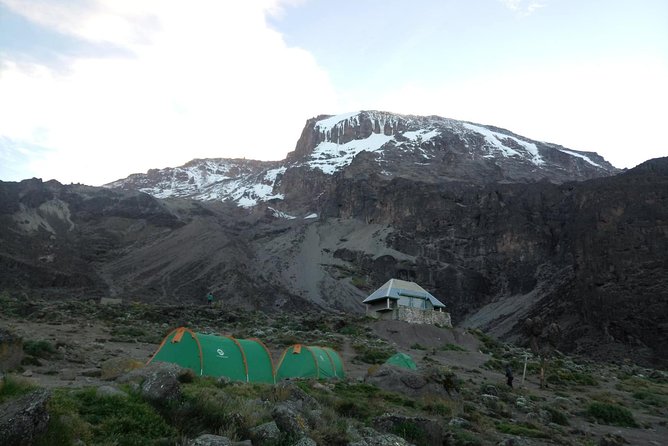
- Mawenzi Tarn is the scenic highlight: Camp beneath Mawenzi’s towering volcanic spires, with an afternoon set aside for rest and exploration.
- A serious summit day: The final ascent takes about eight hours to Uhuru Peak, followed by roughly six hours of descent to Horombo.
- A full support package: Guides, porters, a cook, three hot meals each day, treated water, oxygen, first aid, and rescue fees are included.
- A small maximum group: The company limits the activity to 15 people, which should make camp routines and guide contact more manageable.
What the $2,770 price really covers
At $2,770 per person, this is not a budget walk-up-and-down excursion. You are paying for seven days on the mountain, two nights of accommodation in Moshi, transfers from Kilimanjaro International Airport, park entry, camping fees, rescue fees, government taxes, and 18 percent VAT.
The package also includes four-season mountain tents, double-layer sleeping mats, hot water for washing, treated and filtered drinking water, three hot meals a day, and a professional guide, cook, and porter team. Portable oxygen tanks, an oximeter, and an emergency first-aid kit are included too.
That list matters because Kilimanjaro costs quickly rise when basic services are added separately. Here, the major mountain charges are bundled together. You still need to budget for flights, travel insurance, and tips for your guides, porters, and cook.
The two nights in Moshi are useful. You have a place to sleep before or after the climb, airport transfers, and a base for the road connections to the mountain. The package description does not specify the Moshi hotel, room type, or meal arrangements there, so ask for those details before paying.
More Rongai Route climbs:
- Kilimanjaro climb, Rongai Route (7-day)
★ 5.0 · 40 reviews - Kilimanjaro climb, Rongai Route (6-day)
★ 5.0 · 15 reviews - Mount Kilimanjaro Rongai Route
★ 5.0 · 10 reviews
Day 1: From Moshi to Simba Camp at 2,600 meters
The day begins with an 8:30 a.m. start from Moshi. The drive first takes you to Marangu Park Gate for registration and formalities. From there, the transfer continues for about three hours to the Rongai trailhead near Nale Moru village.
This is a long travel day before the walking really gets going. Allow for road delays and park procedures. The transport is part of the value, but you will spend several hours in vehicles, so pack water and a few easy snacks where you can reach them.
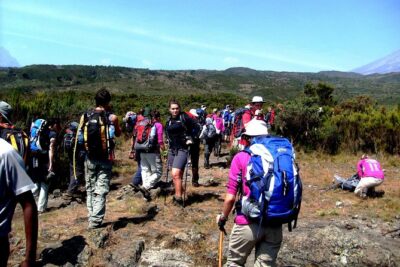
The hike takes about three to four hours and covers roughly eight kilometers. The path begins across maize fields, then enters pine forest. It climbs gently rather than sharply, which makes this a sensible introduction to a week at altitude.
Simba Camp sits at about 2,600 meters. You will find a toilet and a wooden table with benches, but no hut. Water is available down the trail below camp. That detail tells you what to expect: this is organized wilderness camping, not a mountain lodge with indoor facilities.
The forest section gives the first day a pleasant sense of progress. You leave village farmland behind and begin to feel the mountain changing around you. The gentle trail is welcome, though the long transfer means the day still feels substantial.
Day 2: Slow walking to Second Cave
Day two covers only about two to three hours of hiking through moorland. The plan calls for a late breakfast at Simba Camp, followed by a very slow walk toward Second Cave at about 3,450 meters.
This is one of the most useful days in the schedule. The short distance gives your body time to adjust before the route climbs higher. The advice to walk slowly is not decorative. At Kilimanjaro altitude, rushing early can make later days harder.
You stop at Second Cave for a hot lunch, then spend the afternoon resting. Dinner and overnight accommodation are at camp. The shorter day may feel almost too easy, but that is the point. A Kilimanjaro itinerary should give you time to adapt, not simply push you uphill as fast as possible.
The moorland brings wider views than the forest. You may also notice the air becoming colder and thinner. Keep warm during the afternoon, even if you are not moving. Sitting around camp at altitude can chill you quickly.
Day 3: Kikelewa Cave and the first big mountain views
After breakfast, you continue toward Kibo and reach Kikelewa Cave at roughly 3,600 meters. The walk takes about three to four hours through moorland.
The route begins to feel more remote here. Views open up, and the scale of Kilimanjaro becomes clearer. The supplied itinerary describes the moment well: you start to feel that you are on a very big mountain. That change in scenery is one reason to choose the Rongai approach.
Water comes from the obvious stream below the cave, though you may need to walk downhill to find a good collection point. The practical lesson is simple: follow your guide’s instructions about water and do not assume every camp has a tap nearby.
The night is spent at the third cave camp, also called Kikelewa Caves. This is still a basic camping stop, but the setting is more striking than the first night. You are gaining height without making the day painfully long, a good trade for summit preparation.
A few more options to weigh up in Moshi
- Kilimanjaro climb by Lemosho Route (7-day)
★ 5.0 · 651 reviews - Safari Serengeti And Ngorongoro
★ 5.0 · 288 reviews - Kilimanjaro climb, Machame Route (7-day)
★ 5.0 · 262 reviews - Kilimanjaro Climbing Lemosho Route 8 Days.
★ 5.0 · 186 reviews
Day 4: Mawenzi Tarn beneath volcanic spires
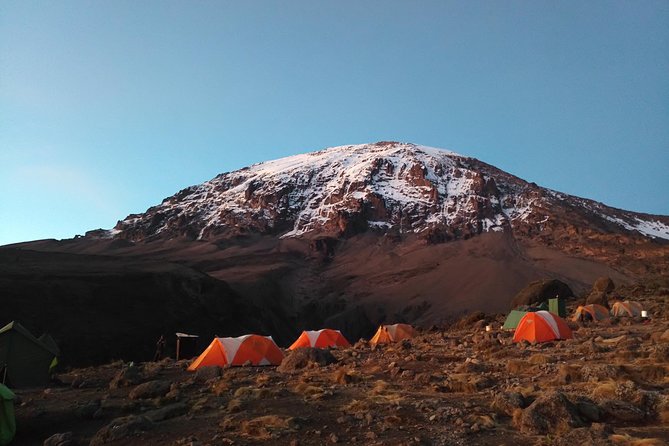
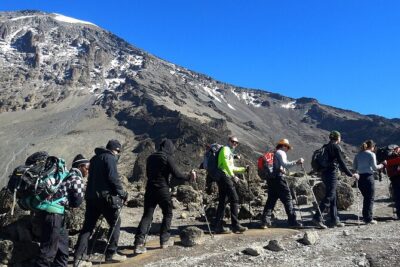
Day four is short, about three to four hours, but steeper. You climb grassy slopes toward Mawenzi Tarn, with broad views across the surrounding wilderness.
The vegetation zone ends shortly before camp. This is an important visual marker on Kilimanjaro. The mountain changes from green upper moorland to a harsher alpine setting, with fewer plants and more exposed rock.
Mawenzi Tarn is spectacularly positioned beneath the spires of Mawenzi. The camp’s setting is the day’s main reward. You have time in the afternoon to rest and explore the area, but keep the exploration gentle. The goal is acclimatization, not a side expedition that leaves your legs tired.
This is also a good place to watch how your body is responding. Headache, unusual fatigue, nausea, or breathlessness should be reported to your guide. The crew carries an oximeter and portable oxygen, but those items are safety tools, not a substitute for speaking up early.
Day 5: Across the saddle to Kibo Camp
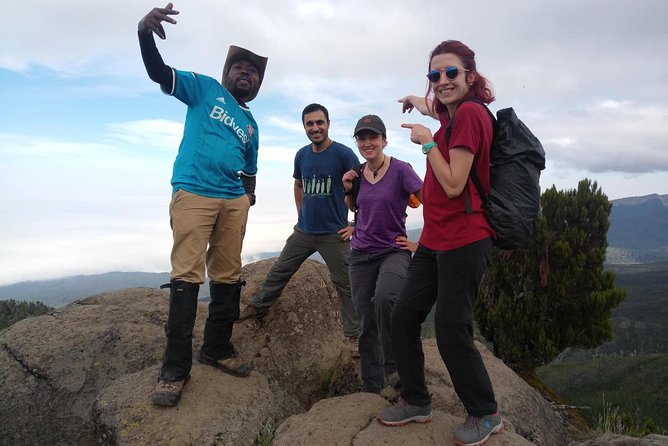
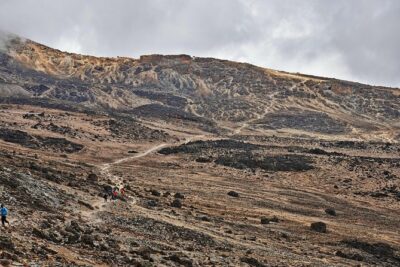
The fifth day crosses the broad saddle between Mawenzi and Kibo. The hike takes about four to five hours through alpine desert and ends at Kibo Camp.
This section can feel stark. The vegetation has largely disappeared, and the route becomes a long high-altitude crossing. The absence of dramatic climbing does not make it easy. You are walking at serious elevation, and the thin air can make a normal pace feel slow.
Kibo Camp is the staging point for the summit attempt. The rest of the day is spent preparing for a midnight start. Eat what you can, organize warm clothing, check your headlamp and water, and sleep instead of trying to fill the afternoon with activity.
The itinerary lists Kibo Camp as the overnight stop. Unlike the lower sections, this is not a place for a relaxed evening. You are resting for the hardest physical and mental effort of the trip.
Day 6: The summit push to Uhuru Peak
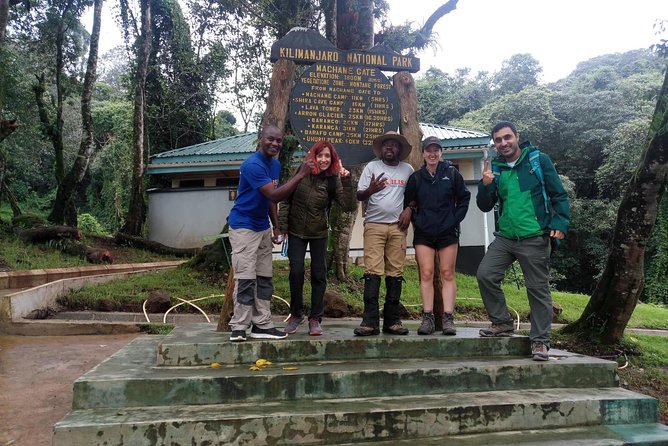
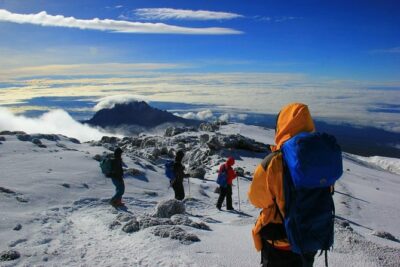
Summit day begins around 11:30 p.m. After tea and biscuits, you start walking into the night. The final ascent takes about eight hours to Uhuru Peak, followed by about six hours descending toward Horombo.
The first section is rocky and leads to Hans Meyer Cave at approximately 5,150 meters. This can serve as a resting point before the trail becomes steeper. From there, the path zigzags through loose stone scree toward Gillman’s Point at about 5,681 meters on the crater rim.
The stretch to Gillman’s Point is described as the hardest part of the route, and that makes sense. The slope is steep, the footing is loose, and every step takes effort. You need both physical strength and mental patience. The early start also means you are climbing while tired and cold.
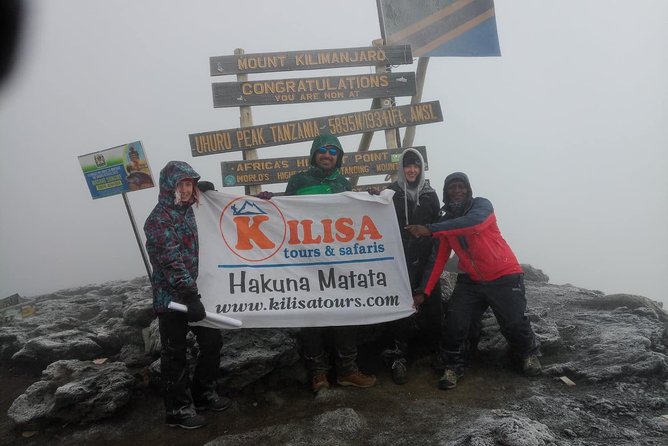
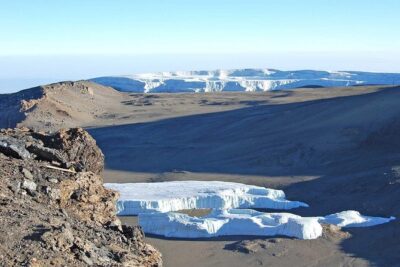
From Gillman’s Point, snow may continue toward Uhuru Peak at 5,895 meters. Uhuru is the highest point in Africa and the main goal of the climb. Reaching it brings a huge sense of achievement, but do not treat Gillman’s Point as a minor stop. It is itself a major high-altitude milestone, and the route provides a green certificate for climbers who reach it. Those who reach Uhuru Peak receive gold certificates.
The summit distance is listed as six kilometers uphill and 21 kilometers downhill. That is a demanding total for one day. The descent is not an afterthought. Loose ground can punish tired knees, and you still have hours to go after the summit photos and celebrations.
Your guide’s role matters most here. Kilisa emphasizes safety, and the package includes rescue fees, oxygen, an oximeter, and an emergency first-aid kit. Still, the guide cannot remove the effects of altitude. Be honest about how you feel, follow instructions, and understand that turning back can be the correct decision.
Day 7: Descending through the forest to Marangu Gate
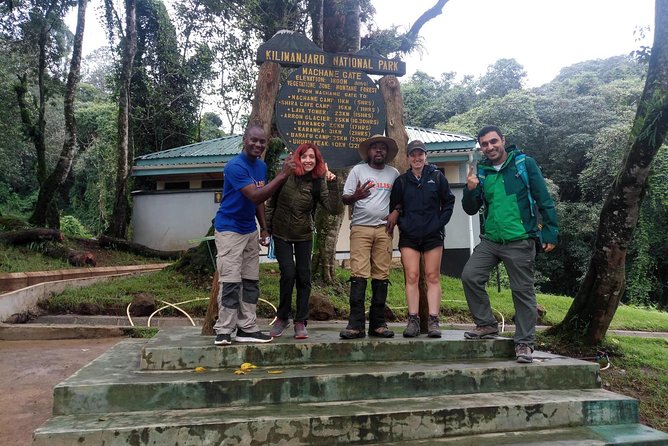
After breakfast, you continue down for about six hours, passing Mandara Hut and reaching Marangu Gate. The day covers roughly 27 kilometers according to the itinerary, so it remains a serious walking day even though the summit is behind you.
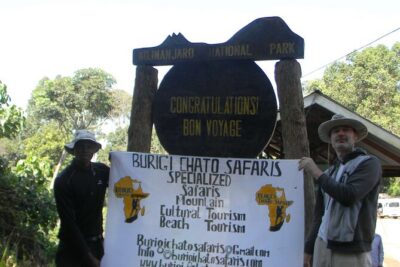
The route returns through lower vegetation, and the change from high alpine ground back toward forest gives you a clear sense of how far you have traveled. At Marangu Gate, you sign the register and receive your certificate if you reached Gillman’s Point or Uhuru Peak.
The drive back to Moshi completes the trip. The experience ends at the original meeting point, with the mountain behind you and the final night in town included in the package.
Food, water, camping, and the support team
Three hot meals are provided each day on the mountain. The package lists six dinners, six lunches, and seven breakfasts, along with treated and filtered drinking water. Hot water for washing is also included.
Those provisions make a real difference after cold, dusty walking days. The details of the menu are not provided, so ask about dietary needs before departure. You should also confirm exactly what personal snacks you should bring.
You sleep in four-season mountain tents on double-layer sleeping mats. There are no huts listed for the Rongai camps, and the first camp specifically has no hut. Prepare for basic conditions, shared camp facilities, and outdoor nights.
The guide, cook, and porters are central to the experience. The two strongest comments about Kilisa’s service praise the team’s support, comfort, encouragement, and attention from the start of the climb through the summit and afterward. One customer, Luke, also described receiving help even after finishing early. That suggests a company willing to manage changing situations, though no guide names are provided.
Tips are not included. Bring cash for gratuities and ask the company for current guidance on fair amounts and how tips are shared among the crew.
Safety, fitness, and group size
The company lists safety and comfort as priorities and includes rescue fees, oxygen, an oximeter, and a first-aid kit. Those are useful safeguards, but they do not make the mountain low-risk.
You need a strong physical fitness level. The hardest test is not one single steep section. It is the combination of several days at altitude, the midnight summit start, the climb to 5,895 meters, and the long descent afterward.
The group maximum is 15 people. That is small enough to avoid the feel of a huge procession, while still large enough that the pace may vary. Ask how the guide team is assigned if the group reaches the maximum size.
The experience requires good weather. If poor weather forces cancellation, you can receive a different date or a full refund. You can also cancel for a full refund if you do so at least 24 hours before the local start time. Changes or cancellations inside that window are not accepted.
Who should choose this Rongai climb?
I would choose this trip if you want a full seven-day mountain program with a slower opening, several acclimatization stops, and a camp beneath Mawenzi. The gradual first days are more appealing than an itinerary that races upward.
It suits people who can handle basic camping and long walking days. It is also a good fit if you prefer having transport, meals, water, equipment, and park charges organized in one package.
I would hesitate if you dislike midnight starts, shared camp facilities, or long descents. The itinerary is physically demanding, and the short descriptions of some days should not fool you. A three-hour day at altitude can feel harder than a much longer walk at sea level.
The two highly positive customer accounts focus on full support and satisfaction with the Kilisa team. That is the strongest reason to consider the operator. Before booking, ask for the names and experience of your guide team, the Moshi accommodation details, the current tipping guidance, and the exact equipment you must supply yourself.
FAQ
How long is the Rongai Route climb?
The experience lasts approximately seven days, beginning and ending in Moshi.
Where does the tour start?
The tour starts in Moshi, Tanzania, with pickup offered. The listed start time is 8:30 a.m.
How high is Uhuru Peak?
Uhuru Peak is at 5,895 meters and is the highest point in Africa.
What is the hardest part of the climb?
The steep, rocky section from Hans Meyer Cave to Gillman’s Point is described as the most demanding part. Summit day also includes the climb to Uhuru Peak and a long descent.
Are meals included?
Yes. Three hot meals per day are provided on the mountain. The package lists seven breakfasts, six lunches, and six dinners.
Is drinking water provided?
Yes. Treated and filtered drinking water is provided throughout the trek.
What is not included in the price?
Flights, travel insurance, and tips for the guides, porters, and cook are not included.
Should you book this Kilimanjaro experience?
Book it if you want a carefully paced Rongai itinerary with substantial support and a clear focus on acclimatization. The price is reasonable for the included park charges, rescue fees, transfers, meals, equipment, water, and mountain crew.
Do not book it simply because the schedule looks tidy on paper. The summit day is long, the conditions are basic, and altitude can change the experience quickly. If you are fit, prepared for camping, and willing to walk slowly, Kilisa’s seven-day plan offers a strong route to Kilimanjaro’s summit with the best scenery saved for Mawenzi Tarn and the upper mountain.
Just added in Moshi
- Zanzibar: Stone Town tour and Nakupenda beach with Lunch★ 5.0 · 1 review
- day trip lake manyara★ 5.0 · 2 reviews
- Mt Kilimanjaro 6 days Marangu route hike★ 5.0 · 3 reviews
- machame route★ 5.0 · 16 reviews
- West Kilimanjaro cycling Adventures★ 4.5 · 8 reviews
- Wildlife Extravaganza: Manyara, Tarangire & Ngorongoro in 3 Days★ 5.0 · 3 reviews
- Private Cycle to Kilimanjaro Bike Park Safari★ 5.0 · 6 reviews
- 3 Days Private E-Bike Tour in West Kilimanjaro★ 5.0 · 3 reviews
Rongai Route Climbs, compared.
Rongai Route 6 Days 5 Nights/Kilimanjaro climb
Read our review →
6 Days Kilimanjaro climbing | Hiking Tour via the Rongai Route
Read our review →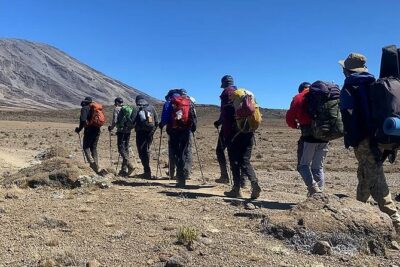
Browse the lists this tour appears in