
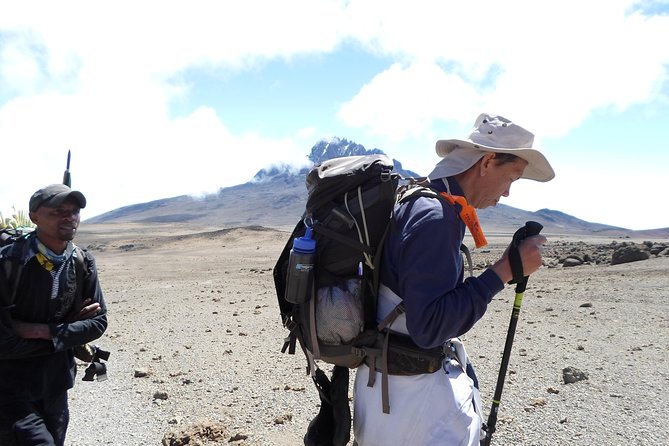
Reviewed · RONGAI ROUTE CLIMBS
Kilimanjaro Rongai Route 7 Days
Quiet trails, big mountain views, and a serious summit day make this route worth a look. The seven-day Rongai Route approaches Kilimanjaro from the Kenyan side, beginning near Nale Moru and crossing through farmland, pine forest, moorland, alpine terrain, and the high volcanic slopes of Kibo. I like the low-crowd first two days and the gradual route toward Mawenzi, where the scenery changes often.
I also like the amount of safety and camp equipment included, from emergency oxygen and a Gamow Bag to VHF radios, purified water, and a personal portable toilet. The main consideration is the summit schedule: you wake around 11:30 p.m., climb steep scree to Gillman’s Point, then continue to Uhuru Peak at 5,895 meters. That is a hard night, even for a fit trekker.
The price is $2,669.88 per person, with pickup, transport, meals, accommodation before and after the climb, park fees, and mountain support included. It is not a budget trek, but the package covers many costly and important elements. The tour is private, so only your group takes part.
In This Review
- Key points to know before booking
- Why the Rongai Route feels different
- Day 1: Nale Moru to Simba Camp at 2,625 meters
- Day 2: Simba Camp to Second Cave Camp
- Day 3: Moorland and Kikelewa Caves
- Day 4: The climb to Mawenzi Tarn at 4,330 meters
- Day 5: Crossing the saddle to Kibo Camp
- Day 6: Gillman’s Point and Uhuru Peak
- Day 7: Descending through Marangu Gate
- What the $2,669.88 price covers
- Who should choose this private trek?
- Should you book the Rongai Route?
- FAQ
- Where does the Rongai Route begin?
- How long is the Kilimanjaro Rongai Route tour?
- Is this a private tour?
- What fitness level is required?
- When does the summit climb begin?
- How high is Uhuru Peak?
- Are meals included?
- What is not included in the price?
Key points to know before booking
- The Rongai Route begins at Nale Moru: The opening section passes farmland and pine forest before reaching Simba Camp at 2,625 meters.
- The first two trekking days are quieter: This is a useful choice if you want fewer people around at the start of the climb.
- Mawenzi Tarn is the route’s scenic highlight: The camp sits below the sharp cliffs of Mawenzi, Kilimanjaro’s second volcanic cone.
- The summit day is the real test: The climb from Kibo Camp starts around midnight and includes steep scree, Gillman’s Point at 5,681 meters, and Uhuru Peak at 5,895 meters.
- Safety equipment is unusually extensive: Oxygen, a Gamow Bag, pulse oximeter, radios, rescue fees, and a trained English-speaking mountain guide are included.
- The route finishes through Marangu: After the summit, you descend to Marangu Gate, collect your certificate if successful, and return to Moshi.
Why the Rongai Route feels different
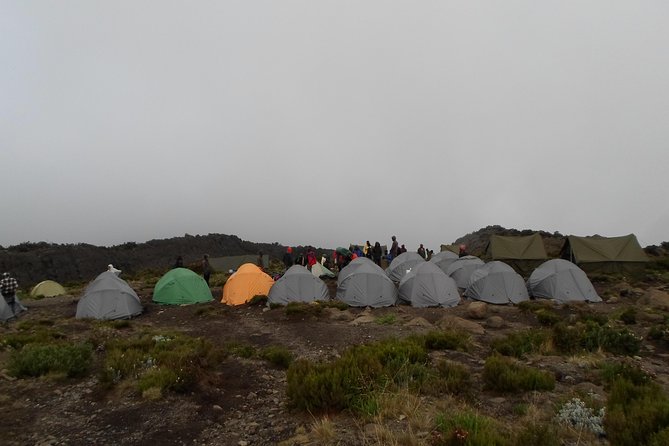
Kilimanjaro has several established routes, and Rongai has a clear advantage for people who dislike crowded trailheads and busy early camps. The route starts on the northeastern side of the mountain, near the village of Nale Moru, rather than following the more commonly used southern approach.
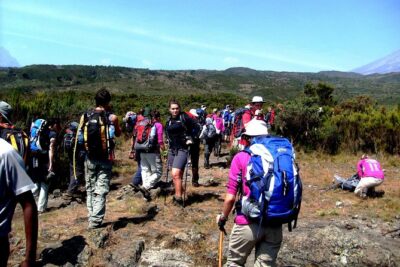
For the first two days, you walk through farmland, pine forest, and moorland. The setting changes at a steady pace, and you may have a chance to see colobus monkeys. Elephants or buffalo are also possible along the approach, though wildlife sightings are not guaranteed.
I like that the route does not rush straight into the high zone. Day one reaches Simba Camp at 2,625 meters, then day two climbs to Second Cave Camp. This gives you time to adjust before the route turns toward Mawenzi and the higher camps.
The route later crosses the saddle between Mawenzi and Kibo before joining the descent through Marangu. That means you do not simply walk up and return by the same path. You get a wider look at Kilimanjaro’s different sides, with distinct vegetation and mountain views along the way.
More Rongai Route climbs:
- Kilimanjaro climb, Rongai Route (7-day)
★ 5.0 · 40 reviews - Kilimanjaro climb, Rongai Route (6-day)
★ 5.0 · 15 reviews - Mount Kilimanjaro Rongai Route
★ 5.0 · 10 reviews
Day 1: Nale Moru to Simba Camp at 2,625 meters
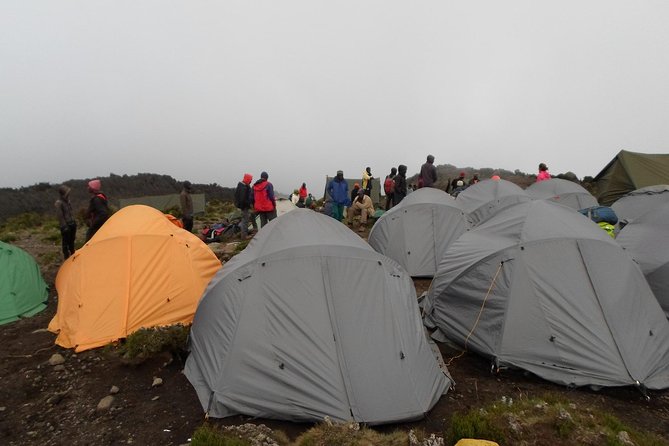
The morning begins with a drive from Moshi to Nale Moru, the starting village for the Rongai Route. From there, the trek begins on a gradual path through farmland and pine forest.
This is a gentle introduction compared with the high-altitude days ahead. The walk takes about three hours, ending at Simba Camp on the edge of the moorland zone. The camp’s elevation, 2,625 meters, is high enough to begin the adjustment process without making the first day overly punishing.
The possible wildlife sightings add interest to an otherwise straightforward opening walk. Colobus monkeys may appear in the forest, and elephants or buffalo are possible in the wider area. Keep your expectations sensible. The main attraction is the change from cultivated ground to mountain forest.
Your guide and porters support the group, and camping equipment, meals, purified drinking water, and warm water for washing are included. That last item sounds small, but after a dusty approach it makes camp life more comfortable.
Day 2: Simba Camp to Second Cave Camp
Day two covers about 5 kilometers and takes three to four hours. The path climbs steadily through the moorland zone, with views toward Kibo and its eastern ice fields.
This is a short day by distance, but the altitude matters more than the mileage. You are not trying to race. A slow, even pace helps you conserve energy for the higher camps and the summit push.
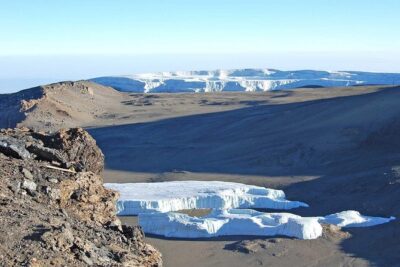
Second Cave Camp sits in the moorland, where the trees have begun to thin and the mountain feels more open. The view toward Kibo is one of the day’s rewards. You can also see the eastern ice fields on the crater rim, a reminder that the summit is still a long way above you.
Breakfast, lunch, and dinner are included. The tour promises large portions of fresh, healthy food, which matters on a route where each day uses more energy than the last. The exact menu is not specified, so bring any personal snacks you know you will want.
Day 3: Moorland and Kikelewa Caves
The third day leaves the pine forest behind completely. You continue through moorland, with Kibo’s eastern ice fields remaining in view, then turn away from the main trail toward the jagged peaks of Mawenzi.
This smaller path is one of the appealing parts of the route. The setting becomes more rugged, and Mawenzi provides a sharp contrast to Kibo’s broad volcanic cone. The walk covers about 5 kilometers and takes three to four hours.
Camp is set in a sheltered valley near Kikelewa Caves at 3,630 meters. The sheltered position may make camp feel more protected than the exposed ground higher up, though the altitude can still affect sleep and appetite.
This is a good day to watch how your body responds. Headaches, unusual tiredness, or nausea should be reported to your guide. The package includes a pulse oximeter for checking oxygen levels, but that tool does not replace a guide’s judgment or your own honest assessment.
A few more options to weigh up in Moshi
- Kilimanjaro climb by Lemosho Route (7-day)
★ 5.0 · 651 reviews - Safari Serengeti And Ngorongoro
★ 5.0 · 288 reviews - Kilimanjaro climb, Machame Route (7-day)
★ 5.0 · 262 reviews - Kilimanjaro Climbing Lemosho Route 8 Days.
★ 5.0 · 186 reviews
Day 4: The climb to Mawenzi Tarn at 4,330 meters
Day four is only about 8 kilometers, but it includes a short, steep ascent over grassy slopes. The climb is rewarded with views of the Kenyan plains to the north.
Vegetation fades shortly before Mawenzi Tarn Hut, which sits directly below Mawenzi’s high cliffs. This is arguably the most dramatic camp of the route. The jagged volcanic rock above you gives the area a wilder feel than the smoother upper slopes of Kibo.
The afternoon is reserved for rest or light exploration to help with acclimatization. Use that time wisely. You do not need to turn it into another major hike. Eating, drinking, organizing your clothing, and sleeping are all productive work at this altitude.
The day takes roughly four to five hours. It is a useful middle section because the route gains height without yet demanding the all-night effort required for the summit.
Day 5: Crossing the saddle to Kibo Camp
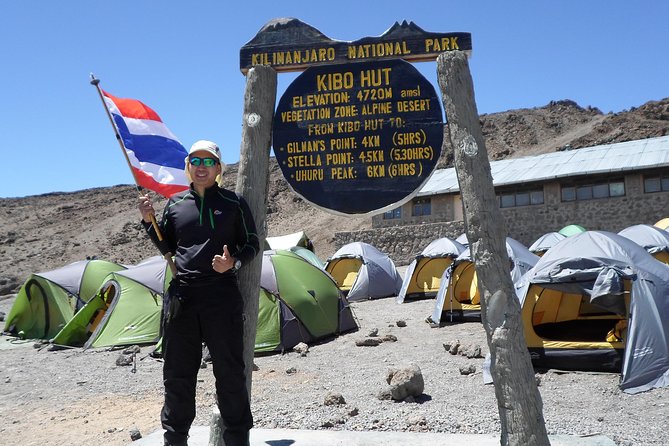
On day five, you continue on the eastern side of Kibo and cross the broad saddle between Mawenzi and Kibo. The walk to Kibo Hut takes four to five hours, though the distance is not provided.
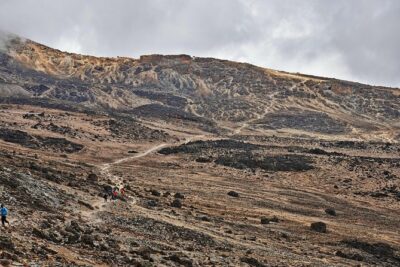
This section can feel stark and exposed. The route is higher, vegetation is largely gone, and the summit slopes ahead look close but remain demanding. The open ground can also make the day feel longer than the clock suggests.
Once you reach Kibo Camp, the focus changes from walking to preparation. You rest for the remainder of the day because the final ascent begins around midnight. This is not a night for casual sightseeing or a late meal. Organize your summit clothing, water, headlamp, and personal items before trying to sleep.
The itinerary calls this overnight camp Kibo Camp, while the day description also refers to Kibo Hut. Treat these as the same high camp in the schedule, and confirm the exact sleeping arrangement with the operator before departure.
Day 6: Gillman’s Point and Uhuru Peak
Summit day begins around 11:30 p.m. You wake in the cold and dark, eat if you can, and begin on a rocky path toward Hans Meyer Cave at 5,150 meters.
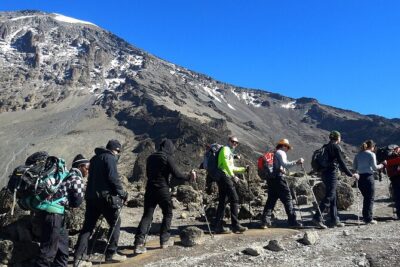
Hans Meyer Cave provides a useful rest point, but the trail soon becomes much steeper. The route zigzags through loose stone scree toward Gillman’s Point at 5,681 meters on the crater rim. This is described as the hardest section of the route, and that assessment makes sense: the altitude, darkness, steep slope, and unstable footing all demand patience.
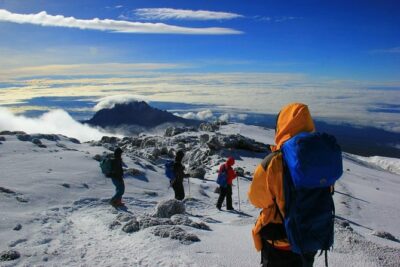
From Gillman’s Point, you normally encounter snow on the way to Uhuru Peak. The summit reaches 5,895 meters, the highest point in Africa. Weather conditions determine how long you can stay for photographs, so do not count on a long celebration at the top.
The summit attempt is listed as taking about three hours in the schedule, but the full summit day also includes the descent and additional walking. The description is cut short before giving the complete return details, so ask for the expected total time before you go.
A porter carries your day-pack during the summit attempt, which is a practical benefit. You still need to carry your own essential water and personal items, but the lighter load can make the steep climb more manageable.
The safety provisions are a strong part of this package. Emergency oxygen tanks, a Gamow Bag, a pulse oximeter, VHF radios, and mountain rescue fees are included. These tools do not make altitude sickness harmless, but they show that the operator has planned for serious mountain conditions.
Day 7: Descending through Marangu Gate
After breakfast, you begin the long descent to Marangu Gate. The schedule gives about six hours for the descent, passing Mandara Hut before reaching the gate.
Downhill walking is easier on your lungs but can be rough on tired knees and feet. Trekking poles, if you use them, may be useful, though they are not listed among the inclusions. Your guide can help you maintain a steady pace and avoid rushing simply because the summit is behind you.
At Marangu Gate, successful climbers receive summit certificates after signing the register. You then drive back to Moshi, with the trek ending at Park View Inn.
The return to town is welcome, but do not underestimate the final day. Six hours of descending after a midnight summit attempt is a long finish. Plan to keep your evening simple.
What the $2,669.88 price covers
At $2,669.88 per person, this is a major purchase. The value depends on how much support you want and how many included services you would otherwise need to arrange separately.
The package includes arrival and departure transfers, local transport, two nights of classic standard hotel accommodation, two nights of comfort hotel accommodation, and bed-and-breakfast arrangements. The wording suggests accommodation before and after the mountain portion, but because both hotel categories are listed, confirm how the nights are divided.
On the mountain, you receive tents, sleeping mats, solar LED lights, toilet tents, a dining tent setup, aluminum tables, and chairs with backs and armrests. Those chairs are a small luxury after several hours on the trail.
All mountain meals are included, along with purified drinking water and warm water for washing. Government taxes, park entrance fees, rescue fees, and fair treatment of porters are also covered.
Tips, a Tanzania visa on arrival, personal expenses, laundry, phone use, beverages, and optional tours such as a short safari are not included. The description also lists lunch, dinner, and breakfast as optional entries, but separately says all mountain meals are included. Ask the operator to clarify this before paying, since the main package description indicates that meals on the mountain are part of the price.
Who should choose this private trek?
This route suits you if you want a quieter start, varied scenery, and a private trip for your own group. A private format can make it easier to set a group pace and discuss concerns with the guide, though the route still follows a fixed mountain schedule.
You should have a moderate level of physical fitness. That means being ready for several hours of walking on consecutive days, steep uphill sections, a high-altitude overnight, and a long descent after the summit attempt.
The route is not ideal if you want a relaxed holiday with easy nights and plenty of sleep. The summit start is around midnight, and the path to Gillman’s Point is steep and covered with loose rock.
The operator is Kilimanjaro Brothers, providing experienced professional English-speaking mountain guides. One published account described choosing a company from overseas as stressful and praised the service received from Kilimanjaro Brothers during a seven-day Rongai climb in mid-December. That is encouraging, but it is still wise to confirm guide details, group procedures, hotel names, and meal arrangements before booking.
Free cancellation is available up to 24 hours before the start time. Changes or cancellations inside that window are not refundable, and poor weather may lead to a new date or a full refund.
Should you book the Rongai Route?
I would choose this trek if your priorities are a quieter opening route, strong mountain support, and a fuller circuit rather than a simple up-and-down path. The progression from forest to moorland, Kikelewa, Mawenzi Tarn, the Kibo saddle, and Marangu gives the seven days a clear sense of movement.
The price is easier to justify if you value private transport, hotel nights, full mountain catering, porters, safety gear, park fees, and rescue support in one package. It is less appealing if you are comparing only the number of hiking days or if you want to minimize costs.
Before booking, confirm the accommodation breakdown, clarify the optional meal entries, and ask for the full summit-day timing. If you accept the physical demands and prepare for a cold, steep midnight climb, the Rongai Route offers one of Kilimanjaro’s more varied and less crowded approaches.
FAQ
Where does the Rongai Route begin?
The trek begins near the village of Nale Moru, after a morning drive from Moshi.
How long is the Kilimanjaro Rongai Route tour?
The tour lasts approximately seven days.
Is this a private tour?
Yes. Only your group participates in the activity.
What fitness level is required?
A moderate physical fitness level is required. You should be prepared for several hours of walking, steep sections, high altitude, and a long descent.
When does the summit climb begin?
You wake at about 11:30 p.m. on day six, with the final ascent beginning around midnight.
How high is Uhuru Peak?
Uhuru Peak is 5,895 meters above sea level and is the highest point in Africa.
Are meals included?
Breakfast, lunch, and dinner are included while you are on the mountain. The package also lists optional meal entries, so confirm the exact meal arrangement before booking.
What is not included in the price?
Tips, a Tanzania visa on arrival, personal expenses such as laundry, telephone use, and beverages, plus optional tours such as a short safari, are not included.
Just added in Moshi
- Zanzibar: Stone Town tour and Nakupenda beach with Lunch★ 5.0 · 1 review
- Mt Kilimanjaro 6 days Marangu route hike★ 5.0 · 3 reviews
- machame route★ 5.0 · 16 reviews
- day trip lake manyara★ 5.0 · 2 reviews
- Private Cycle to Kilimanjaro Bike Park Safari★ 5.0 · 6 reviews
- West Kilimanjaro cycling Adventures★ 4.5 · 8 reviews
- Wildlife Extravaganza: Manyara, Tarangire & Ngorongoro in 3 Days★ 5.0 · 3 reviews
- 3 Days Private E-Bike Tour in West Kilimanjaro★ 5.0 · 3 reviews
Rongai Route Climbs, compared.
Rongai Route 6 Days 5 Nights/Kilimanjaro climb
Read our review →
6 Days Kilimanjaro climbing | Hiking Tour via the Rongai Route
Read our review →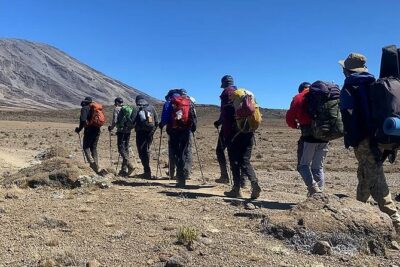
Browse the lists this tour appears in