
Reviewed · RONGAI ROUTE CLIMBS
Mountain Kilimanjaro Climbing 7 Days Rongai Route
The quiet side of Kilimanjaro rewards patience. This seven-day climb takes you up the mountain’s northern slope, near the Kenyan border, where fewer hikers and a gentler acclimatization schedule make the Rongai Route an appealing alternative to the busier Marangu Route. I like the route’s remote feel and its extra day for adjusting to altitude. The main drawback is that the scenery is less varied than on Kilimanjaro’s western approaches, and summit day is brutally long.
I also like that the climb is capped at 15 people and includes pickup, park admission, guides, cooks, porters, and transport back to Moshi. The price, $2,628.72 per person, is not small, but seven days on the mountain and a full support team give it solid value for someone who wants a guided summit attempt without carrying a full pack.
In This Review
- What Makes This Rongai Climb Worth Considering
- Why the Rongai Route Has a Different Feel
- Day 1: NaleMuru to Simba Camp at 2,625 Meters
- Day 2: Second Cave and Views Toward Kibo
- Day 3: Moorland and Kikelewa Cave at 3,630 Meters
- Day 4: Mawenzi Tarn Hut and a Short, Steep Climb
- Day 5: Across the Saddle to Kibo Camp
- Day 6: Gillman’s Point, Uhuru Peak, and Horombo Hut
- Day 7: Horombo to the Park Gate and Moshi
- What the $2,628.72 Price Means
- Group Size, Fitness, and Planning
- Who Should Choose Rongai?
- Should You Book This Kilimanjaro Climb?
- FAQ
- Where does the Rongai Route begin?
- How long is the Kilimanjaro climb?
- What is the highest point reached?
- How difficult is the Rongai Route?
- How many people can join the tour?
- Is pickup available?
- Can I cancel for a full refund?
What Makes This Rongai Climb Worth Considering
- Northern approach: Rongai is Kilimanjaro’s only route from the north, close to the Kenyan border.
- Lower trail traffic: You get a quieter start than on the more heavily used Marangu Route.
- Seven-day schedule: The added day gives you more time to adjust before the summit push.
- Real wilderness early on: The route passes through farmland, pine forest, moorland, and quiet valleys before joining the Marangu descent.
- Strong summit day: The final ascent begins around midnight and lasts about 15 hours.
- Personal planning support: Oscar is specifically praised for answering questions and shaping trips around different needs.
Why the Rongai Route Has a Different Feel
Rongai is the only Kilimanjaro route that approaches from the north. That geographic detail changes the whole first half of the climb. You start near NaleMuru, close to the Kenyan border, and spend several days moving through quieter country before reaching Kibo Camp and the main summit route.
I see this as the route’s biggest selling point. You are not simply following the most popular path to the top. The early stages feel more remote, and the trail has a wilderness quality that can be harder to find on busier routes.
The tradeoff is visual variety. The western routes are known for more dramatic changes in scenery, while Rongai’s progression is steadier: farmland, pine forest, moorland, alpine desert, then the summit zone. It is still an impressive sequence, but the appeal comes more from peace and gradual altitude gain than from constant visual surprises.
Rongai also works well during the rainy season because the northern side of the mountain receives less precipitation. That does not remove the need for proper clothing or preparation, but it gives this route a practical advantage at a time when other approaches may be wetter.
More Kilimanjaro climbs:
- Kilimanjaro climb by Lemosho Route (7-day)
★ 5.0 · 651 reviews - Kilimanjaro climb, Machame Route (7-day)
★ 5.0 · 262 reviews - Kilimanjaro Climbing Lemosho Route 8 Days.
★ 5.0 · 186 reviews
Day 1: NaleMuru to Simba Camp at 2,625 Meters
The morning drive takes you from Moshi to NaleMuru, the trailhead for the Rongai Route. The first walking stage passes through farmland and pine forest, which gives you a relatively gentle introduction to a week of mountain walking.
The day takes about four hours. That is useful because you are getting your legs moving without starting with an exhausting climb. You may have a chance to see colobus monkeys, and, if luck is on your side, elephants or buffalo along the route. Wildlife sightings are not guaranteed, so treat them as a bonus rather than a reason to choose the climb.
Simba Camp sits at 2,625 meters on the edge of the moorland zone. One of the first rewards is the broad view toward the Kenyan plains. This is a good opening camp because you are already above the forest but have not yet reached the stark upper mountain.
I would use this first afternoon to settle into the walking rhythm, organize your sleeping gear, and pay attention to how your body reacts to the altitude. The route is described as moderately difficult, but altitude affects people differently.
Day 2: Second Cave and Views Toward Kibo
Day two brings a steady four-hour ascent to Second Cave at 3,450 meters. The trail continues upward without the sudden, punishing change that can make early altitude gain difficult.
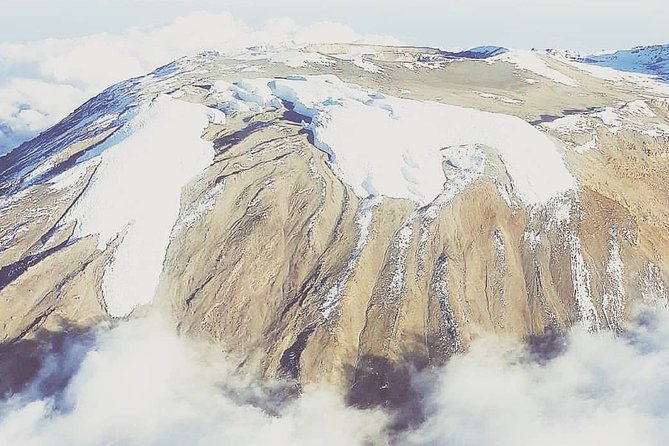
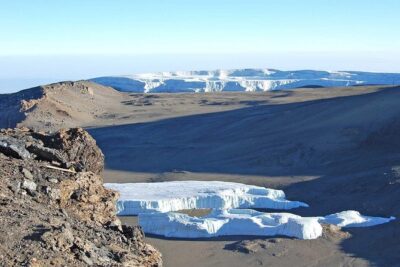
The reward is a clearer view of Kibo, the highest of Kilimanjaro’s three volcanic cones, along with the eastern ice fields around its crater rim. These views help you understand the mountain’s shape. You are not just climbing a high hill. You are moving toward a huge volcanic summit with several distinct zones.
After a hot lunch, you have time to rest at camp. The schedule also allows for an acclimatization walk toward Third Cave. That extra movement at a higher point is one reason the seven-day version makes sense. You gain altitude, then have time to adjust instead of rushing straight onward.
The practical challenge is resisting the urge to do too much. A walk toward Third Cave can help with acclimatization, but rest is also part of the climb. You will need energy later in the week.
Day 3: Moorland and Kikelewa Cave at 3,630 Meters
By day three, the pine forest is behind you. The trail moves through moorland, with continued views toward Kibo’s eastern ice fields. The walking time is again about four hours, but the experience feels more exposed and remote than the opening stages.
At one point, the route leaves the main trail and follows a smaller path toward Mawenzi, Kilimanjaro’s second volcanic peak. Mawenzi has jagged, striking summits, and its rough form contrasts with Kibo’s broad upper dome.
Camp is set in a sheltered valley near Kikelewa Caves at 3,630 meters. The shelter matters. At this elevation, wind, cold, and tired legs can make a protected camp feel like a real luxury.
This is also a day when the route’s quieter character becomes clear. You are moving away from the main flow before eventually joining the Marangu Route near Kibo Camp. If you want a less crowded mountain experience, this section is one of Rongai’s strongest features.
More Rongai Route climbs:
- Kilimanjaro climb, Rongai Route (7-day)
★ 5.0 · 40 reviews - Kilimanjaro climb, Rongai Route (6-day)
★ 5.0 · 15 reviews - Mount Kilimanjaro Rongai Route
★ 5.0 · 10 reviews - 6-Day Rongai Route Trek in Mount Kilimanjaro
★ 5.0 · 8 reviews
Day 4: Mawenzi Tarn Hut and a Short, Steep Climb
Day four is only about four hours, but the walking is not necessarily easy. The morning begins with a short, steep ascent up grassy slopes. The effort pays off with wide views toward the Kenyan plains.
Vegetation fades as you approach Mawenzi Tarn Hut, located at 4,330 meters directly below the cliffs of Mawenzi. The setting is one of the most memorable parts of the route. You are close to the rough volcanic rock of the second peak, with a high tarn adding a different character to camp.
The afternoon is reserved for rest or an acclimatization walk. Again, the value of the seven-day plan is clear. The schedule does not force you to make a huge distance every day. Instead, it gives your body repeated chances to adjust before summit night.
At this altitude, you may find that even simple tasks take longer. Keep the afternoon easy. The point is to arrive at the next camp ready for the summit attempt, not to prove anything at Mawenzi Tarn.
Day 5: Across the Saddle to Kibo Camp
Day five crosses the lunar desert known as the saddle between Mawenzi and Kibo. After several hours of walking, you reach a stark open area with Kibo ahead and the high-camp trail stretching into the distance.
The total walking time is about six hours. The saddle is visually dramatic, but it can also feel mentally demanding because the terrain is open and spare. There is little distraction from the fact that the summit is still ahead.
Once you reach camp, the rest of the day is for resting. You will have an early night before the midnight ascent. This is not a normal camping evening. You need to eat, organize your clothing, prepare your headlamp if you have one, and sleep as much as possible before waking for the final push.
The route description does not specify the exact Kibo Camp elevation, but this is the high camp before the summit attempt. Expect cold conditions and a short night. The midnight start is one of the toughest parts of any Kilimanjaro climb, even before the steepest section begins.
Day 6: Gillman’s Point, Uhuru Peak, and Horombo Hut
Summit day is the physical test. You begin around midnight and climb slowly toward Hans Meyer Cave at 5,220 meters. From there, the trail continues upward toward Gillman’s Point at 5,681 meters, the crater rim.
Reaching Gillman’s Point around sunrise gives you a major psychological lift. The first light begins to warm the mountain after a cold night, and you can pause to take in the crater rim before continuing.
Uhuru Peak is still another one to two hours away. At 5,895 meters, it is the highest point in Africa. The final section can feel long because you have already spent several hours climbing in darkness and thin air.
After reaching Uhuru Peak, you return to Kibo Hut for a warm meal and a one to two-hour break. Then you continue down to Horombo Hut. The full day takes about 15 hours, making it by far the hardest stage of the trip.
You should think of summit day as two separate efforts: the climb to the top and the descent to Horombo. Reaching Uhuru Peak is only part of the day’s work. The route does provide food and a break at Kibo Hut, but you will still need stamina for the long descent.
This is where the seven-day schedule helps. The extra time does not make summit day short, but it gives you a better chance of arriving at it acclimatized and rested.
Day 7: Horombo to the Park Gate and Moshi
The final day takes about seven hours. You descend through the heath and moor zone to Mandara Hut at 2,700 meters, where a warm lunch is waiting.
From Mandara, the route returns through tropical rainforest before reaching the Kilimanjaro National Park Gate at 1,860 meters. The shift from high, spare ground to forest is a satisfying final change in scenery, especially after the demanding summit day.
At the gate, you say goodbye to the mountain guides, cooks, and porters. A short transfer then takes you back to your hotel in Moshi, where a hot shower and a celebration are well earned.
Tipping is an important practical detail. You are reminded to tip the guides, cooks, and porters before leaving the mountain. Plan for this before the climb so the final moment feels appreciative rather than hurried.
What the $2,628.72 Price Means
At $2,628.72 per person, this is a major trip expense. The value depends on what you want from a Kilimanjaro climb.
You are paying for seven days on the mountain, park admission, a supported route, meals prepared during the climb, porters, guides, and transport back to Moshi. Pickup is offered, and the group size can reach 15 people. For someone who wants a guided climb with a full mountain team, that package has practical value.
The price also covers a route that takes a slower seven-day approach rather than squeezing the climb into the six-day minimum. That extra day matters because altitude adjustment is a central part of the challenge.
Still, you should check exactly what is included before booking, especially personal equipment, airport transfers, hotel nights, and tips. The supplied details confirm pickup and the mountain support structure, but they do not list every possible extra cost.
The provider has also arranged combined trips for some customers. Oscar received particular praise for answering questions through a WhatsApp group and adapting arrangements to different needs. One couple combined the seven-day Rongai climb with a five-day safari, while another small group paired the climb with a three-day budget safari. That may be useful if you want to add safari time in Tanzania, though the price quoted here is for the climb itself.
Group Size, Fitness, and Planning
The maximum group size is 15 people. That is large enough to provide company but small enough to avoid the feel of a mass procession. Your experience may still depend on the actual number booked and how the group’s walking pace is managed.
The activity calls for a moderate level of physical fitness. You do not need to be an elite athlete based on the information provided, but you do need to handle repeated four to seven-hour walking days and one 15-hour summit day.
The most important preparation is mental as well as physical. The route is described as moderately difficult, yet the altitude and summit schedule make it serious. You should be ready for early mornings, cold conditions, long uphill sections, and a descent after reaching the summit.
The stated start time is 12:00 a.m. Because the itinerary also describes a morning departure to NaleMuru on day one, confirm the exact pickup and meeting arrangements before the trip. Pickup is offered, but the meeting details should be clear in advance.
Confirmation is provided at booking, and cancellation is free up to 24 hours before the experience begins. Cancellations or changes inside that window are not accepted, with cutoff times based on local time.
Who Should Choose Rongai?
I would recommend this route to you if you want a quieter climb and prefer a gradual seven-day schedule. It also makes sense if you are concerned about rain, since the northern side receives less precipitation than some other approaches.
Rongai is especially appealing if you have less backpacking experience but still want a real mountain challenge. The daily stages before the summit are manageable on paper, and the route includes rest and acclimatization time.
You may prefer another route if changing scenery is your top priority. Rongai does not offer the same variety associated with western approaches, and the summit day remains very demanding despite the slower schedule.
The route also suits people who like combining a major climb with a wider Tanzania trip. The provider has helped arrange add-on safaris, including visits to Serengeti and Tarangire for some groups.
Should You Book This Kilimanjaro Climb?
Book it if you value a quieter northern approach, a seven-day acclimatization plan, and a support team that can help shape a larger Tanzania itinerary. The praise for Oscar’s communication is useful here, especially if you have many questions before committing to a high-altitude trip.
I would not book it without confirming the full inclusion list and the midnight meeting details. At $2,628.72, you should know what equipment, lodging, transfers, and gratuities cost beyond the headline price.
For the right climber, Rongai offers a strong balance: remote early stages, a slower route, impressive views of Kibo and Mawenzi, and a clear path to Uhuru Peak. Just respect the 15-hour summit day. Kilimanjaro is not a casual walk with a tall finish.
FAQ
Where does the Rongai Route begin?
The climb begins at NaleMuru village, reached by road from Moshi. Rongai approaches Kilimanjaro from the north, near the Kenyan border.
How long is the Kilimanjaro climb?
The experience lasts approximately seven days. Six days is the minimum stated for Rongai, but seven days are recommended.
What is the highest point reached?
The itinerary reaches Uhuru Peak at 5,895 meters. It also passes Gillman’s Point at 5,681 meters on the crater rim.
How difficult is the Rongai Route?
The route is described as moderately difficult and recommended for people with less backpacking experience. The final ascent is still long and strenuous, lasting about 15 hours from the midnight start through the descent to Horombo Hut.
How many people can join the tour?
The maximum group size is 15 people.
Is pickup available?
Yes. Pickup is offered, and transport returns you to your hotel in Moshi after you leave Kilimanjaro National Park.
Can I cancel for a full refund?
Yes, if you cancel at least 24 hours before the experience start time. Cancellations or changes made less than 24 hours in advance are not accepted for a refund.
Just added in Moshi
- Zanzibar: Stone Town tour and Nakupenda beach with Lunch★ 5.0 · 1 review
- machame route★ 5.0 · 16 reviews
- day trip lake manyara★ 5.0 · 2 reviews
- Mt Kilimanjaro 6 days Marangu route hike★ 5.0 · 3 reviews
- Private Cycle to Kilimanjaro Bike Park Safari★ 5.0 · 6 reviews
- West Kilimanjaro cycling Adventures★ 4.5 · 8 reviews
- Wildlife Extravaganza: Manyara, Tarangire & Ngorongoro in 3 Days★ 5.0 · 3 reviews
- 3 Days Private E-Bike Tour in West Kilimanjaro★ 5.0 · 3 reviews
Rongai Route Climbs, compared.
Rongai Route 6 Days 5 Nights/Kilimanjaro climb
Read our review →
6 Days Kilimanjaro climbing | Hiking Tour via the Rongai Route
Read our review →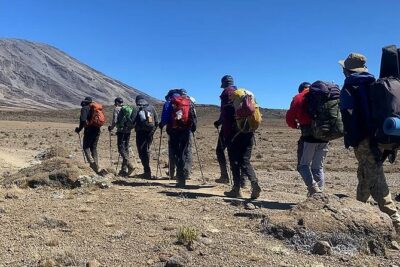
Browse the lists this tour appears in