
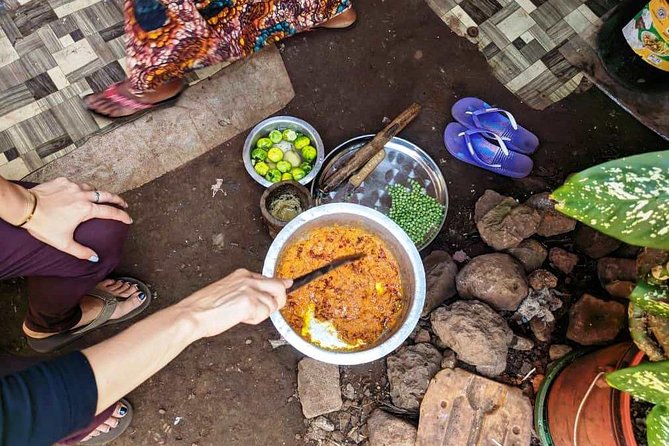
Reviewed · COOKING CLASSES
Private Market Tour and Tanzanian Cooking Class in Moshi
Food opens doors quickly. This private Moshi experience pairs a local market visit with a hands-on cooking class in the home of Shida, Marissa, and William. I like the personal scale, especially with William introducing you to vendors and local ingredients, and I like that the meal takes place in a family home rather than a formal cooking school. The main consideration is that this is a genuine home visit, so you should be comfortable with a simple setting, outdoor benches, a wood fire, and unfamiliar foods or drinks.
I also appreciate the way the tour connects ingredients to daily life. You do not simply sit down to eat ugali. You help make coconut milk with a traditional buzi grinder and learn why ugali takes patience and effort. The five-and-a-half-hour schedule gives the market, cooking, and meal enough room, though it may feel long if you want only a quick food tasting.
In This Review
- Key points to know before booking
- Starting with Moshi’s market and local ingredients
- From the market to Shida’s mud house
- Making coconut milk with a traditional buzi
- Learning the art of ugali over a wood fire
- Sharing the meal outside with the family
- What the five-and-a-half-hour schedule means
- Is $86 a fair price?
- Who will enjoy this Moshi cooking class?
- Practical tips for a smoother visit
- Should you book it?
- FAQ
- Where does the cooking experience take place?
- How long does the tour last?
- Is hotel pickup available?
- Is this a private activity?
- Who hosts the experience?
- What happens at the market?
- What dishes do you learn to prepare?
- What is a buzi?
- Where do you eat the finished meal?
- Can you cancel for a full refund?
Key points to know before booking
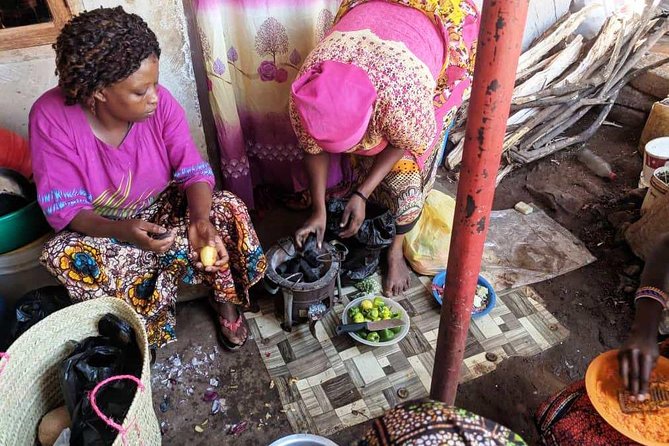
- William leads you through a local market: You can see fresh fruits, vegetables, herbs, and other ingredients before cooking with them.
- The class takes place at Shida’s home: Expect a personal visit to a mud house, with the meal served outside on benches.
- Coconut milk is made by hand: You use a buzi, a small wooden seat with a grinder for shaving coconut meat.
- Ugali is the central lesson: This cornmeal staple looks simple, but stirring it over a wood fire takes work.
- The tour is private: Only your own group participates, which allows more time for questions and personal attention.
- Pickup and drop-off are included: The experience is designed around hotels in Moshi, with a walk or tuk-tuk ride between the market and home.
Starting with Moshi’s market and local ingredients
The day begins with pickup at your Moshi hotel. William, who is Marissa’s husband and Shida’s son, handles the welcome and takes you to a local market. That personal connection matters. You are not being handed from one anonymous stop to another. You are meeting someone who knows the people, the food, and the household you will visit later.
At the market, William introduces you to the ingredients used in Tanzanian cooking. You may see piles of fruit, vegetables, and herbs, then stop with him at favorite vendors to select supplies for the class. This makes the visit more useful than simply walking through stalls with a camera. You can see the food in its everyday setting, then recognize it later in the cooking pot.
The market also gives you a chance to try some local items. Dried sardines and various fruits are among the foods included in the market visit, and you may be invited to sample vegetables or other produce. If you are cautious about unfamiliar food, this is a good place to ask questions before tasting. One practical point from the experience is that the market may not feel as clean or polished as a shop at home. Keep an open mind, but bring your own comfort level and do not feel pressured to eat anything you would rather skip.
I like this part because it gives the cooking class a clear setting. Tanzanian food does not begin in a recipe book. It begins with what is available at the market, what local families buy, and what can be prepared with basic tools.
More Cooking Classes in Moshi:
- Private Traditional Cooking Class.
★ 5.0 · 1 review - Zanzibar: Spice Farm Tour with Traditional Cooking Lesson
★ 4.8 · 77 reviews - Zanzibar Cooking Class & Spice Tour
★ 4.5 · 77 reviews
From the market to Shida’s mud house
After the market, you make your way to Shida’s home, about 20 minutes away. The transfer may be on foot or by tuk-tuk, depending on the arrangement for your visit. That short ride or walk is part of the experience, not just a gap between activities. You are moving from a public market into a family neighborhood and then into the household where the meal will be prepared.
Shida’s home is described as a mud house, which sets expectations clearly. This is not a staged restaurant with decorative African cooking equipment. It is a simple domestic setting where food is prepared with traditional methods and basic tools. If you want a polished kitchen, this may not be your ideal class. If you want to see how a family meal can be made in a modest home, the setting is a major reason to book.
The household includes Shida, Marissa, and William, and the family joins you for the meal. That family connection gives the visit a warm, social feel. You are not just learning a dish and leaving. You are sharing time with the people who prepared it.
Making coconut milk with a traditional buzi
The cooking class lasts about one hour and focuses on practical work. One of the most memorable tasks is making fresh coconut milk by hand. You sit on a buzi, a small wooden seat fitted with a grinder, and use it to shave the coconut meat.
This is a useful lesson because it shows the labor behind a familiar ingredient. In many kitchens, coconut milk comes from a can or carton. Here, you see the coconut change from a whole ingredient into something that can form the base of vegetable and stew dishes. The process is direct, physical, and easy to understand, even if it takes more effort than modern cooking.
You may want to wear clothes that are comfortable for sitting and working. The supplied details do not specify a dress code or special equipment, but this is a hands-on class rather than a demonstration where you watch from a distance. Ask questions as you go, especially if you want to understand how the coconut milk is used in the meal.
The coconut preparation also gives you a better sense of time in home cooking. The meal is not assembled in a few quick steps. Ingredients are handled, grated, stirred, and cooked with care. That slower pace is part of the value.
Learning the art of ugali over a wood fire
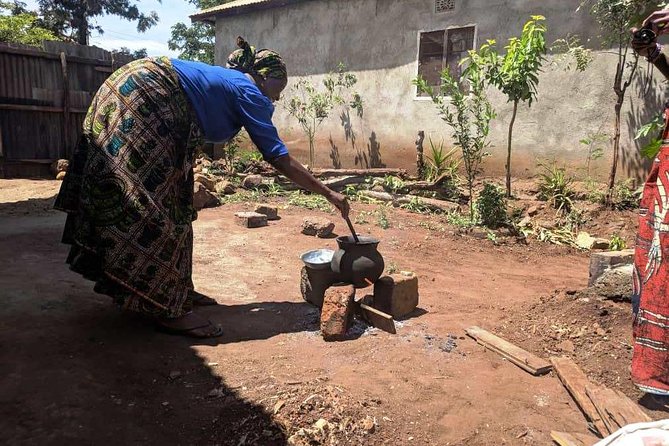
The other central dish is ugali, a staple made from cornmeal. The ingredients are simple, but the preparation requires steady stirring and attention. Shida takes pride in this family favorite and teaches you how to prepare it with sautéed vegetables.
Ugali is often served as an everyday accompaniment, but this class shows why it deserves respect. The dish may look plain on the plate, yet getting the texture right takes effort. Cooking it over a wood fire adds another layer of work and gives you a direct look at a traditional household method.
You should not expect a restaurant-style lesson with exact measurements and a printed recipe in hand. The value comes from watching, helping, and learning through the process. The private format helps here. With only your own group, you can ask Shida to slow down, explain a step, or show you the technique again.
The meal also includes sautéed vegetables and coconut-based preparations. The exact selection of produce can vary because the class begins at the market and uses fresh ingredients chosen for the day. That is a benefit if you enjoy local food as it is actually prepared, but it means you should not book this expecting a fixed menu.
More market walks in Moshi:
- Full-Day Moshi Private Forest Walk and Local Market Tour
★ 5.0 · 4 reviews - Moshi, Kilimanjaro: Local Market Shopping Experience
★ 5.0 · 2 reviews - Stone Town Guided Tour: Culture, Slave Market & Spice Market
★ 4.8 · 44 reviews - Arusha: Traditional Tanzania Cooking Class & Food Market Tour
★ 5.0 · 34 reviews
Sharing the meal outside with the family
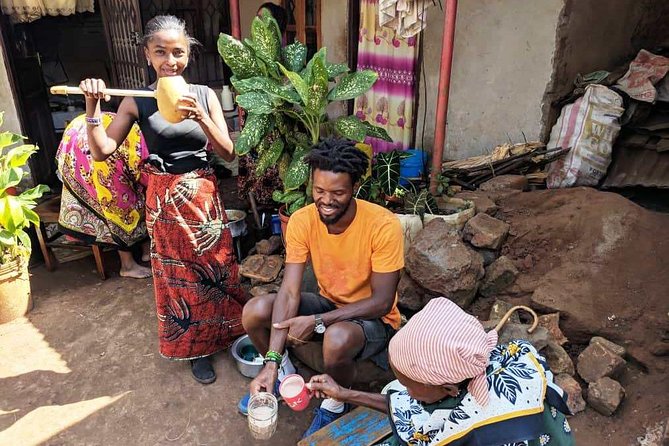
Once the food is ready, you eat outside on benches with the whole family. This is the point where the market visit and cooking lesson come together. You have seen the ingredients, worked with the cooking tools, and then sit down to eat what you helped prepare.
Ugali is eaten with the vegetables and other dishes, and the meal may include peanut brittle and homemade alcohol. Those additions make the meal feel tied to family customs rather than built only around the advertised main dish. If you do not drink alcohol, you can simply ask about the available options. The provided details confirm that homemade alcohol is part of the food experience, but do not specify its type or whether alternatives are offered.
The outdoor seating is simple. Some people will find that appealing because it keeps the visit close to ordinary home life. Others may prefer a more comfortable dining room, especially after several hours of activity. I would treat the benches and open-air meal as part of the cultural setting, not as a missing amenity.
This is also a good time to let the conversation unfold. The private group format means you can focus on the family and ask about the ingredients, the cooking process, or daily routines. The experience is strongest when you treat the meal as a shared social occasion, not just the final course of a food tour.
What the five-and-a-half-hour schedule means
The full experience lasts about five hours and 30 minutes. That includes hotel pickup, the market visit, travel to the home, the cooking class, and the meal. The length works well if you want one substantial cultural activity during your time in Moshi.
I would not schedule it too close to another fixed activity. The market visit includes stops, tasting, and ingredient selection, while the cooking itself involves manual work rather than a quick demonstration. The 20-minute trip from the market to the home also takes time.
The schedule is especially useful after or before a wider Kilimanjaro visit, when you want to understand more about local life beyond the mountain. It gives you a food-based introduction to Moshi and Tanzania without requiring a full multi-day village stay.
Pickup and drop-off at your Moshi hotel make the day easier. You do not need to arrange your own way to the market, and the private setup avoids the delays that can come with a large group. The booking information also states that group discounts are available, so the per-person price may work better for a small private party.
Is $86 a fair price?
At $86 per person, this is not the cheapest way to eat in Moshi. You are paying for more than a plate of food. The price covers a private guide, hotel pickup and drop-off, a market visit, ingredient selection, a hands-on class, and a home meal with the family.
I see the strongest value in the private format. A large group would make the mud-house setting and cooking tools less personal. Here, William can guide your market visit and Shida can give attention to your group during the class.
The price makes the most sense if you value access and context. You will learn where the food comes from, how coconut milk is prepared, and how ugali is cooked. If your main goal is simply to eat Tanzanian food at the lowest possible cost, a restaurant will be cheaper and faster.
Group discounts may help if you are booking with friends or family. Since the activity has received a top rating from seven reviews, the available feedback is strongly positive, but the sample is small. I would consider the price fair for a private cultural visit, while keeping expectations focused on local hospitality rather than luxury.
Who will enjoy this Moshi cooking class?
I would recommend this for you if you want direct contact with local food and family life. It suits curious eaters, couples, families, and small groups who prefer a personal visit over a standard sightseeing stop.
It is also a good choice if you are staying in Moshi around a Mount Kilimanjaro trip. The class gives you a different view of the area, one based on markets, household work, and shared food.
You may want to choose another activity if you dislike simple facilities, wood-fire cooking, outdoor seating, or unfamiliar ingredients. The market and home setting are central to the experience, so they are not minor details you can overlook.
The private nature is helpful for families and mixed groups. You can set the pace more easily than you could in a large class, and the host can give more direct guidance. Still, the duration is substantial, so everyone in your group should be interested in the full process.
Practical tips for a smoother visit
Wear comfortable clothing for a hands-on class and a setting that may involve sitting on a low wooden tool or outdoor benches. The information provided does not list required clothing, but practical clothes make more sense than anything formal.
Come ready to ask questions at the market. William can explain the ingredients and help you understand what you are seeing, while the vendors provide the food-buying setting that makes the visit feel real.
If you have food preferences or do not drink alcohol, raise that before or during the meal. The experience includes homemade alcohol, peanut brittle, coconut preparations, vegetables, ugali, fruits, and other local foods, but the exact menu can depend on what is purchased that day.
You receive confirmation when booking, and free cancellation is available up to 24 hours before the local start time. Changes or cancellations made less than 24 hours before the start are not accepted for a refund.
Should you book it?
Book this tour if you want a personal, food-centered look at Moshi and you are happy to trade polish for real household details. The market with William, coconut preparation on a buzi, wood-fire ugali, and a family meal outside give the day a clear sense of place.
Skip it if you want a short tasting, a fixed menu, or a modern kitchen. For everyone else, the $86 price is reasonable for a private half-day that combines transport, instruction, food, and human connection. I would especially choose it for a small group with time to slow down and enjoy the process.
FAQ
Where does the cooking experience take place?
The experience takes place in Moshi, Tanzania. It begins at a local market and continues at Shida’s home, about 20 minutes away.
How long does the tour last?
The experience lasts approximately five hours and 30 minutes.
Is hotel pickup available?
Yes. Pickup and drop-off are offered at your Moshi hotel.
Is this a private activity?
Yes. Only your own group participates in the tour.
Who hosts the experience?
The local hosts are Shida, Marissa, and William. William is Marissa’s husband and Shida’s son.
What happens at the market?
You visit local stalls, learn about Tanzanian ingredients, and select fresh produce, herbs, and other items for the cooking class. You may also taste local foods such as fruit and dried sardines.
What dishes do you learn to prepare?
You learn to make fresh coconut milk and ugali, a cornmeal dish served with sautéed vegetables. Coconut milk is also used as a base for vegetable and stew dishes.
What is a buzi?
A buzi is a small wooden seat with a grinder used to shave coconut meat while making fresh coconut milk.
Where do you eat the finished meal?
You eat outside the home on benches with the whole family.
Can you cancel for a full refund?
Yes. You can cancel at least 24 hours before the experience start time for a full refund. Cancellations or changes made less than 24 hours before the start are not accepted for a refund.
More Shopping Tours in Moshi
- Stone Town Private Tour with Slave Market Tickets
★ 5.0 · 13 reviews - Tanzanite experience tour – Tanzanite shopping in Arusha
★ 5.0 · 12 reviews - Arusha: Traditional Tanzania Cooking class& Food Market Tour
★ 4.9 · 12 reviews - Zanzibar:Stone town Street food market walking tour,transfer
★ 4.5 · 9 reviews
Just added in Moshi
- Zanzibar: Stone Town tour and Nakupenda beach with Lunch★ 5.0 · 1 review
- machame route★ 5.0 · 16 reviews
- day trip lake manyara★ 5.0 · 2 reviews
- Mt Kilimanjaro 6 days Marangu route hike★ 5.0 · 3 reviews
- Private Cycle to Kilimanjaro Bike Park Safari★ 5.0 · 6 reviews
- West Kilimanjaro cycling Adventures★ 4.5 · 8 reviews
- Wildlife Extravaganza: Manyara, Tarangire & Ngorongoro in 3 Days★ 5.0 · 3 reviews
- 3 Days Private E-Bike Tour in West Kilimanjaro★ 5.0 · 3 reviews
Cooking Classes, compared.
Half-Day Kuza Cave Swimming Adventure and Cooking Class
Read our review →
NGO Lifted Strong – Traditional Tanzanian Cooking Class
Read our review →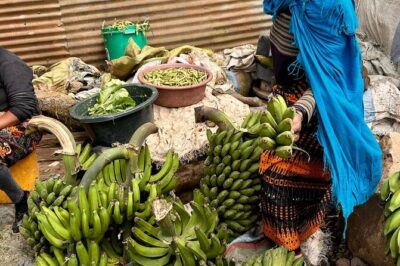
Traditional Tanzania Cooking Class & Food Market Tour
Read our review →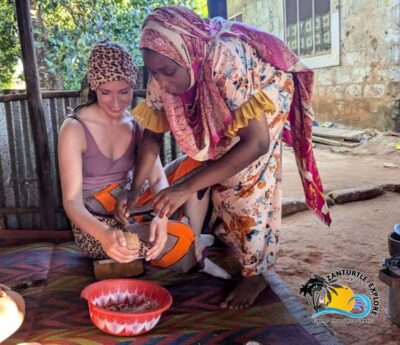
Cooking and Sewing & Jewelry Workshops in Arusha
Read our review →
Mnemba Dolphin Tour, Clear Kayak, Cooking Class, Horse Riding
Read our review →Browse the lists this tour appears in